Answer-first summary
Start your comparison with 1990 Pro Set #118 for a player page, 1990 Score #361 Art Ross Trophy for an award theme, or 1991 Upper Deck #437 for a preferred design. Research 1979 Topps #18 and O-Pee-Chee #18 separately if a rookie is the goal. Our picks prioritize clear identities and collecting fit; the actual copy, transaction evidence, and delivered cost determine whether an offer works for you.
The best first choice depends on what you want to collect
For a first Wayne Gretzky card, start by comparing a clearly identified 1990 Pro Set #118 with a 1990 Score #361 Art Ross Trophy card. Choose the Pro Set if you want a straightforward player entry; choose the Score if an award theme gives the card more meaning for you. A 1991 Upper Deck #437 is another specific later-career issue to consider when you prefer its presentation. These are editorial starting points, not a ranking by expected returns.
If owning a recognized rookie is your actual goal, research the 1979 Topps #18 and 1979 O-Pee-Chee #18 separately. They require a more deliberate examination of authenticity, condition, and comparable transactions. Being new does not prohibit buying a rookie, but it does make a written purchase process particularly useful. You should be able to explain the exact card and the proposed price before committing.
This guide compares five identifiable issues rather than treating every Gretzky product as equivalent. It does not publish current price bands because the cost of a particular copy depends on edition, condition, holder, venue, and sale date. Read the shortlist as a way to narrow your research. No option promises an easy resale, and you do not need to own all five to have a satisfying collection.
How we chose these options
We prioritized a recognizable player, precise catalog identities, and collecting purposes that a beginner can explain. We then considered condition sensitivity, the work needed to compare sales, and whether an issue could remain personally relevant after the excitement of a first purchase fades. These are qualitative judgments. We did not calculate sell-through rates or produce a forecast of future demand.
The PSA Gretzky master checklist is an identification reference for the later issues and distinguishes many other Gretzky entries. Its registry weights are not our recommendation scores or price estimates. For the rookie cards, the separate PSA issue pages provide more focused references. The selection logic below is our editorial interpretation of collector needs.
A useful option must fit both the person and the transaction. A card with a familiar name but unreadable photographs is a poor candidate for a confident first purchase. Conversely, a modest card with clear identification and honest condition disclosure can be a productive learning purchase. Our emphasis on recognition and lasting collecting interest should not be read as a claim that every copy has broad, liquid demand.
Compare the five collecting roles
| Card | Best fit | Main trade-off | First check |
|---|---|---|---|
| 1990 Pro Set #118 | A straightforward player-card starting point | No rookie-year connection | Year, product, and number on both sides |
| 1990 Score #361 Art Ross Trophy | An award-themed collection | Different subject from an ordinary player entry | Award designation and edition |
| 1991 Upper Deck #437 | A later-career design choice | Preference is personal, not a rarity claim | Exact issue and card number |
| 1979 Topps #18 | A researched rookie centerpiece | Greater need for authenticity and condition work | Original issue, holder details, matched sales |
| 1979 O-Pee-Chee #18 | A deliberate O-Pee-Chee rookie goal | Condition sensitivity and identification demands | Manufacturer, actual copy, certification evidence |
The table ranks roles, not current prices. Do not treat a raw example and a top-grade encapsulated example as the same purchasing proposition simply because they share a row. Nor should you assume that every card in a product has the same edition or language. Check the complete catalog description and the actual item before comparing offers. If your favorite design is outside this list, apply the same questions to it.
1990 Pro Set #118: a clear starting point for a player collection
This is our first candidate for a collector whose objective is simply to begin with an identifiable Gretzky player card. The useful feature is the specific search target: year, manufacturer, player, and number. Enter all four rather than searching only for “Gretzky vintage.” A broad search invites unrelated commemorative cards, lots, and products with different identification requirements.
Ask for photographs of the front and reverse of the actual copy. Match the number and product, then inspect the corners, edges, surface, and any visible crease. A modest purchase still deserves an accurate description. If a seller uses a stock image, decide whether the listing explains how condition varies and whether that uncertainty is acceptable for your intended use.
This option suits a collector building a small player page or learning to record purchases. It is less suitable if the only goal is a rookie or a documented scarce variant. Do not add a rarity story simply because the athlete is famous. The card can meet a display or learning goal without needing one.
The main purchasing trap is letting a low advertised amount hide disproportionate shipping or an unnecessary grading premium. Compare total delivered cost. If you prefer a raw copy for an album, do not pay extra for encapsulation unless the added service or presentation has value to you. Finish by recording why you selected this copy rather than merely noting its price.
1990 Score #361 Art Ross Trophy: an award-themed alternative
The Score #361 provides a different collecting role: an award subject rather than another interchangeable player entry. The checklist identifies the Art Ross Trophy designation. Include that wording in your notes and searches so you do not substitute another Gretzky number from the same product. A player can appear multiple times in one release for different reasons.
This is a useful candidate if you want your first few cards to tell different stories. A player card and an award card can complement each other without requiring a large checklist. Before buying both, ask whether you actually enjoy the distinction or are simply filling space. A two-card display works best when you can explain why each belongs.
Pay attention to edition descriptions. The registry distinguishes Score and Score Canadian entries, so do not merge differently identified copies automatically in a sales comparison. Verify the reverse and any relevant catalog wording rather than guessing from a familiar photograph. An incomplete seller title is a reason to investigate the edition, not to supply the missing information yourself.
The trade-off is that an award card may not satisfy someone who wants a conventional player portrait or a rookie. Choose it for the theme, not because an award label is assumed to create a premium. If reselling later matters to you, examine completed transactions for this exact entry before deciding how much to pay. An adjacent card number is not a substitute comparison.
1991 Upper Deck #437: choose it for the presentation you prefer
Upper Deck #437 offers another precisely named later-career candidate. It suits a collector who wants to compare designs across manufacturers rather than collect only one brand. Use the full year, manufacturer, and number when checking the item. Year labels can appear as a single year or a season in different catalogs; resolve the underlying identity instead of assuming every wording difference means a different card.
Look at the actual front and reverse and decide what you like about the presentation. You do not need an argument about investment potential to prefer one photograph, layout, or card format. Put that preference into a sentence. It gives you a reason to stop searching once an acceptable example meets your requirements.
The main trade-off is that design appeal is subjective. Another collector may prefer Pro Set or Score, and your favorite does not automatically deserve a market premium. Keep aesthetic preference separate from assertions about print quantity. A seller describing an ordinary issue as rare should provide a specific, checkable basis for that claim.
This card can be considered alongside the other later issues, but compare prices within its own identity and condition group. If a graded copy costs more, ask what the holder adds to your goal. If the answer is only that it appears more prestigious, revisit whether that prestige is worth the extra expense to you. A chosen design can stand on its own.
1979 Topps #18: a rookie centerpiece after deliberate research
For a beginner determined to own a recognized Gretzky rookie, Topps #18 deserves its own research file. The PSA Topps issue page identifies the card and organizes examples by grade. Use that identity as a starting point, then examine the listing you might actually buy. A reference page cannot certify an unrelated seller's object.
This option suits someone comfortable concentrating a purchase on one researched piece rather than assembling several later cards. That is a collecting preference, not a necessary progression. You can remain a serious Gretzky collector without moving into rookies, and you can begin with a rookie if the evidence and budget support the choice.
Separate original cards from later reprints. Check both sides, the manufacturer, the stated year, and the label if encapsulated. A shared image or the number 18 alone does not settle identity. When photographs or descriptions conflict, obtain clarification before calculating what you consider an acceptable price.
Choose the condition you can comfortably accept, including visible flaws. Do not buy a damaged example solely because you hope it will be assigned a better grade later. Compare completed sales for Topps copies with matching assessment details and broadly similar presentation. An exceptional auction result for a very different grade is background information, not a valuation of your candidate. Allow time to walk away from an unclear listing.
1979 O-Pee-Chee #18: a specific collecting goal with added condition work
O-Pee-Chee #18 is the choice to investigate when the Canadian issue itself is central to your goal. The PSA O-Pee-Chee reference discusses blue-border wear, printing defects, rough cuts, and centering. Those features make inspection of the actual copy particularly important. They are not a do-it-yourself authenticity test.
This option suits a collector who can state why O-Pee-Chee matters personally and is willing to study examples before selecting one. It is a poor fit for someone using a famous rookie as a shortcut around research. Treat it separately from Topps even though the two cards share a number and a broadly similar appearance.
Decide which visible characteristics you can live with. A distracting mark on the image may matter more to you than another flaw elsewhere. Request clear views of the front, reverse, edges, and holder as appropriate. Do not infer authenticity from a rough edge or infer alteration from one photograph without expert support.
Budget for the full transaction and any independent examination you require. If the evidence remains incomplete, delaying the purchase is a valid outcome. O-Pee-Chee belongs on this list as a deliberate destination for some beginners, not as a universal recommendation above the later cards. The best choice remains the one whose identity, condition, cost, and collecting purpose you can explain without relying on the seller's excitement.
Choose raw or graded according to the job
For an album project, a raw later-career card may suit the format you want. For a display built around a grading company or consistent holders, an encapsulated copy may be preferable. Neither format automatically makes the object a better fit. Clarify whether you want physical presentation, an independent assessment, easier comparison, or simply a particular card.
Read the card grading guide before making a number your main selection rule. A condition grade and an authenticity assessment communicate different information. A label may also contain additional descriptions that matter to comparison. Read the entire label, not just its largest number.
For a PSA holder, use the official certification lookup and compare returned information with the offered item. PSA cautions that genuine certification numbers can appear on counterfeit labels, so a matching number does not remove all risk. The seller, photographs, holder, and supporting records still require scrutiny.
Do not purchase raw cards on the assumption that grading will fund the purchase or create a particular premium. Submission involves costs and uncertain outcomes. The grading service buying guide can help you define a submission's purpose. Keeping a card raw can be a complete decision rather than a temporary failure to improve it.
Compare actual transactions before setting a spending limit
Create a short comparison sheet for the exact issue you are considering. Record year, manufacturer, number, edition, grading company, grade, visible condition, sale date, currency, and whether the amount includes a buyer's premium. Add shipping and applicable taxes separately when estimating your own total cost. Asking prices and completed transactions belong in different columns.
Look for several relevant sales where possible and inspect the original listings. Exclude lots when you cannot sensibly allocate the amount to the individual card. Treat best-offer transactions cautiously if the accepted amount is not disclosed. A high figure with unclear terms is weaker evidence than a transparent, well-matched sale.
Liquidity means the practical ability to find a buyer at an acceptable price and within your available time. A familiar player name does not measure that ability for every version. If you cannot find usable recent comparisons, record that limitation and allow more uncertainty in your decision. Do not turn a lack of records into proof of rarity.
Set a maximum delivered amount before contacting the seller or bidding. Base it on what the card contributes to your collection and the quality of the evidence. If no suitable copy fits, keep the research and wait. A spending limit is most useful when it can actually cause you to decline a purchase.
Use Lemieux, Crosby, and O-Pee-Chee as comparison tools
The planning references for this guide include Mario Lemieux, Sidney Crosby, and O-Pee-Chee. Lemieux and Crosby are other players, not substitute Gretzky products. Use them to test whether you prefer collecting one athlete deeply or building a broader hockey page. That decision can change how much of your budget you want to assign to a Gretzky centerpiece.
Avoid comparing unrelated rookie prices as though sporting stature determines a universal exchange rate. Different issues have different supply, condition challenges, and collecting audiences. A useful comparison concerns your purpose: one player across several designs, several players in one set, or one documented card that anchors a collection.
O-Pee-Chee is a manufacturer or brand reference and therefore answers another question. Choosing it can express an interest in a particular publishing tradition, but the brand does not identify the year, number, or individual copy by itself. Keep those fields in your record. This distinction between player, product, and object also makes future searches more precise and helps prevent accidental duplicate purchases.
Build a first purchase you can review afterward
Pick one role from the table and save two or three clearly documented candidate listings. Write what each gets right and what remains unknown. For a later card, this might be total delivered cost and a surface mark. For a rookie, it may include uncertainty about the holder or a mismatch with the seller's description. Resolve the material questions before choosing.
The Gretzky safe-buying guide provides additional purchase checks. Keep the listing images, description, receipt, and any certification reference together. When the card arrives, compare it with that record and use the seller's stated process promptly if something is wrong. Do not discard packaging or evidence while a discrepancy remains unresolved.
Finally, record whether the purchase met its purpose. Did the Pro Set begin the player page you wanted? Did the Score award card add a different story? Did the Upper Deck satisfy your design preference? Did the rookie meet your documented condition requirements? These questions are more useful than immediately wondering what to buy next.
For a broader plan, consult the complete Gretzky collector guide. Start with one understandable transaction, learn from the physical card, and expand only when you have a reason. This is educational collecting guidance: the shortlist helps you make a reviewable choice, not predict returns.
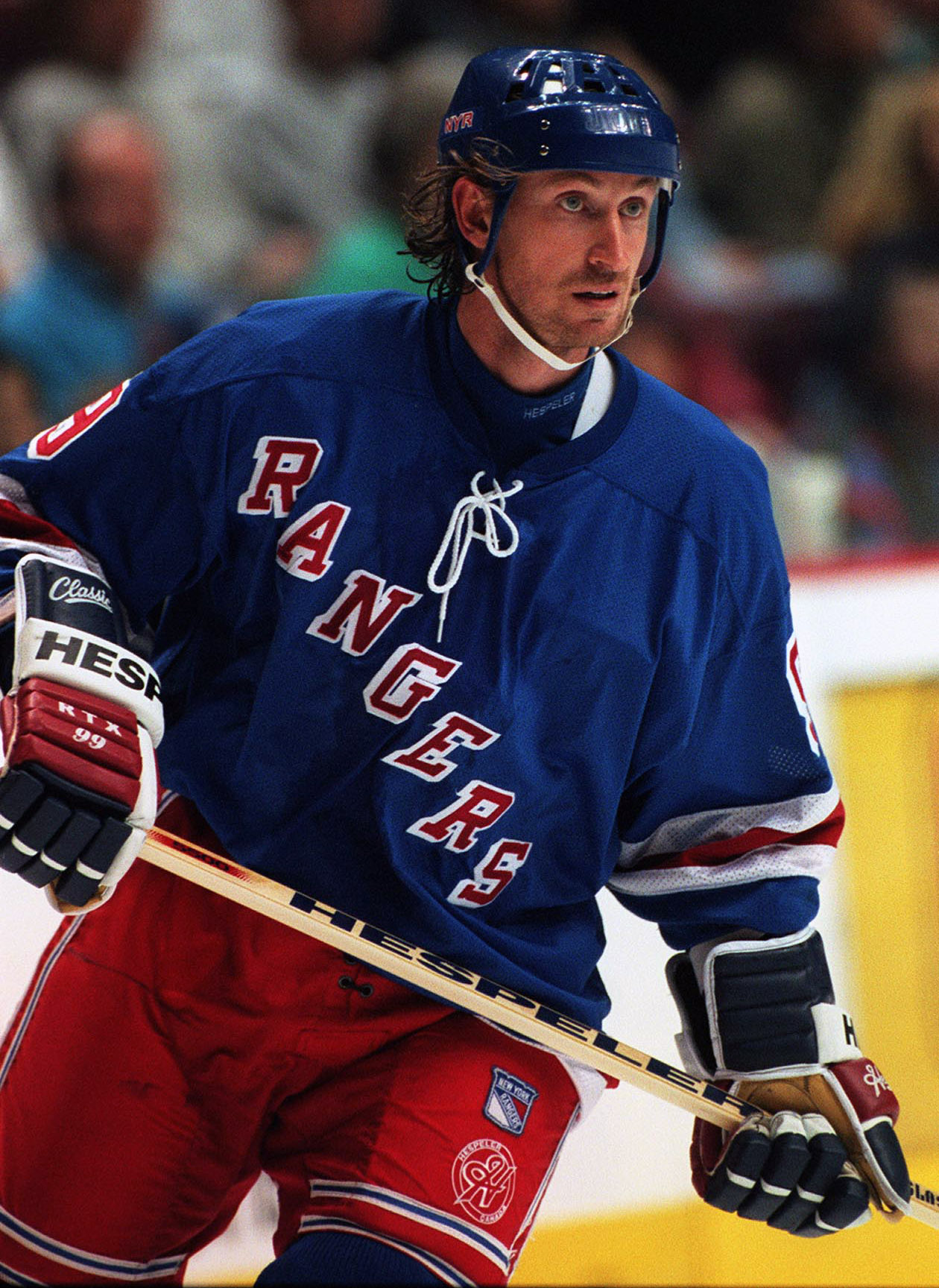
Image: Wayne Gretzky with the New York Rangers, Håkan Dahlström/SportNet, version uploaded by IrisKawling, CC BY-SA 3.0. File reproduced without modifications.
Conclusion
The best collecting decisions usually come from structure rather than urgency. When you combine clear comparisons, strong context, and a disciplined buying framework, you give yourself a better chance to build a collection with both enjoyment and staying power.