Answer-first summary
For a lasting centerpiece, choose the 1979-80 O-Pee-Chee or Topps number 18 when original rookie ownership is the goal. The 1980-81 O-Pee-Chee number 250 and a defined playing-era run suit history and design interests; a documented signed photograph suits display. Set acceptable flaws and a completion rule before shopping.
Choose a piece you can explain and enjoy for years
The strongest starting points for a lasting Wayne Gretzky collection are an authenticated 1979-80 O-Pee-Chee number 18 rookie, the separate 1979-80 Topps number 18 rookie, or a carefully chosen early-career card such as 1980-81 O-Pee-Chee number 250. For collectors who value a personal signature more than rookie status, a documented signed photograph offers a different kind of centerpiece. A compact run of playing-era cards can be equally satisfying when the goal is telling his career story.
These are editorial choices for collecting, not a ranking of expected returns. The right piece must fit your available space, your interest in hockey history, the defects you can tolerate, and the amount you can spend without depending on a future sale. Long ownership cannot repair an uncertain identity, missing provenance, or a purchase price justified only by an exceptional auction headline.
Decide what the object should contribute before searching listings. Write a sentence such as “I want one original rookie with a clear image” or “I want a signed Oilers photograph for my study.” That sentence becomes a useful filter when attractive alternatives appear.
Our selection method
We prioritize recognizable issues, a clear connection to Gretzky's career, condition that can be assessed, and documentation another collector could understand. We also consider how practical the piece is to store, display, compare with completed sales, and eventually transfer. Recognition and demand matter, but this guide does not claim to measure current sales velocity or predict long-term prices.
The card identities below are checked against CGC's illustrated Gretzky card selection. We use that historical article for issue identification, not its dated record claims or auction figures. Condition observations for the Canadian rookie are checked against PSA. Signature verification guidance comes from Upper Deck's own authentication resources. The recommendations and collection exercises are our editorial interpretation of those facts.
An uncommon parallel can belong in an experienced specialist's collection. It does not automatically outrank an established base card here, because a low serial number does not explain demand, condition, or the likelihood of finding another buyer. We favor a clear collecting purpose over numerical scarcity alone.
Shortlist by collecting purpose
| Piece | Best suited to | Main trade-off |
|---|---|---|
| 1979-80 O-Pee-Chee number 18 | A Canadian rookie centerpiece | Condition and authenticity require careful scrutiny |
| 1979-80 Topps number 18 | An original rookie in the American issue | Must be researched separately from O-Pee-Chee |
| 1980-81 O-Pee-Chee number 250 | An early Oilers collection beyond the rookie | Second-year status is different from rookie status |
| Playing-era career run | Collectors who enjoy chronology and photography | More cards create more cataloguing work |
| Documented signed photograph | A signature-focused display | Provenance, fading, and framing matter |
No row assumes a fixed budget band. Obtain fresh comparisons before making an offer, especially when a higher grade or an unusual inscription changes the object being offered. The most useful shortlist is the one that leaves you comfortable passing on an unsuitable copy.
O-Pee-Chee number 18: the Canadian rookie centerpiece
Choose this card when the original Canadian rookie is the specific object you want to own. Its role in a focused collection is easy to explain: one identifiable issue can anchor the rest of your Gretzky material. That clarity is valuable even when your preferred example has visible wear.
PSA identifies blue-border chipping, printing defects, and pronounced rough cuts as condition obstacles for this issue. These production and preservation characteristics make close inspection especially useful. A rough edge alone neither proves authenticity nor establishes later damage; examine the entire card and obtain qualified assessment when needed. See PSA's O-Pee-Chee number 18 profile.
Our preference for long ownership is a copy whose visible compromises you understand. Compare the face, centering, surface marks, corners, and reverse instead of choosing from the grade alone. If a crease crossing the portrait will bother you every time you open the collection, a cheaper price will not necessarily make that compromise pleasant.
An authenticated lower-grade example can serve the same historical purpose as a higher-grade one. It should still be priced against genuinely comparable copies. Avoid paying a premium for an advertised opportunity to resubmit: your collection should work with the card and opinion you are buying today.
Topps number 18: choose the American rookie deliberately
The 1979-80 Topps number 18 is a distinct original rookie issue, despite sharing the familiar image and closely related design with O-Pee-Chee. It suits collectors who specifically want the Topps release or who find a more appealing fit among its available examples. Owning Topps does not oblige you to treat it as a temporary step toward another card.
Keep separate search lists for the two manufacturers. Record the full set name, year, card number, grading company, grade, and any label qualification. A sale of an O-Pee-Chee copy does not establish the value of a Topps copy with the same numerical grade.
Before choosing between them, compare actual candidates within your total spending limit. One may have better centering, clearer photography, stronger documentation, or a seller with better return terms. Those are concrete ownership differences; the prestige attached to a manufacturer is only one part of the decision.
If your real goal is a Canadian rookie, acknowledge that before buying a substitute. Buying an unwanted compromise and then replacing it can add selling fees, shipping costs, and time. Conversely, a Topps collector does not need to upgrade merely because another collector prefers O-Pee-Chee.
O-Pee-Chee number 250: an early-career alternative
The 1980-81 O-Pee-Chee number 250 depicts Gretzky during his early Edmonton career and belongs to his second season's card issue. It offers a defined project for someone who enjoys early Oilers material but does not require a debut-season rookie. Label it correctly in your records so its identity remains clear later.
This choice works particularly well when the collector wants a card to examine and enjoy without letting rookie status dominate every decision. Compare available copies for image clarity, centering, reverse condition, and any damage you find distracting. Set your acceptable defects before choosing a numerical grade.
Do not assume a high-grade second-year card must be better value than a worn rookie. They solve different collecting problems, and each requires its own sales evidence. If a particular grade commands a premium that feels excessive for your purpose, consider a lower grade or wait for a different copy.
A useful stopping rule is one copy that satisfies your written criteria. Repeatedly buying marginal improvements can turn a modest collection into a costly upgrade cycle. Keep your first-choice issue clear and save the purchase documentation even if you never intend to sell.
A playing-era run: collect the story in a manageable form
A small career run is our choice for someone who values changing photographs, uniforms, and designs. Start with a defined structure: one card for each team era, a short sequence of favorite seasons, or a handful of cards connected by a visual theme. The project does not need every variation to be complete.
For example, CGC documents the 1990-91 Topps number 120 as a Los Angeles Kings card. It can provide a specific starting point for that part of a career display. Check individual checklists and images before selecting the remaining cards; do not assume the release year guarantees the uniform or team shown.
Choose a consistent rule for reissues. You might include only cards released during his playing career, or deliberately add a later tribute with its release date clearly recorded. A retrospective image does not turn a modern card into a period issue. Keeping that distinction visible makes the collection easier to understand.
For ordinary display cards, consider whether grading adds enough benefit to justify its total cost. Protective storage and a legible inventory may serve your purpose. The complete Gretzky collector guide provides broader context if you want to expand the project later.
A signed photograph: a different kind of centerpiece
A documented signed photograph suits someone who wants to see Gretzky's signature in a room rather than collect card grades. Choose the image, team association, size, and signature placement first. A piece that does not fit your wall or viewing distance is an awkward purchase even with excellent paperwork.
Upper Deck describes a witnessed signing process for its authenticated memorabilia and provides a hologram lookup. For an item represented as Upper Deck Authenticated, compare its identifying hologram and supporting documentation with the official record. See the authentication process and hologram database. Do not assume every Gretzky signature came through that program.
Ask for close photographs of the ink, the whole image, the hologram, and any certificate. Establish whether the frame prevents inspection of important details. A generic certificate without a verifiable issuer is weak evidence, while a documented signature still needs examination for fading, smearing, or damage to the photograph.
Distinguish signed, game-used, and game-issued claims. Authentication of a signature does not establish that an associated jersey was worn in a game. If your purpose is simply a display autograph, avoid paying for an additional historical claim that the documentation does not substantiate.
Condition: choose the flaws you can live with
For long ownership, condition is partly a practical preference. Two cards carrying the same grade may look different to you. Decide whether centering, a clean portrait, color, or an unmarked reverse matters most, then use the same priorities for every candidate. This prevents a seller's description from resetting your standards.
Request front and back images with sufficient resolution, plus angled photographs when surface issues are unclear. Note whether a visible line lies on the card or on the holder. If the seller cannot resolve that ambiguity, treat it as missing information rather than assuming the more favorable explanation.
Keep a small list of acceptable and unacceptable flaws. For example, you might accept corner wear but reject a crease through the face, or tolerate off-centering but reject writing on the reverse. These are personal collecting choices, not substitutes for professional grading. The card grading guide explains how outside opinions fit into evaluation.
Verify the object, then the transaction
A valid certification number is a useful check, but it is not proof that the object in a listing is genuine. PSA explicitly warns that real numbers can be copied onto counterfeit inserts. Use the official certification lookup, then compare identifying details and available reference images with the item offered.
Review the seller's photographs, description, transaction history, return policy, and shipping arrangements together. Save the listing and correspondence before paying. A written statement about the exact card or signature is easier to revisit than a vague verbal assurance about authenticity.
For an expensive or unfamiliar item, use an established seller and seek specialist inspection when the evidence remains uncertain. A deadline or another alleged buyer does not fill a documentation gap. Our safe Gretzky buying guide develops the seller and payment checks in more detail.
Compare prices without turning this into a prediction
Build a short comparison sheet using completed transactions for the same issue and relevant condition. Record the date, currency, grade, grading company, visible flaws, and whether the displayed total includes a buyer's premium. Keep asking prices separate: a seller's ambition is not a completed purchase.
If there are few appropriate comparisons, state that uncertainty. Widening your search to another manufacturer or a much higher grade can create a misleadingly precise number. It is better to wait, seek informed help, or offer conservatively than to pretend unrelated sales are equivalent.
Calculate the total acquisition cost, including applicable charges, shipping, insurance, and any planned framing or authentication. Also consider what selling would involve: fees, packing, possible consignment delays, and negotiation. Recognizability can help people identify a piece, but it cannot guarantee a quick sale or recovery of your spending.
Use Lemieux and Crosby as reference points, not price formulas
Mario Lemieux and Sidney Crosby are useful reference points for examining your preferences. Would you rather collect a recognized hockey rookie, a favorite player's career, or a modern premium format? Your answer may explain why a particular Gretzky piece appeals to you.
They are not interchangeable pricing benchmarks. Before comparing any players, establish the specific release, autograph status, condition, and production context. A comparison between a basic card and an elaborate signed parallel says little unless those differences are acknowledged.
O-Pee-Chee is directly relevant to the rookie and second-year selections. Treat the manufacturer as part of the object's identity. Do not let a familiar logo replace verification of the year, card number, and version.
Plan storage, documentation, and a stopping point
Decide where the item will live before it arrives. Keep cards supported in suitable protective storage and avoid exposing paper or signatures to direct sunlight. Display plans should account for handling, dust, and changing room conditions. Framing should preserve access to documentation and avoid mounting choices that damage the collectible.
Maintain an inventory with photographs, full identification, certification details, seller, date, total cost, and the location of certificates. Keep copies separately from the object. Add a sentence describing why you chose it and which defects were disclosed; those details are useful when reviewing the collection years later.
Set a completion rule: one rookie, one signature, or a defined career run. Revisit the collection periodically for condition and missing records, without making every review an excuse to upgrade. If you consider grading another card, the safe grading guide can help you assess the service and submission process.
Questions before committing
Which pieces are easiest to understand and resell?
Clearly identified original issues and well-documented signatures are easier to describe than poorly specified rarities. Actual resale ease still depends on price, condition, buyer interest, and venue. Confirm recent matched transactions instead of assuming a famous name creates immediate liquidity.
Should a beginner buy the highest grade affordable?
Only if that grade serves the collecting goal and the specific copy satisfies inspection. Leave room for all acquisition costs. A lower-grade card you enjoy, with sound identification and documentation, can be a more comfortable long-term choice than a higher-grade copy purchased under pressure.
What is the best first long-term Gretzky piece?
Choose an original O-Pee-Chee or Topps rookie if rookie ownership is the goal; choose number 250 or a defined career run if early history and design matter more. Choose a verified signed photograph if display is the priority. Buy only after the object, evidence, condition, and total cost all fit that purpose.
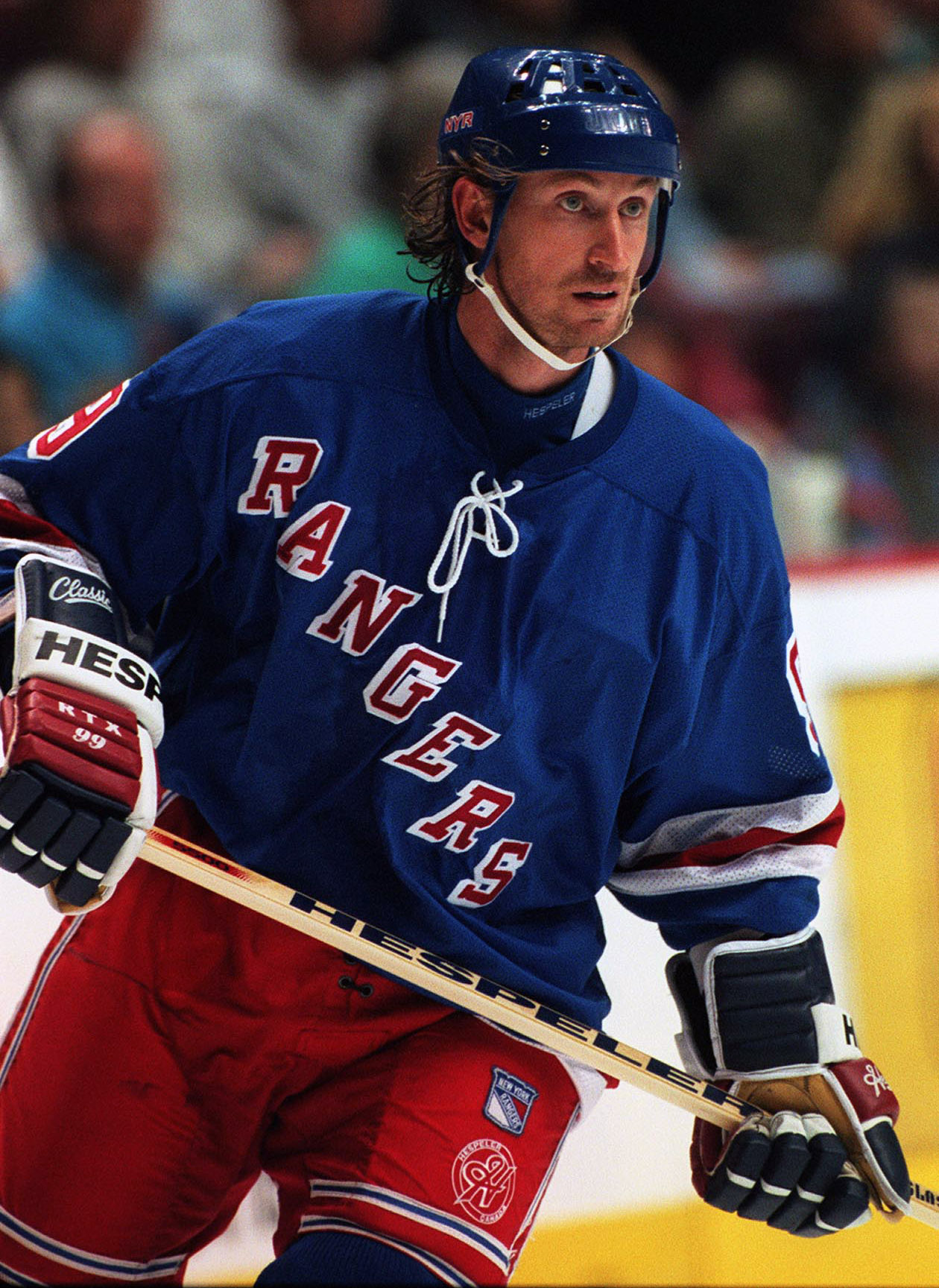
Image: Wayne Gretzky in 2019, Andre Forget / Andrew Scheer, cropped Wikimedia Commons version, CC0 1.0. Reused without further modification.
Conclusion
The best collecting decisions usually come from structure rather than urgency. When you combine clear comparisons, strong context, and a disciplined buying framework, you give yourself a better chance to build a collection with both enjoyment and staying power.