Answer-first summary
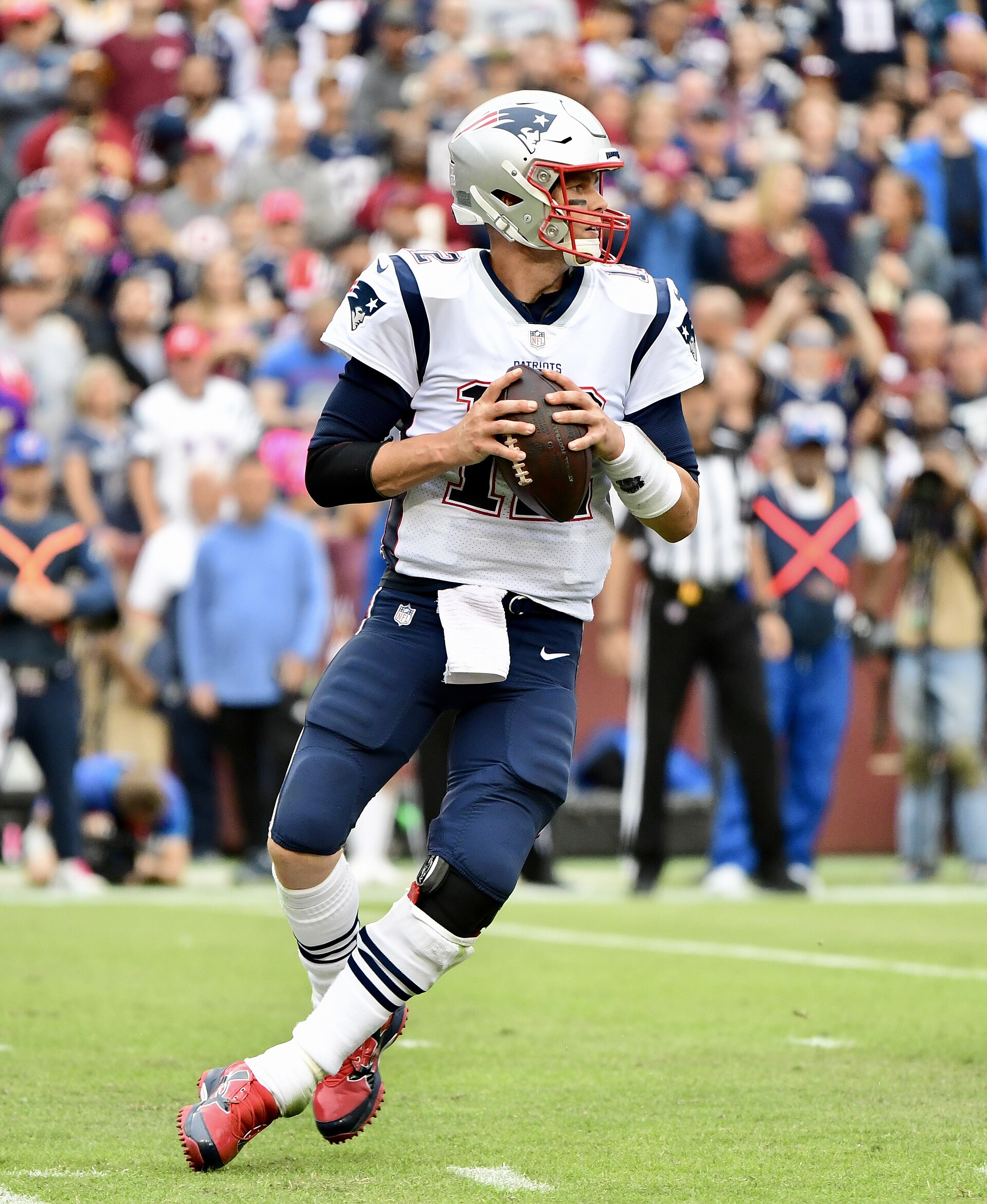
Tom Brady is generally the better fit for collectors who want an established career narrative, a recognizable 2000 rookie hierarchy, and less dependence on future performance. Patrick Mahomes is generally the better fit for collectors who enjoy following an active career, want many budget and product choices, and are comfortable distinguishing numerous modern parallels. Neither is universally better: compare the exact card, version, condition, grade, and recent sales rather than using one quarterback's reputation or price to value the other.
The short answer
Tom Brady is usually the better collecting fit for someone who wants a completed, widely understood career story and a rookie market built around identifiable 2000 issues. Patrick Mahomes is usually the better fit for someone who enjoys following an active career and wants a much wider modern selection of base cards, parallels, inserts, autographs, and graded options.
That is a difference in collecting experience, not a universal ranking. Brady's market can feel more settled, but the best-known rookies can be expensive and condition-sensitive. Mahomes offers many affordable entry points, but his modern product environment contains far more versions that can look similar while carrying very different scarcity and demand. A clearly identified, fairly priced Mahomes card can be a stronger purchase than a weak Brady card, and the reverse is equally true.
The comparison should begin with a purpose. Are you buying one recognizable rookie, building a season-by-season collection, learning modern parallels, choosing a graded benchmark, or representing a favorite quarterback? Once the role is defined, the exact card—not the player's headline reputation—decides which option works better.
Why collectors compare Brady and Mahomes
Both players attract people who want a quarterback-centered football-card collection. Their names are understood beyond specialist circles, and each supports collecting lanes from inexpensive career cards to premium rookies and autographs. That common recognition makes the comparison natural.
Their cards, however, come from very different production environments. Brady's recognized rookie cards date to 2000, with a checklist that PSA's Tom Brady Rookie Set page helps map. Mahomes entered a later modern market built around a broader product range, color and pattern parallels, serial numbering, short prints, autographs, and extensive grading activity. A comparison that ignores those structural differences quickly becomes misleading.
The useful question is therefore not “Which quarterback is greater?” It is “Which card market better matches the way I collect?” Brady can provide legacy clarity. Mahomes can provide product variety and a career still unfolding. Neither advantage makes every card bearing that name desirable.
What Tom Brady cards do better
Brady cards are strongest when the collector values a finished career narrative and an established rookie hierarchy. The basic collecting story does not require assumptions about what happens in a future season. A buyer can focus on the meaning of the existing career, identify a card's role within the 2000 rookie landscape, and compare it with other copies of the same issue.
Brady may be the better choice when you want:
- a completed career story rather than an active-career collecting experience
- recognized 2000 rookies with distinct set names and card numbers
- a quarterback collection centered on legacy and historical familiarity
- fewer modern parallel trees to learn in the core rookie market
- a card whose appeal can be explained without relying on the next performance milestone
The PSA rookie checklist demonstrates that “Brady rookie” is still a broad description, not one card. Bowman #236, Bowman Chrome #236, Score #316, Upper Deck #254, SP Authentic #118, Playoff Contenders, and other issues occupy different price, condition, and liquidity lanes. The advantage is not simplicity everywhere; it is that collectors have had years to develop recognizable reference points.
The risk is paying for the name while ignoring the copy. Surface problems, centering, corners, holder quality, and exact base-versus-parallel identity remain decisive. Premium Brady rookies can also have thin sales at a given grade. A settled legacy does not create a guaranteed resale price.
What Patrick Mahomes cards do better
Mahomes cards are strongest when the collector values participation, variety, and a current career story. A collector can follow seasons, uniforms, product releases, inserts, parallels, and milestones as the collection develops. There are also many lower-cost base cards and ordinary inserts that let someone build a meaningful player collection without beginning with a major rookie.
Mahomes may be the better choice when you want:
- an active-player collection that changes with new seasons
- many choices across low, middle, and premium budgets
- modern designs, color parallels, serial-numbered cards, and autographs
- the challenge of learning product and parallel structure
- a collection that can grow through new releases rather than only older inventory
Variety is both the benefit and the risk. Two cards with similar photographs or borders may be a base card and a much scarcer parallel. A seller may omit the exact version, confuse a retail-exclusive pattern with another issue, or place an ambitious price on a low-numbered card with almost no completed sales. The collector needs a reliable checklist, clear front-and-back photographs, and exact-version comparisons.
An active career also introduces attention risk. A new result, injury, release, or media cycle can change short-term interest. A collector should choose a card that remains satisfying without assuming that current attention will continue at the same intensity.
Production era is the biggest structural difference
Brady's 2000 rookie landscape and Mahomes's later rookie landscape should not be compared by raw card count or simple rarity labels. Manufacturers, distribution, product tiers, parallel conventions, serial numbering, grading behavior, and buyer expectations changed. A population figure or grade premium in one era cannot be transferred to the other.
For Brady, the research often begins by confirming which 2000 issue is being offered. Is it Bowman or Bowman Chrome? Base or Refractor? Which card number and grade? Does the certification record match the holder? The market recognizes several anchors, but their condition profiles and transaction depth differ.
For Mahomes, research often begins one level deeper: which set, subset, parallel name, color, pattern, serial number, and distribution channel? A generic description such as “silver” or “rookie parallel” may not identify the card precisely enough. Modern cards also expose different surface, print-line, edge, and centering concerns depending on the product.
This difference creates a practical choice. Brady rewards learning a finite historical map in depth. Mahomes rewards comfort with a wider and continually expanding modern vocabulary.
Rookie-card clarity: Brady has the older map, Mahomes has more routes
Brady's strongest collecting advantage is not that his rookie market is small. It is that the major lanes are established and widely discussed. An accessible Score, Pacific, or Upper Deck rookie serves a different buyer from Bowman Chrome, SP Authentic, or Playoff Contenders. A collector can select a rung based on budget, recognition, condition, and market depth.
Mahomes offers more ways to approach the idea of an early-career card. A collector can choose a widely recognized base rookie, a chrome-style issue, a graded entry card, a serial-numbered parallel, or an autograph. That variety makes the market accessible across budgets, yet it also makes it easier to buy a card whose importance is overstated by a listing.
For either player, “rookie” is the beginning of the research, not the conclusion. Confirm the exact set and number. Determine whether the card is a base issue, parallel, variation, insert, or autograph. Compare only the same version. If the seller cannot provide enough information to do that, the card is not ready for a confident purchase.
Liquidity and resale flexibility
Liquidity belongs to individual cards, not to the player's name. A recognized rookie with regular transactions in the same grade may be relatively easy to price. A scarce parallel with one public sale may be difficult to value even when the player has enormous demand.
Brady can offer strong liquidity in recognized rookie lanes and popular career issues, but high-end cards may trade infrequently. Mahomes can offer broad listing activity, but that activity is spread across many products and parallels. A card surrounded by hundreds of Mahomes listings is not necessarily easy to resell if few buyers search for that exact version.
Measure liquidity by counting meaningful completed sales over a relevant period. Match set, card number, base or parallel, grade, and autograph status. Note whether the same copy appears repeatedly, whether an accepted offer hides the real price, and whether shipping or buyer premiums change the delivered cost. One headline result is context, not a market.
If future flexibility matters, choose the card you can identify and benchmark most confidently. That may be Brady or Mahomes depending on the issue and budget.
Condition and grading trade-offs
Condition can reverse the player-level preference. A strong Mahomes copy at a defensible price may be better than a Brady card with weak centering and an aggressive grade premium. Likewise, a clean, verified Brady rookie may be better than a Mahomes parallel whose surface and exact identity remain unclear.
PSA's grading standards provide a general vocabulary for centering, corners, edges, and surface. The holder number still does not replace inspection. Two examples in the same grade can present differently, and product-specific flaws matter. Use PSA's certification verification for PSA holders, inspect both sides, and compare the actual copy with other cards in the grade. The safe graded-card buying guide adds seller, holder, and transaction checks.
Raw cards demand more work. Ask for high-resolution photographs, inspect common flaw areas, confirm return rights, and never pay as though an optimistic future grade were guaranteed. Graded cards improve communication and may reduce some uncertainty, but they do not make the asking price fair or the card liquid. The complete card-grading guide explains how to separate card quality from holder confidence.
Budget comparison
At lower budgets, Mahomes generally offers more current cards, ordinary inserts, and base issues from which to build a player collection. Brady also has affordable later-career cards, including options from both team eras, but a buyer should not force a questionable 2000 rookie into a small budget merely to own the rookie label.
At middle budgets, the comparison becomes card-specific. A collector might choose an accessible graded Brady rookie, a more prominent Mahomes rookie, or several meaningful career cards. The best option is the one with clear identity, good eye appeal, enough completed sales, and room in the budget for tax, shipping, and storage.
At premium budgets, both markets require stricter transaction planning. Autographs, scarce rookies, high grades, and low-numbered parallels may have fewer comparables and greater authentication consequences. Insurance, secure delivery, seller history, certification, and return terms should be planned before payment.
Do not compare what the same dollar amount buys by player name alone. Compare the role and evidence. One budget may buy a recognizable mid-grade Brady rookie or a visually impressive Mahomes parallel, but those objects solve different collecting goals.
Autographs and scarce cards
Brady autographs and scarce rookies can offer a concentrated legacy object. Mahomes autographs and low-numbered cards can combine a current player story with modern product appeal. In both cases, scarcity must be paired with exact identity and a real audience.
For autographs, distinguish manufacturer-certified issues from signatures authenticated after release. Read the holder label and card back carefully. Check whether the autograph itself receives a grade, whether the card receives a grade, and what the certification statement actually covers. A bold signature, clean placement, and attractive card may matter to buyers beyond a single number.
For serial-numbered parallels, confirm that the number belongs to the stated version. Do not infer demand from the denominator alone. A card numbered to a small quantity can remain thinly traded because few collectors prioritize that product. Scarcity limits supply; it does not automatically create liquidity.
Which player is better for beginners?
Brady is often easier for a beginner who wants one research project. Choose a documented base rookie or a meaningful later-career card, learn the exact issue, compare condition, and build a purchase range. The historical map is established, even though premium areas remain difficult.
Mahomes is often easier for a beginner who wants to start inexpensively and collect broadly. Ordinary base cards can teach set identification and condition without making every decision expensive. The difficulty arrives when the buyer moves into parallels: modern naming and visual similarities require careful checklist work.
The better beginner option is therefore the one that reduces the buyer's weakest risk. If budget is the main constraint, Mahomes career cards may provide more current variety. If product complexity is the concern, a clearly identified Brady issue may be easier. In either case, begin with a card that can be explained in one precise sentence.
The Tom Brady complete collector guide provides a structured starting point for Brady's market, while the safe Brady buying guide covers listing and seller checks.
Which player is better for long-term collectors?
Brady offers a completed legacy narrative, so the collector does not need to assume future career outcomes to explain the card. That can make the collection feel historically anchored. Mahomes offers a living collection: new seasons and products can add chapters, but current attention and future developments remain part of the experience.
Neither structure guarantees demand. Long-term satisfaction comes from selecting a card with a durable role. A Brady rookie can anchor the historical side of a football collection. A Mahomes card can represent a later production era. Owning one of each may produce a clearer collection than trying to declare a universal winner.
Review long-term cards periodically. Record exact identity, delivered cost, seller, certification, condition notes, images, and the reason for ownership. Rebuild comparable sales rather than carrying an old price forward. A good collecting decision can remain good because the card still fits its purpose, even when recent market prices move.
Decision table
| Collector priority | Better starting fit | Why |
|---|---|---|
| Completed career narrative | Tom Brady | The collection can be organized around an established legacy. |
| Active-career participation | Patrick Mahomes | New seasons and releases continue to add collecting routes. |
| Established rookie hierarchy | Tom Brady | Major 2000 issues have widely understood roles. |
| Broad modern product variety | Patrick Mahomes | More products, parallels, inserts, and budget entry points are available. |
| Avoiding parallel complexity | Tom Brady | A documented base issue can require fewer modern-variant distinctions. |
| Learning modern parallels | Patrick Mahomes | The market rewards detailed product and version research. |
| One historical quarterback anchor | Tom Brady | The completed career story offers a clear organizing purpose. |
| Building across new releases | Patrick Mahomes | The collection can expand with the active product cycle. |
Final verdict
Choose Tom Brady if you want an established legacy, a historically anchored quarterback collection, and a rookie market whose main reference points are already familiar. Choose Patrick Mahomes if you want to follow an active career, explore modern products, and select from a wider range of budgets and designs.
Do not choose either player in the abstract. Identify the exact card, confirm its version, inspect condition, verify the holder, and build a range from recent completed sales. Decide what role it will fill and what uncertainty you can accept. The winning purchase is not automatically the card of the more famous quarterback or the lower serial number. It is the card whose evidence, price, and purpose fit the collector most clearly.
Conclusion
The best collecting decisions usually come from structure rather than urgency. When you combine clear comparisons, strong context, and a disciplined buying framework, you give yourself a better chance to build a collection with both enjoyment and staying power.