Answer-first summary
Start with the team story: Gretzky for an early Edmonton centerpiece, Lemieux for a Pittsburgh rookie anchor. Compare their separate O-Pee-Chee and Topps editions within your condition and cost limits; if both players belong, define a pair instead of forcing a permanent winner.
Gretzky or Lemieux: choose the collection before the card
Choose Wayne Gretzky if your collection needs an early Edmonton-era centerpiece; choose Mario Lemieux if Pittsburgh is the story you want to tell. For a rookie-card comparison, start with Gretzky's separate 1979-80 O-Pee-Chee and Topps number 18 issues and Lemieux's separate 1985-86 O-Pee-Chee and Topps number 9 issues. The better purchase is the particular copy that fits your theme, condition preferences, and spending limit.
A debate about who played better hockey cannot settle this decision. You might prefer Gretzky's career while enjoying a Lemieux card's appearance more, or collect Pittsburgh without wanting the highest numerical grade. Naming the collection's purpose first prevents sporting reputation from becoming a substitute for evaluating the object offered for sale.
This article provides a comparison framework, not a live price guide. We verified issue references and condition guidance but did not assemble a dated sales sample or measure which player sells faster. Recommendations below are editorial judgments about collecting goals. There is no claim that either player's cards will appreciate or that any specific grade guarantees a straightforward resale.
Four rookie searches, not one player ranking
| Starting point | Exact issue to research | Why it belongs on the shortlist |
|---|---|---|
| Gretzky, O-Pee-Chee | 1979-80 number 18 | An original rookie route for an early career centerpiece |
| Gretzky, Topps | 1979-80 number 18 | A separate rookie edition deserving its own condition and sales comparisons |
| Lemieux, O-Pee-Chee | 1985-86 number 9 | A rookie anchor for a Pittsburgh or player collection |
| Lemieux, Topps | 1985-86 number 9 | Another original rookie route with a separate market identity |
PSA identifies Gretzky's O-Pee-Chee number 18 and his Topps number 18 separately. Its references also distinguish Lemieux's O-Pee-Chee number 9 from Lemieux's Topps number 9. The references use the starting year in their catalog titles; sellers may use the full hockey season.
Keep the manufacturer in every saved search. A listing that includes both manufacturer names may be written for search visibility, so inspect the actual card and label. Matching numbers within a player's two rookie editions do not make the cards interchangeable. Reprints and later tribute cards also need separate identification, even when their fronts resemble the original design.
Where Gretzky makes the stronger fit
Gretzky fits a collection organized around his early career or a display whose central subject is Edmonton. The rookie gives that project a defined starting point. You can research two named editions rather than buying loosely related cards and hoping they eventually form a coherent group. For wider planning, use the Gretzky collector guide.
The trade-off is that your preferred historical object may require condition compromises or a longer saving period. Do not respond by assuming that every Gretzky rookie is suitable at any price. A poorly photographed example with unresolved identity questions remains a weak candidate even when the player's significance is exactly what your collection needs.
Think about what the card will do after it arrives. If it will be displayed alone, image placement and visible wear may matter more to you than small differences in a label number. If it belongs in a manufacturer-specific rookie run, edition consistency may matter more than choosing whichever copy currently looks least expensive.
Gretzky is therefore a strong fit when the collecting brief specifically calls for him. That is different from claiming that all his cards outrank all Lemieux cards. Later career cards, signed items, and unusual versions create additional choices that need their own research; they should not inherit the rookie's rationale simply because they show the same player.
Where Lemieux makes the stronger fit
Lemieux offers a direct starting point for a Pittsburgh-focused rookie collection. His 1985-86 number 9 issues provide clear targets, so you can define the manufacturer and acceptable condition before comparing sellers. If the reason you collect is a connection to the Penguins, choosing him can fulfill the theme more directly than buying Gretzky to satisfy somebody else's hierarchy.
That does not establish Lemieux as universally cheaper or easier to buy. A high-grade example and a worn copy answer different questions, and seller terms can change the practical cost. Compare the editions and copies actually available to you. Calling one player the budget option without specifying the card conceals more than it explains.
Sidney Crosby is a useful contextual reference for a Pittsburgh collection spanning generations. He can help you decide the eventual shape of a display, but his sales are not price comparables for Lemieux. Keep each player's purchase case independent. A future addition should clarify your plan rather than silently expand the budget for the current decision.
Choose Lemieux if the player, team, or 1980s card design is the part you want to revisit. Choose a later Lemieux card if that is the object you enjoy and rookie status is unnecessary. The point is to make the collection personally coherent, not to reproduce a list of players ranked by someone else's enthusiasm.
Decide which imperfections you can live with
PSA notes blue-border chipping, print defects, rough cuts, and centering challenges for Gretzky's O-Pee-Chee rookie. Its Lemieux O-Pee-Chee reference highlights centering and slight rough cuts as potential obstacles to higher grades. These are useful inspection prompts, not a complete authentication method or a promise that a particular copy will receive a particular grade.
Request clear front and back photographs. Examine the image, borders, corners, edges, and any visible creases or marks. Ask for additional angles when glare hides the surface. Distinguish wear on the card from scratches on a holder; if the photos cannot resolve that difference, ask the seller rather than building your offer around an optimistic assumption.
Make a short condition preference list. For example: no crease across the player's face, readable back text, and centering that looks balanced in a display. Another collector might accept a crease but insist on a particular edition. These are personal selection rules, not grading standards, and stating them before shopping makes it easier to reject an unsuitable copy.
Use the PSA grading standards to understand the service's published condition vocabulary. Do not treat the same number from different services as a guarantee of identical appearance or market treatment. The card grading guide can help you decide how third-party assessment fits your own collection.
Separate identification, authenticity, and condition
These are three different checks. Identification asks which card and version you are viewing. Authenticity asks whether the object is genuine and whether alterations or added signatures need investigation. Condition asks what wear and production characteristics it has. A readable label can help with identification without settling every concern about the physical object.
For a graded card, look up the certification number using the grading service's verification tool. Compare the returned description and any available images with the seller's photographs. PSA warns that a valid number alone does not eliminate counterfeit risk. Examine the holder, seller history, and available transaction protections as part of the same decision.
For an ungraded card, avoid treating a familiar print detail or rough edge as conclusive proof. If you cannot evaluate a meaningful concern from the supplied evidence, seek appropriate specialist help or choose another listing. Paying less does not compensate for uncertainty you cannot reasonably resolve, particularly when originality is the main reason for the purchase.
Signed examples add another layer. A printed signature in a design is different from a handwritten autograph, and a signature added after issue needs its own evidence. Keep those cards out of an unsigned rookie comparison. First establish what is being sold; then decide whether both the card and any signature meet your collecting requirements.
Use the budget to compare attainable copies
Set a total delivered limit, including shipping, applicable taxes, and buyer premiums. Account for currency conversion and import costs where relevant. This lets you compare purchases on the same basis even when one seller advertises free delivery and another uses a low opening price with additional charges. Keep your preferred player separate from your maximum spend.
Here is a hypothetical exercise, not a card valuation. With a 500-unit limit, an example priced at 430 plus 45 in combined costs leaves 25. Another priced at 460 plus 55 costs 515 and exceeds the limit. Do not ignore the excess because the second copy carries a more appealing label or because the seller calls it a rare opportunity.
Next compare the compromises in the copies that genuinely fit. Would you rather accept more visible wear on the player you primarily collect, or own a cleaner-looking card of the other player? There is no universal answer. Write down which difference you will still care about once the excitement of the transaction has passed.
Do not rely on a future grade increase to make the arithmetic work. If you plan to submit an ungraded card, include service, postage, and insurance costs and allow for an uncertain result. Review the grading purchase checklist before committing. A collecting purchase should make sense without an assumed upgrade paying for it.
Compare resale evidence without inventing a winner
A well-known player can make an item recognizable, but recognition does not measure how quickly your copy will sell. Build a small record of genuinely comparable completed transactions before making claims about selling flexibility. Keep dates, venues, reported prices, and notes about included fees. Asking prices alone do not demonstrate what buyers have paid.
Separate Gretzky from Lemieux, O-Pee-Chee from Topps, and each grade and grading service from the others. Exclude reprints, signed variants, and unrelated lots. If a sale includes unusual defects or qualifications, record that instead of treating it as an ordinary comparison. An exceptional result deserves investigation rather than immediate use as your target price.
Thin evidence is a finding, not an invitation to improvise. If you find only one useful sale, say that the sample is limited. A graded population report counts cards recorded by that service, not every surviving example or every willing seller. Avoid translating a small population figure directly into a prediction of demand or a guaranteed premium.
We have not measured a liquidity advantage for either player here. If eventual resale matters to you, estimate net proceeds after selling fees, packing, and shipping, and consider the effort of presenting clear evidence to the next buyer. A card can fit your collection very well even when its selling prospects remain uncertain; the uncertainty should simply be part of the decision.
A paired collection can avoid a false either-or
If you enjoy both players, define a small pair rather than choosing a permanent winner. One approach is a rookie from each player using the same manufacturer. Another is two cards with similar visual appeal, regardless of numerical grade. Set a total budget for the pair so the first purchase does not consume the money intended for the second.
A same-season project offers another useful distinction. PSA's 1985 O-Pee-Chee image checklist includes Lemieux number 9 and Gretzky number 120. That is a coherent two-player set connection, but only the Lemieux is the rookie discussed here. Sharing a season does not mean sharing a career stage.
If you choose this route, label your collection records accurately. Record season, manufacturer, number, and whether the card is a rookie or later issue. A display can tell a good story without making every card a debut-year object. Clear descriptions also prevent confusion when you revisit purchases years later or explain the pair to another collector.
Three practical choices
The Edmonton-focused collector
Start with the two Gretzky rookie editions and choose the copy that meets your condition brief and complete budget. If neither works, wait or deliberately choose a later issue. Do not buy Lemieux merely because a listing appears more polished when your actual goal remains an Edmonton centerpiece.
The Pittsburgh-focused collector
Start with Lemieux's two number 9 editions. Decide whether manufacturer consistency, appearance, or a particular grade matters most. Keep a possible Crosby addition on a separate future list. This preserves the current decision as a specific purchase instead of allowing a broader team theme to justify every tempting listing.
The collector who likes both
Choose a defined pair with its own finish line: two original rookies, two same-season cards, or two later cards selected for their photographs. Each is a legitimate project, but they need different comparisons. Buy the first piece only after checking that the second part remains realistic within your total allowance.
Make the final decision about the actual listing
Write one sentence explaining why the chosen card belongs in your collection. Confirm its identity, acceptable defects, authentication evidence, complete price, and seller terms. Use the Gretzky buying guide to organize the Gretzky-specific purchase checks. Save photographs, receipts, and certification details alongside your own condition notes.
Before finalizing a paired purchase, decide how the two cards will be presented and stored. Check that their holders fit the intended display, and avoid forcing a card into a pocket or sleeve that is too tight. Keep the collection record separate from any removable sales label. These practical details do not make one player better, but they help ensure that a carefully chosen pair remains easy to identify and enjoyable to handle after the buying decision is over.
Choose Gretzky for a collecting story that calls for Gretzky; choose Lemieux for one that calls for Lemieux. If both fit, compare actual copies or define a pair. The successful purchase is the one you can explain through the object, its evidence, and your collecting purpose, without needing a sporting ranking or a future price rise to justify it.
Image credit
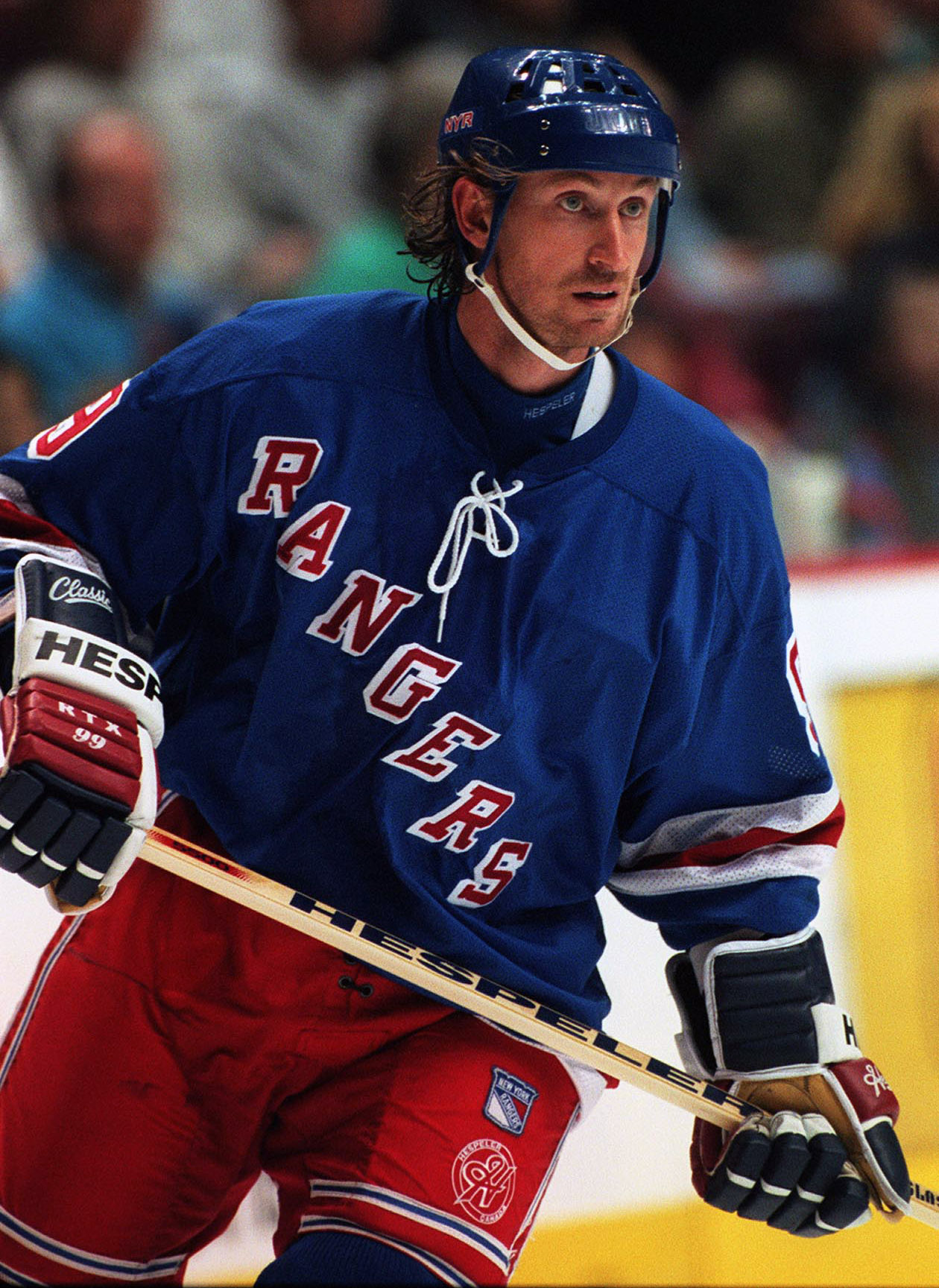
Featured photograph: Wayne Gretzky at the 2006 Turin Winter Olympics, by Kris Krüg, via Wikimedia Commons, under Creative Commons Attribution-ShareAlike 2.0. The downloaded photograph is used without additional image edits. It illustrates Gretzky, not either rookie card or a sales listing.
Conclusion
The best collecting decisions usually come from structure rather than urgency. When you combine clear comparisons, strong context, and a disciplined buying framework, you give yourself a better chance to build a collection with both enjoyment and staying power.