Answer-first summary
Gretzky is a player, while O-Pee-Chee is a card brand, so they are not competing card types. Choose a Gretzky collection for a self-defined selection across issues, an O-Pee-Chee set for checklist completion, or Gretzky within a fixed O-Pee-Chee period for a bounded overlap. Estimate the unfinished work before buying a starting lot.
A player and a brand are different collecting choices
Wayne Gretzky and O-Pee-Chee are not competing players or interchangeable card editions. Gretzky is the subject of a player collection; O-Pee-Chee is a card brand whose sets can include him. The useful decision is whether to follow one player across selected issues or complete a defined set featuring many subjects. A Gretzky O-Pee-Chee card can belong to both projects.
Choose a Gretzky collection if you want every purchase to connect to one player and prefer setting your own boundaries. Choose an O-Pee-Chee set if you enjoy a checklist, a shared design, and the process of finding missing numbers. If both appeal, start with a deliberately limited Gretzky run within O-Pee-Chee rather than attempting every card of the player and every release of the brand.
This article compares the work and satisfaction involved in those approaches. It does not rank their investment prospects or claim that one sells faster. We have not collected a current sample of completed transactions. The recommendations below concern project design, evidence, and manageable commitments, with the 1979-80 hockey issues providing a concrete historical example.
Compare the projects before comparing prices
| Decision | Gretzky player collection | One O-Pee-Chee set |
|---|---|---|
| Organizing principle | The same player across chosen products | A specified release and checklist |
| Definition of completion | You must write your own scope | The chosen checklist provides the boundary |
| Typical research task | Identify each different issue correctly | Verify numbers, missing cards, and consistent edition |
| Condition policy | Can vary by role in the display | Decide whether the set needs a consistent appearance |
| Main budget trap | Adding another category whenever something attractive appears | Underestimating the cost of the remaining gaps |
| A useful compromise | Gretzky cards from a defined O-Pee-Chee period | A clearly labeled partial set with a separate centerpiece |
Neither column requires the most expensive rookie or the highest available grade. These are ways to organize a collection, not spending tiers. A small, intentional player display and a modest partial set can each be complete enough for the person building them, provided the description is honest.
What the 1979-80 example actually shows
PSA's O-Pee-Chee set profile identifies a 396-card release and Gretzky's rookie at number 18. That relationship explains why the player and brand often appear together in searches. Owning his card is not the same as owning the set, and buying a group from the set does not mean the Gretzky card is included.
The separate Topps set profile describes a 264-card 1979-80 release that also includes a Gretzky rookie. A set builder needs the intended manufacturer's cards; a player collector may deliberately include both manufacturers. Similar-looking cards should not silently fill each other's checklist spaces.
Treat these counts as facts about those specific releases, not a rule for every O-Pee-Chee or Topps product. The example shows why year, brand, set, and card number belong in your records. It does not establish that a larger checklist is more valuable or that a smaller one is necessarily cheaper to finish.
Route one: make the Gretzky collection finite
A player collection offers freedom, but freedom needs a stopping rule. Write a brief such as “six playing-career cards with distinct designs” or “one identified card from each of three chosen seasons.” These are hypothetical project boundaries, not official checklists. The point is to make the next purchase answer a specific need rather than simply add another image of a familiar player.
Decide whether your scope includes only cards issued during the playing career, later tribute products, autographs, or several of those categories. If you include signed items, give them a separate authentication and spending plan. A new category should be a conscious revision to the project, not an automatic response to an appealing listing.
For every slot, write why it belongs: a design you like, a season you followed, a manufacturer comparison, or a photograph that completes a display. Two cards with similar roles are not inherently wrong, but they should compete for the same discretionary budget. This makes it easier to pass on a purchase without feeling that you have failed to collect the player properly.
The complete Gretzky collector guide provides wider context for choosing the scope. Here, the key distinction is that you define completion. Someone else's master checklist need not become your personal obligation.
Route two: choose one O-Pee-Chee checklist
“O-Pee-Chee collection” is too broad to function as a buying instruction. Specify the season, product, and checklist you intend to follow. Record whether additional versions are included or excluded. If you are collecting only a team or a selection of numbers, call it a team collection or partial set so your progress remains meaningful.
Build a working list with one row per target number. Use separate fields for owned, ordered, received, and inspected. A card in the mail should not trigger another purchase because you forgot an order, and a damaged arrival should not become an accepted copy merely because you already marked the slot complete.
Keep a notes field for edition doubts and replacement plans. If a card does not match the intended manufacturer, put it outside the completion count until resolved. A checklist filled with the wrong edition gives a satisfying percentage but an inaccurate description of the collection.
Before committing to a whole set, identify the cards that may dominate your own budget and investigate attainable copies. Do this even if the starting lot looks inexpensive. The decision to begin should account for the finish you want, including whether you are comfortable leaving a prominent gap for a while.
Condition policy: uniformity or individual character?
A player display can accommodate different conditions when each card has a different purpose. A set may look more coherent when the copies have a broadly similar appearance. These are aesthetic preferences rather than universal rules. State whether you care most about clear portraits, centering, unmarked backs, or an overall level of wear.
PSA's grading standards offer a reference for understanding condition terminology and the distinction between ordinary defects and problems such as alteration. Your personal acceptance policy still needs photographs. A grade label does not tell you whether a particular crease will bother you every time you open the album.
Set two thresholds: the condition you are happy to keep and the condition you accept temporarily. Track temporary copies separately. Without that distinction, a cheap starter set can quietly turn into a full replacement project, with the original purchases adding little to the final result.
For a player collection, apply the same discipline to a planned centerpiece. If you already know you will dislike a defect, waiting or changing the target may suit you better than buying now and assuming an upgrade will be easy. The card grading guide helps when deciding whether a professional condition assessment serves the project.
Budget for the remaining work
Compare project totals rather than card counts. A player project with only a few slots can still be demanding; a set with many inexpensive starting cards can still have costly unresolved gaps. The useful figure is your estimate of the remaining acceptable purchases, delivery costs, and any planned services, not the average price of the cards already acquired.
Consider a hypothetical partial-set example. A lot contains 200 cards but only 150 distinct numbers on your target checklist. Fifty duplicate copies do not fill fifty additional spaces. Against a 396-card checklist, those 150 unique numbers represent about 38 percent completion and leave 246 target numbers. This arithmetic says nothing about how the remaining cost is distributed.
Now suppose a separate ten-slot player project has eight slots filled. It is 80 percent complete by count, but the last two slots might require most of the remaining budget. Neither percentage is a price estimate. Track count completion and estimated spending separately, with unknown costs labeled unknown rather than entered as zero.
Include combined shipping when comparing a lot with individual purchases, but do not use delivery savings to justify cards that fail your condition policy. Set a total limit and a periodic spending allowance. If the likely finishing cost exceeds the limit, narrow the project openly instead of hoping the arithmetic will improve after the first purchase.
Buying a lot: count useful cards, not pieces
Ask for an itemized list or sufficiently clear images to establish the numbers included. A pile described as “near complete” needs a defined checklist and a missing-card list before you can evaluate it. Confirm whether pictured cards are the actual items, whether duplicates are present, and whether the most prominent card is included in the price.
Calculate the lot's value to your project using cards you need and would accept. A duplicate may be useful for a planned trade, but give it no assumed cash value without evidence that you can actually move it on suitable terms. Otherwise, imagined proceeds make an expensive lot look affordable.
For a player collection, inspect repeated designs and unidentified issues just as carefully. A large quantity of Gretzky cards may contain few additions to your chosen scope. For a set collection, inspect the weakest described condition rather than relying on an attractive card placed on top of the group.
Agree on what happens if the count, edition, or condition differs from the description. Retain the listing and verify the contents after delivery before marking the project updated. This is inventory work, but it protects both the budget and your confidence in the completion record.
Authentication belongs to the individual card
A checklist entry establishes what you are looking for; it does not authenticate an offered copy. For a graded card, compare the holder and card with the grading service's record. PSA's verification guidance notes that valid certification numbers can be copied, so a matching number alone is insufficient.
For either route, keep the seller's photographs and a record of the actual transaction. If a significant purchase depends on details that the images cannot show, seek better evidence before paying. Brand familiarity and a tidy album do not remove the need to inspect the specific object.
Use the Gretzky buying-safety guide for a more focused review of a candidate Gretzky card. If submitting cards is part of your collection plan, consult the grading-service buying guide before treating service costs as incidental. Neither a submission nor a new holder should be assumed to fix a questionable purchase.
Keep the collection easy to inspect
Record where each card is stored as well as whether you own it. A protected centerpiece kept separately from an album can still satisfy a checklist slot, but the record should explain its location. Keep a photograph or a written reference in your inventory rather than leaving yourself to remember which empty space is intentional.
Schedule an occasional inventory review before another buying session. Check outstanding orders, duplicate purchases, and temporary copies you planned to replace. For either route, a reliable record can prevent more frustration than adding another card. It also lets you pause the project and resume later without reconstructing every decision.
Selling later: describe what you actually own
A player collection and a set require different listing explanations. The first needs an accurate issue-by-issue inventory. The second needs the exact checklist, completeness, edition consistency, and condition description. “Gretzky collection” and “O-Pee-Chee set” are starting labels, not adequate substitutes for that information.
If you want to assess likely resale options, compare completed transactions for the same kind of offering. A single graded rookie, an ungraded player lot, and a partial set are different units of sale. Adding individual asking prices together does not establish what a buyer will pay for the group.
No general liquidity winner follows from this comparison. A specific card may have useful sales evidence while a custom collection has little; a set may appeal to a different buyer than its individual components. Record uncertainty instead of assigning a confident resale total simply because the names are recognizable.
Splitting a collection also creates work: photographs, descriptions, packing, fees, and potentially multiple shipments. Selling it intact may require accepting a different price for that convenience. Decide which process you could realistically manage before counting possible future proceeds toward today's budget.
A hybrid can keep both interests manageable
You can collect Gretzky within a defined O-Pee-Chee period, or build a partial set while holding a separately documented centerpiece. These are legitimate projects if the boundary is explicit. The overlap gives you a reason to research the brand without requiring every set, and a reason to follow the player without requiring every product.
Mario Lemieux and Sidney Crosby are useful questions about scope, rather than price references here. Would adding either player make the display more meaningful, or would it create a new collecting project? If the answer is a new project, give it its own checklist and budget. Their inclusion should not silently turn a Gretzky plan into an unlimited hockey collection.
Choose a project you will enjoy maintaining
Before the next purchase, complete five lines: subject or set, exact boundary, acceptable condition, maximum total spending, and the next missing item. Then explain how the candidate fills that item. If the explanation depends mostly on quantity, a seller's urgency, or an assumed resale profit, revisit the brief.
A Gretzky player collection suits someone who enjoys curating a personal narrative and revising a small selection thoughtfully. An O-Pee-Chee set suits someone who enjoys checklist progress and a shared season's design. The hybrid suits someone who wants overlap with firm limits. Start with the smallest version you would be proud to keep, and expand only when the added research and maintenance remain enjoyable.
Image credit
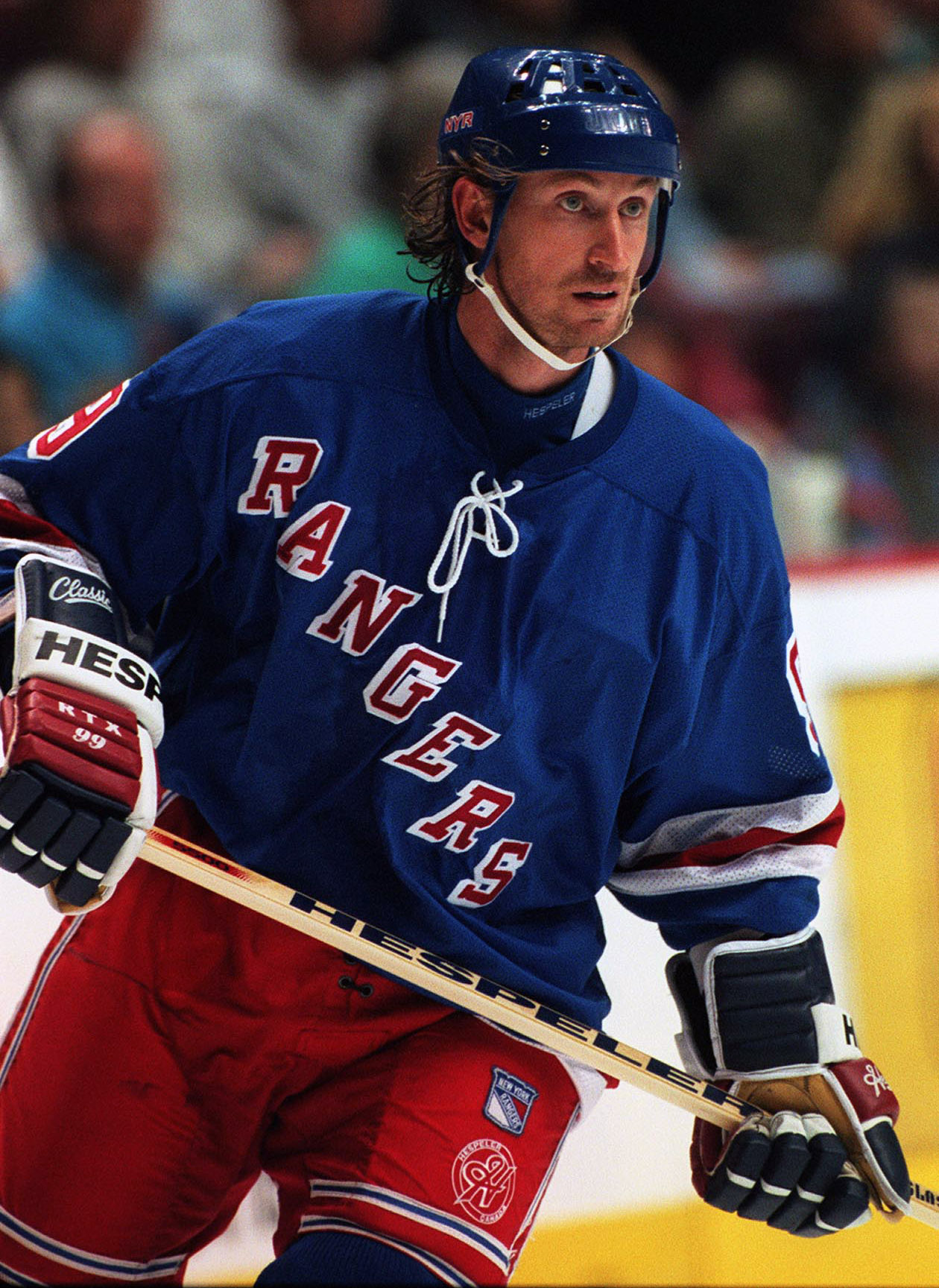
Featured photograph: Wayne Gretzky at the 2006 Turin Winter Olympics, by Kris Krüg, via Wikimedia Commons, under Creative Commons Attribution-ShareAlike 2.0. The Commons crop is used without additional image edits. This is a photograph of the player, not an example of an O-Pee-Chee card or a product endorsement.
Conclusion
The best collecting decisions usually come from structure rather than urgency. When you combine clear comparisons, strong context, and a disciplined buying framework, you give yourself a better chance to build a collection with both enjoyment and staying power.