Answer-first summary
Gretzky fits a vintage-rookie project; Crosby fits a modern rookie or Pittsburgh-focused collection. Compare Gretzky’s separate O-Pee-Chee and Topps number 18 issues with Crosby’s 2005-06 Upper Deck Young Guns number 201, then choose by acceptable defects, delivered cost, and the evidence for that exact copy.
Which player belongs in your collection?
Wayne Gretzky is the stronger fit if you want a vintage rookie centerpiece and enjoy comparing older cards with visible production differences and wear. Sidney Crosby is the stronger fit if your collection centers on Pittsburgh or the modern rookie-card era. Neither player wins every buying decision: an appealing, correctly identified copy of the card you actually want matters more than winning a debate about the two careers.
Start with three concrete reference points: Gretzky's 1979-80 O-Pee-Chee number 18, his separate Topps number 18, and Crosby's 2005-06 Upper Deck Young Guns number 201. These are useful anchors for the comparison, not a complete list of either player's collectible cards. A later career card can be the right choice when the rookie would consume an uncomfortable share of your budget.
This comparison offers a collecting framework, not a current price ranking. We have not assembled a dated sample of completed sales or measured which player sells faster. Any judgment about suitability below is editorial reasoning based on the collecting task; it is not evidence of future appreciation or a promise that a card will be easy to resell.
The main trade-offs at a glance
| Collecting priority | Gretzky route | Crosby route |
|---|---|---|
| An older rookie as a centerpiece | Compare the separate O-Pee-Chee and Topps number 18 issues | Choose Crosby only if the modern era better fits your theme |
| A Pittsburgh-focused collection | A cross-generation addition rather than the central team connection | A direct player focus for the collection |
| One clearly defined rookie search | Specify manufacturer, year, number, grader, and acceptable defects | Start with the exact Young Guns number 201 issue and exclude unrelated versions |
| Condition preferences | Decide how much wear and printing variation you enjoy living with | Decide how much a higher grade adds to your enjoyment |
| A modest spending limit | Consider an identified later career card | Consider an identified later career card |
| Future selling flexibility | Investigate sales of the exact issue and grade | Apply the same issue-specific sales test |
The table is a way to narrow a search. It does not establish that all Gretzky cards are vintage, all Crosby cards are affordable, or one player's market is uniformly more liquid. Those shortcuts erase the differences between individual products.
Gretzky: choose between two rookie editions
The PSA O-Pee-Chee reference identifies Gretzky's number 18 rookie and describes condition obstacles including blue-border chipping, print defects, and rough cuts. Topps also issued a Gretzky number 18 in 1979-80. The two manufacturers belong in separate searches and separate sales comparisons, even when a listing includes both names for visibility.
For an O-Pee-Chee-focused collector, the manufacturer is part of the desired object. A Topps copy cannot automatically substitute just because the player image feels familiar. Conversely, someone who specifically enjoys Topps should not assume that choosing it makes the collection incomplete. Write the manufacturer into your collecting brief before looking at grades.
The practical trade-off is how much condition compromise you can accept in the edition you prefer. An older card with obvious wear can still suit a display collection, but the wear should be visible and understood. A crease across the face may bother you more than soft corners; another collector may make the opposite choice. Compare photographs of actual candidates rather than imagining that every card at one numerical grade looks alike.
For broader context, the complete Gretzky collector guide can help you decide whether a rookie or another part of his card history belongs at the center of your collection.
Crosby: define the Young Guns target precisely
A practical starting point is the 2005-06 Upper Deck Young Guns number 201. PSA's certification record confirms the 2005 Upper Deck, Crosby, and number 201 identification; catalogs and labels may shorten the season to its opening year. Match the full product identity rather than treating a small difference in year formatting as decisive by itself.
This route suits someone who wants a recognizable rookie design tied to Crosby and is willing to research the exact version. The name Young Guns alone is not enough information for a transaction. Check the year, card number, front and back, and any version notation. A later card using familiar design language should not enter the same comparison merely because a seller describes it as a rookie tribute.
The principal decision is often what condition level you want to own. Ask whether the added cost of a higher numerical grade purchases a visibly more satisfying example, a label you specifically collect, or simply the feeling that the number ought to be higher. All three motivations can affect a purchase, but identifying them prevents a vague preference from becoming an unlimited budget.
A Crosby collection also need not begin with this rookie. If the card you want is beyond a comfortable limit, choosing a later issue with a photograph you enjoy is a coherent collecting decision. Record its actual year and product so the alternative is valued on its own terms.
Condition: compare the object, then the label
Grading creates a useful shared vocabulary, but it does not replace looking at the card. PSA's grading standards discuss factors such as corners, centering, surfaces, and defects. Use the applicable company's standards when reading a label; do not assume that equal numbers from different services describe interchangeable purchases.
For each candidate, request a clear front, back, all edges, and angled views where reflections hide the surface. Make two notes: what you can see, and what the photographs leave uncertain. A blurry image is missing evidence, not evidence of a clean surface. If the seller cannot resolve a defect that matters to you, the comparison remains incomplete.
Older manufacture can make the Gretzky inspection a different experience from inspecting a Crosby card, but a visual feature alone does not prove authenticity. Avoid turning one border detail or edge appearance into a home authentication rule. The Gretzky buying-safety guide provides a separate framework for that part of the transaction.
Before ranking two cards, cover the grade labels on the images and decide which you would rather display. Then reveal the labels and ask whether the price difference is justified by your own collecting goal. This exercise is especially useful when comparing a lower-grade rookie of one player with a cleaner later card of the other: the trade-off concerns both issue and condition.
Authentication and seller evidence
A graded holder is one layer of evidence. Look up the number with the grading service and compare the returned player, issue, grade, and available images with the actual listing. PSA's verification page warns that a valid certification number alone does not eliminate risk, because genuine numbers can be copied. A successful lookup is a check, not a complete verdict.
Keep the questions about the card and the seller separate. A genuine reference image does not establish that the seller possesses that exact card. Ask for current photographs when needed, review the transaction terms, and retain the listing and correspondence. These steps apply to both players; a famous name is no substitute for a traceable transaction.
Autographed cards require a further distinction. Establish whether the signature is manufacturer-certified or separately authenticated and what the documentation actually covers. Card condition and signature authentication answer different questions. For your first purchase, a straightforward unsigned issue can reduce the number of claims you need to evaluate, even if an autograph remains a later goal.
Budget: compare complete purchases
Choose a total spending ceiling before searching. Include the item, buyer premium where applicable, shipping, insurance, and any tax or import charges relevant to the actual transaction. Do not compare a domestic delivered price with an overseas hammer price as though both leave the same amount in your budget.
Here is a hypothetical example, not a market quote. Suppose your ceiling is 600 budget units. One candidate costs 500, has a 10 percent buyer premium, and requires 25 for delivery: that is 575 before any other applicable charges. Another is listed at 560 with 20 delivery: 580 before other charges. The first listing's lower headline price creates only a five-unit difference in this simplified comparison.
Use the exercise with actual Gretzky and Crosby candidates. If neither meets your condition standards inside the ceiling, change the issue, wait, or leave the money unspent. Buying a card you already dislike because it represents the preferred player is an avoidable compromise.
If grading an ungraded card is part of the plan, calculate the service and shipping costs separately and assume no grade improvement in the purchase decision. The card grading guide helps distinguish what grading does from what a buyer hopes it will do. The purchase should remain understandable if the result is less flattering than expected.
Resale flexibility: ask for comparable evidence
Both names offer clear subjects for a listing, but name recognition does not tell you how quickly your particular copy will sell. Investigate completed transactions matching the manufacturer, year, number, version, grading service, and grade. Photograph quality, individual appearance, venue, and sale date can still explain differences within that group.
Build a small worksheet with the sale date, link, visible card details, sale format, reported amount, and known fees. Keep asking prices in a separate section. If a best-offer listing hides the accepted amount, mark it unknown rather than treating the displayed original price as a confirmed sale. Flag repeated certification numbers so a single copy does not look like several independent buyers.
Then ask what the evidence actually supports. Several matching transactions may help establish a usable reference range. One unusual sale may only demonstrate that one buyer and seller agreed once. An empty search means you have less evidence; it does not establish exceptional rarity or an automatic premium.
To compare Gretzky with Crosby fairly, apply the same observation window and inclusion rules to both shortlists. If one has many useful comparisons and the other has few, that is a reason to acknowledge uncertainty in your decision. It is not a measured claim about the entire player market. Allow for selling costs and time before treating a potential resale amount as money available for another purchase.
Scarcity and the appeal of a grade
Separate three ideas: the number originally produced, the number graded by a particular service, and the number currently offered for sale. They answer different questions. A population report should be read with its scope and date, not relabeled as the total surviving supply of a card.
Likewise, a limited version can be harder to compare than a more familiar issue. If you cannot find matching sales, a small printed number does not tell you what to pay. Decide whether you want the specific variation for your collection before allowing its scarcity language to influence your budget.
This matters for either player. A grade-focused collector may reasonably want a certain label for a set, while a display-focused collector may prefer a less expensive example with appealing centering. Neither approach establishes a universal winner between Gretzky and Crosby. The relevant question is which requirement you would regret relaxing.
Three collector situations
You want one historical centerpiece
Start with the Gretzky rookie editions if the older card era is the reason you are collecting. Compare attainable copies of both manufacturers and identify the defects you can accept. Choose Crosby instead if the modern rookie era is what you actually want to represent; buying the older object only to satisfy someone else's hierarchy is unlikely to resolve that preference.
You collect Pittsburgh and player connections
Crosby is the more direct choice for that brief. Mario Lemieux, included here as a contextual reference, gives you another way to think about a collection spanning Pittsburgh generations. His cards are a separate research project and should not serve as price comparables for Crosby. Gretzky can broaden the display, but should have an explicit role before taking its central budget.
You are learning with a limited budget
Choose a clearly identified card with adequate images and understandable transaction terms. Either player's later career issues can serve that purpose if a rookie is unsuitable for your limit. The educational benefit comes from checking identity, condition, and comparable evidence, not from making the first purchase as expensive as possible. Keep the record so the next decision becomes easier.
Make the final choice repeatable
Write down your preferred player, exact issue, acceptable condition, total ceiling, and the evidence still missing. Give each candidate a simple result: meets the brief, needs clarification, or fails the brief. Do not average away a failed authenticity check with a strong emotional preference or an attractive price.
Before paying, use the grading-service buying checklist if submission or a grading purchase is involved. Save the card images, seller details, receipt, and any certification lookup with your collection record. That documentation is useful whether you keep the card indefinitely or eventually offer it to another collector.
Choose Gretzky when a specific vintage rookie and its individual character fulfill the brief. Choose Crosby when his rookie era or Pittsburgh connection provides the stronger reason to own the card. Choose neither listing when the available evidence or total cost fails your requirements. The useful winner is the purchase you can explain without relying on a future price increase.
Image credit
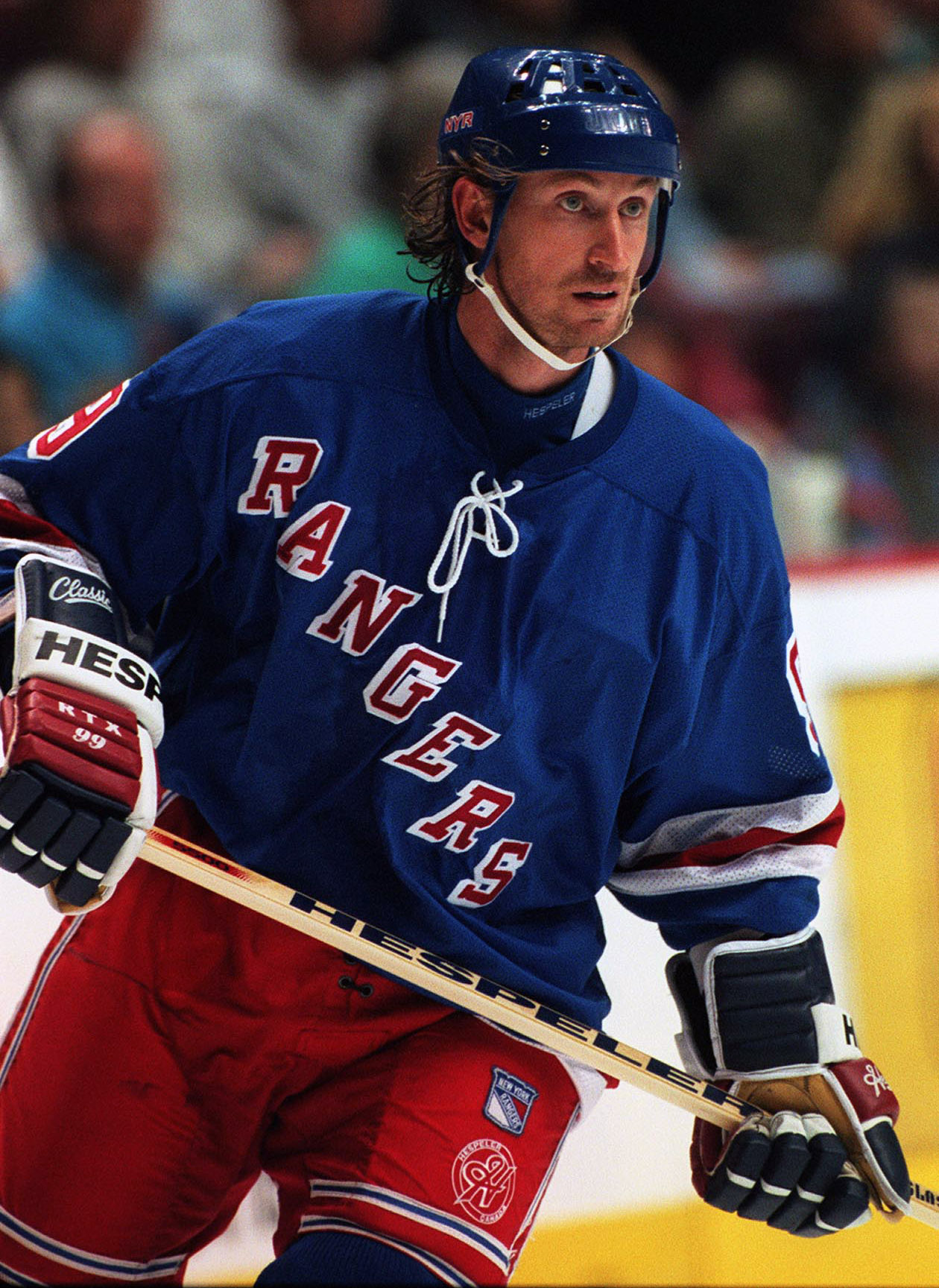
Featured photograph: Wayne Gretzky at the 2006 Turin Winter Olympics, by Kris Krüg, via Wikimedia Commons, under Creative Commons Attribution-ShareAlike 2.0. We use the Commons crop without additional image edits. The photograph illustrates the player, not a card offered for sale.
Conclusion
The best collecting decisions usually come from structure rather than urgency. When you combine clear comparisons, strong context, and a disciplined buying framework, you give yourself a better chance to build a collection with both enjoyment and staying power.