Answer-first summary
You can collect Gretzky and Upper Deck together. Choose a vintage rookie for an early career centerpiece, a later Upper Deck Gretzky card for its particular design or release, or a defined hockey set for the enjoyment of completion.
What does “Wayne Gretzky vs Upper Deck” actually compare?
Wayne Gretzky is the player; Upper Deck is a card manufacturer. You can collect both at once by buying an Upper Deck Gretzky card. The useful choice is between a vintage Gretzky rookie, a later Upper Deck card of Gretzky, and a broader Upper Deck hockey collection. Those projects serve different interests and should have different shopping lists.
Choose a vintage rookie when owning an early career issue is the main attraction. Choose a later Upper Deck Gretzky card when the photograph, design, or particular release matters more than rookie status. Choose a manufacturer-focused collection when completing a defined set and exploring several players is the activity you enjoy. None of these goals requires treating the other two as inferior.
This guide compares those collecting routes, not current investment returns. We checked issue identities and reference material, but did not compile a dated transaction sample or measure resale speed. Budget examples below are hypothetical. Any assessment of which route suits a reader is an editorial judgment about collecting preferences, not a forecast of price performance.
The comparison in one table
| Your priority | Vintage Gretzky rookie | Later Upper Deck Gretzky | Upper Deck set project |
|---|---|---|---|
| Early career history | Direct fit | A later chapter in the collection | Depends on the players and release |
| One player throughout | Direct fit | Direct fit | Requires a player-focused subset |
| A specific visual style | Choose between identified vintage issues | Choose a named release and design | Enjoy consistency across a set |
| A firm spending limit | Assess individual copies first | Research an ordinary base card first | Price the complete checklist, not just starter cards |
| Signed or special versions | Separate the original card from any later signature | Verify the exact version and signature evidence | Define whether special versions belong in the project |
| Selling flexibility | Investigate matching completed sales | Investigate matching completed sales | Consider whether buyers want singles or the completed set |
A brand name does not establish a price tier. An ordinary base card and a premium signed issue can carry the same manufacturer name while creating very different buying decisions. Likewise, “Gretzky card” is too broad to identify a rookie or a particular collectible.
Establish the timeline before comparing listings
Gretzky's 1979-80 O-Pee-Chee number 18 and Topps number 18 are the vintage rookie reference points here. PSA catalogs the O-Pee-Chee issue and separately identifies the 1979 Topps number 18. Keep their manufacturer names in your searches; a matching player and card number do not make them the same issue.
Upper Deck identifies 1990-91 as its first NHL set in its anniversary account of a Gretzky card mosaic. That places the release well after Gretzky's rookie issues. A Gretzky card from Upper Deck's first hockey set is not therefore Gretzky's rookie card. “First Upper Deck” and “rookie” describe different milestones.
When a listing says “rookie,” ask whose rookie and which original release it means. A tribute design, anniversary issue, or reprint needs its own identification. The picture can recall an older card without making the object an original from that year. Read the reverse and checklist details before allowing a familiar front image to determine your offer.
Route one: a vintage Gretzky rookie centerpiece
This route suits collectors who want a single object representing Gretzky's early NHL career. Decide whether the O-Pee-Chee or Topps issue belongs in your collection, then compare actual copies. Buying whichever listing uses the strongest language is a poor substitute for choosing an edition and understanding its condition.
PSA's O-Pee-Chee reference highlights blue-border chipping, print defects, rough cuts, and centering as condition considerations. Use that information to request useful photographs, rather than to diagnose authenticity from one visual feature. An irregular edge alone cannot settle whether a card is genuine, altered, or accurately described.
Write down the defects you can accept before browsing. One collector may prefer a centered image despite rounded corners; another may favor cleaner corners despite uneven borders. A numerical grade helps organize the search, but the physical copy still needs to meet your preferences. Two cards with the same grade can produce different display experiences.
Choose this route if the original issue is the reason you want to collect. Reconsider it if you would spend beyond your comfortable limit simply to own something called a rookie. A later card that you enjoy looking at can be a more satisfying purchase than a historical centerpiece whose compromises bother you every time you see it.
Route two: an Upper Deck Gretzky card
This route suits a player collection built around photographs, designs, or selected moments from later releases. Begin with one named issue. “Upper Deck Gretzky” is a search category, not a complete specification. Record the season, product, card number, language or edition where relevant, and whether the object is an ordinary base card or a special version.
A base card is a regular checklist entry. An insert belongs to a separate subset, while a parallel is a variation of a card within a product. Those labels need confirmation from the appropriate product information. Do not assume that every shiny card is scarce or that every card showing a signature contains a handwritten autograph.
If you want a signed example, distinguish a printed signature in the design from an actual signature. For a manufacturer-certified autograph, inspect the relevant wording on the card and verify the exact product. For a signature added later, investigate the authentication evidence separately. Neither the player name nor a familiar brand logo resolves that question by itself.
For a card carrying a serial number, copy the complete numbering into your notes and compare like with like. A small stated edition does not tell you how many collectors want that particular version. It also does not describe every related parallel. Decide whether the variation adds something you personally value before paying for its scarcity narrative.
Route three: collect an Upper Deck hockey set
A set project shifts attention from one star to a defined group of cards. It can suit someone who enjoys sorting, completing pages, comparing photography, and learning about several players. Start by choosing the exact release and deciding what “complete” means. A base set, a master set, and a player selection are different commitments.
Make a checklist before purchasing starter lots. Note any separate series, updates, language editions, or special subsets that your chosen product includes. Include only the categories you intend to collect. An open-ended aim to own every possible variation can turn a manageable project into a spending plan with no clear finish.
Compare the delivered cost of a complete set with the cost of the missing singles in a partial one. Cheap starter cards do not establish the cost of finishing. Repeated postage, duplicate purchases, and storage supplies belong in the calculation. A nearly complete lot can be attractive only after you identify exactly what remains absent.
Mario Lemieux and Sidney Crosby are useful reference points when thinking about a collection spanning different player generations. They are not substitute price evidence for Gretzky. Choose a release appropriate to the players you want to include, and check its actual checklist rather than assuming every star appears in every set.
Compare condition without letting the holder decide everything
Use the PSA grading standards to understand the service's condition vocabulary. Centering, corners, edges, and surfaces all deserve attention. A seller's “mint” description is not equivalent to an independent grade, and a grade is not a promise about the price you could later receive.
Ask for clear front and back images, with additional angles if reflections hide the surface. With a vintage card, inspect wear and printing characteristics. With a glossy or special-finish card, look for scratches or other surface problems that a straight-on photograph may conceal. These are inspection priorities, not a claim that every card in an era has the same defects.
For a graded card, compare the physical holder and label with the certification record. PSA cautions that a valid certification number does not eliminate the risk of a counterfeit holder or card. Use available images, seller history, and transaction protections alongside the lookup. Investigate discrepancies before paying.
The card grading guide provides more context for deciding what grading contributes to a collection. For this comparison, the central question is simpler: does the specific copy satisfy your condition requirements at its complete cost? Paying for a higher label number is optional when the visual improvement adds little to your enjoyment.
Build a budget that includes the whole transaction
Set a maximum delivered cost before you contact sellers. Include the item price, shipping, applicable taxes, and any buyer premium. If currency conversion or import charges apply to your purchase, account for those as well. Two equally priced listings can produce materially different totals at checkout.
Consider a hypothetical 300-unit spending limit. A card listed at 240 with 20 shipping and 30 in other charges costs 290, leaving 10 for any further needs. Another card listed at 260 with 45 in combined charges costs 305 and exceeds the limit. The arithmetic is illustrative and does not value any Gretzky or Upper Deck issue.
Do not build a purchase around an assumed grading upgrade. If you buy an ungraded card, make the decision work at the condition you can reasonably support now. Submission, shipping, and insurance add costs, while the outcome remains uncertain. For an inexpensive collecting copy, those costs may contribute little to your actual purpose.
For a set project, reserve money for the difficult missing cards before expanding the checklist. For a player project, decide whether buying several ordinary cards advances your theme more than saving for one centerpiece. Neither answer is automatic. The right comparison uses the collection you want to finish, not the number of objects a budget can temporarily buy.
What can you reasonably say about resale?
Recognition can help someone understand an item, but it does not establish liquidity. Liquidity means how readily an item can find a buyer at an acceptable price. Assess that through relevant completed sales and the current selling context, rather than through the fame of Gretzky or the familiarity of Upper Deck.
Build separate comparison groups for each manufacturer, year, card number, version, grading service, and grade. Keep signed cards apart from unsigned cards. Record the sale date and whether reported totals include fees. Exclude unrelated lots or reproductions before looking for a pattern. A result for a different version can be interesting without being a useful valuation reference.
A practical worksheet needs only a few columns: exact identity, condition, sale date, venue, reported total, and a note about comparability. If evidence is thin, state that openly. Do not turn one exceptional result into a normal asking price, and do not treat an unsold listing as proof that somebody will pay that amount.
We do not rank these three routes by measured resale speed. A vintage rookie, an ordinary later single, and a completed set serve different buyers. Before purchasing with eventual resale in mind, consider the work of documenting, listing, packing, and shipping your particular item. An attractive headline sale can still translate into a less appealing net result after costs.
Three decisions a collector can make today
You want your first Gretzky card
Choose a specific issue with readable images and a delivered cost you are comfortable paying for enjoyment. A later Upper Deck base card is a sensible research starting point if rookie status is unimportant. Compare actual available copies before calling anything affordable. Use the Gretzky buying checklist to organize the transaction questions.
You want one historical centerpiece
Research the O-Pee-Chee and Topps rookie editions separately. Decide which defects you can accept and whether a graded example helps you assess the purchase. Wait if the available copies fail your brief. Switching to an unrelated premium modern card only because it is available may leave the original collecting goal unresolved.
You enjoy building and organizing
Choose an exact Upper Deck set or a bounded Gretzky selection. Write a finish line such as one base card from each of several named releases. Avoid adding inserts and parallels simply because a seller offers them together. A collection becomes coherent through the rules you choose, not through the breadth of the manufacturer's catalog.
A repeatable final checklist
Before paying, write one sentence explaining the role of the card or set in your collection. Then confirm its identity, condition evidence, total cost, seller terms, and storage needs. Mark unresolved questions explicitly. A strong emotional connection can justify your preference, but it should not be used to fill gaps in a listing's factual description.
Keep front and back photographs, the receipt, any certification details, and your own notes together. If you plan to submit a card, review the grading purchase checklist before committing extra money. For a wider view of the player collection, consult the Gretzky collector guide.
The useful answer to “Gretzky or Upper Deck?” is a collecting brief: an original rookie, a particular later Gretzky card, or a clearly defined hockey set. Choose the route whose objects and activities you enjoy, then judge the actual purchase on its evidence. You can combine the routes later without pretending they were mutually exclusive choices.
Image credit
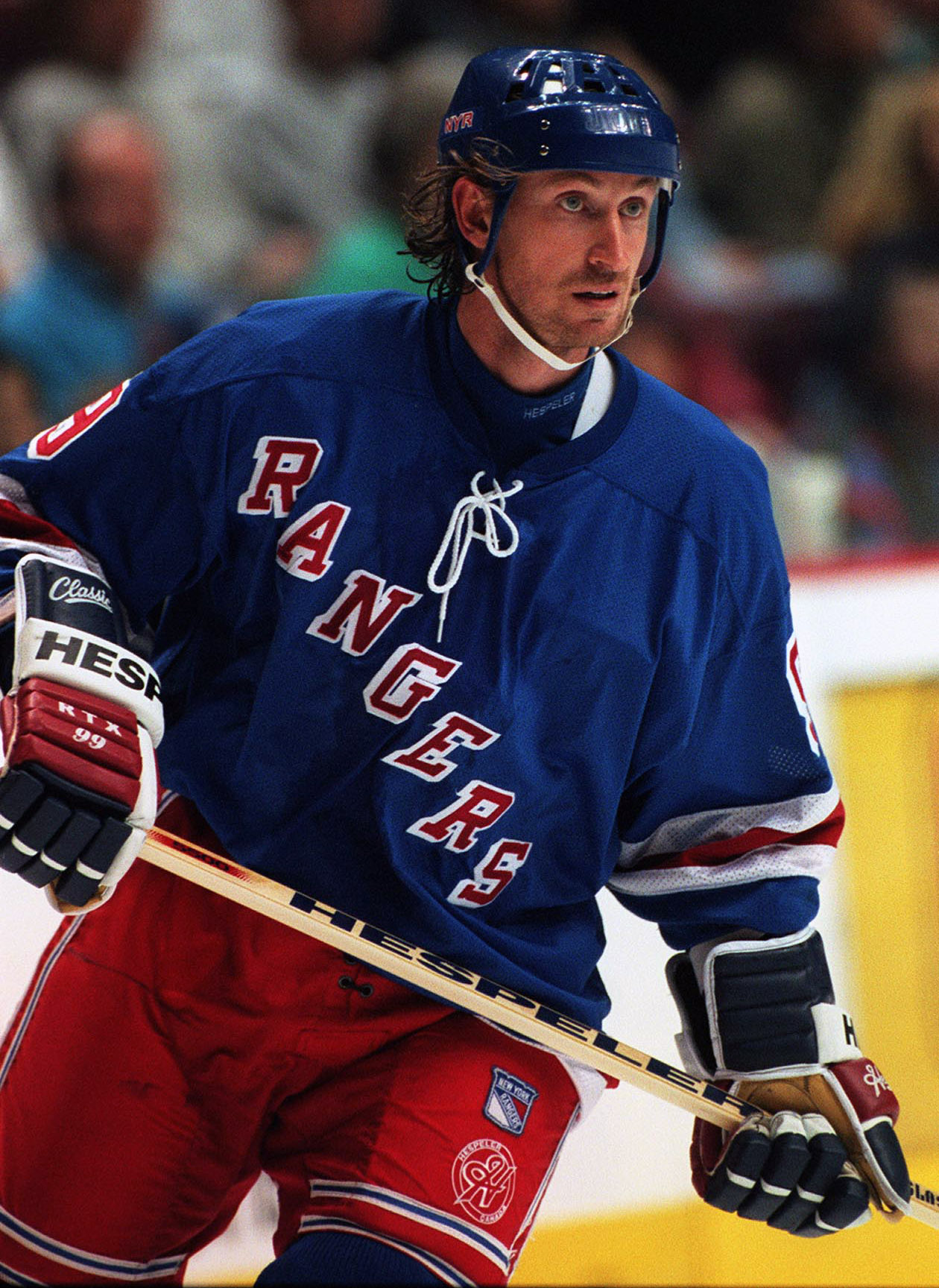
Featured photograph: Wayne Gretzky at the 2006 Turin Winter Olympics, by Kris Krüg, via Wikimedia Commons, under Creative Commons Attribution-ShareAlike 2.0. The Commons crop is reused without additional image edits. This portrait illustrates the player; it does not depict a card offered for sale.
Conclusion
The best collecting decisions usually come from structure rather than urgency. When you combine clear comparisons, strong context, and a disciplined buying framework, you give yourself a better chance to build a collection with both enjoyment and staying power.