Answer-first summary
Buy only when the listing, actual-card photos, seller answers, and transaction terms agree. Check a graded holder as well as its number, document the order, and pause whenever a material discrepancy remains unexplained.
Buy the card only when the evidence fits
To buy Charizard safely, require agreement between the listing, photographs, seller's answers, and payment record. Identify the exact release, examine the actual copy, and settle delivery and return arrangements before paying. If an important detail remains unexplained, pause the transaction even when the price looks attractive. A familiar character and a professional-looking listing do not establish authenticity.
This guide treats safety as a sequence of decisions. You need to know what is being offered, whether the evidence belongs to that item, and what you can do if the delivered card differs. No photograph checklist removes every risk. The aim is to avoid preventable mistakes and recognize when an experienced in-person opinion is worth seeking.
Start with a short purchase note: the intended card, maximum total spend, acceptable defects, and reasons you would walk away. Keep it beside the listing while you review. Writing those limits before negotiating makes it easier to resist a countdown, an enthusiastic sales pitch, or the feeling that another buyer will take your only chance.
Turn “Charizard” into an exact item description
Ask for the set, collector number, language, printing, and whether the item is ungraded or professionally graded. Copy these details into your purchase note. The seller's title may abbreviate or confuse them, so use photographs of the full front and back to check the description. Similar artwork alone is not enough to identify a release.
For a Base Set Charizard, clarify the claimed printing before comparing prices. Terms such as first edition, shadowless, and unlimited should refer to visible, verifiable features of the appropriate release. Do not apply English printing terminology automatically to other languages. If you cannot explain which version you are buying, postpone the purchase and consult the Charizard collector guide.
With modern cards, record the number even when the set and character seem obvious. Different illustrations, finishes, or product origins can change the comparison. Ask whether a pictured card is the exact copy you will receive or an example from multiple available copies. For a collectible single, a generic image leaves condition unresolved.
Request a useful photograph set
Request clear front and back photographs, close views of each corner, and angled views of the surface. An evenly lit image helps you read print details; an angled image can reveal marks that disappear head-on. Ask for the whole card within the frame, with edges visible and without filters or a decorative background covering important areas.
For a raw card, ask whether the sleeve is hiding scratches, cloudiness, or edge wear. A seller can photograph the card carefully outside its sleeve if comfortable doing so. Do not insist on unnecessary handling that could damage it. If the seller cannot supply enough detail safely, treat the missing information as unresolved rather than assuming the surface is clean.
A fresh photograph beside a handwritten date or agreed word can help connect the item to the conversation. It is not proof of ownership or authenticity, and images can be manipulated. Its purpose is narrower: to make an otherwise generic listing more specific. Keep the seller's replies and pictures together so that changed explanations are easy to notice.
Separate authenticity checks from condition checks
An authentic card can be damaged, and a convincing-looking card can be counterfeit. Examine these questions separately. Compare the layout, lettering, symbols, and finish with reliable references for that exact release and language. Do not use a different Charizard illustration as your standard. Photographic lighting can alter color, so a color difference alone should trigger questions rather than a confident verdict.
Pokémon Support suggests consulting a specialist card shop about suspected counterfeits. For an expensive purchase you cannot assess confidently, arrange a knowledgeable inspection before committing. Avoid tearing, bending, scraping, or other destructive experiments. A damaged card is a poor outcome even if the experiment tells you something about its construction.
Use several consistent observations instead of one internet shortcut. A mismatch in printing, an unexplained finish, and a refusal to provide better images deserve more attention than a single unusual reflection. Ask the seller to explain the discrepancy plainly. If the explanation depends on a supposed rare error without supporting evidence, do not pay an error premium to resolve the uncertainty.
Inspect wear in a fixed order
Check the front surface, back surface, corners, and edges in the same order each time. Look for creases, indentations, scratches, whitening, stains, and signs of alteration. Write down visible problems rather than relying on a seller's broad label such as “excellent.” A condition label is useful only when you understand what the seller includes within it.
Decide which flaws matter for your intended use. A binder collector may accept back-edge wear but dislike a crease through the artwork. A display collector may prioritize clean presentation from the front. These preferences can justify choosing a worn authentic copy, provided the defects are disclosed and the price comparison uses similarly worn examples.
Do not buy a raw card on the assumption that it will receive a particular grade. Photographs may miss small dents or surface problems, and grading adds cost and uncertainty. If you would regret the purchase without the hoped-for grading result, reconsider the deal. Buy the condition you can assess, with enough margin for details that remain unseen.
Verify a graded card beyond its number
Enter the certification number directly on the grading company's official site. For PSA, use certificate verification. Match the returned identity and grade to the label and card shown. PSA cautions that genuine certification numbers can be copied; a successful lookup alone does not authenticate the seller's physical item.
Request photographs of the complete holder, its label, edges, and back. Compare available certification images with distinctive visible details on the offered copy. Consult the company's holder security information for the relevant holder design. Treat unexplained damage, inconsistent details, or a mismatch as reasons to seek clarification or stop.
A grade also does not tell you whether you like that particular copy. Look at centering, the placement of visible wear, and overall presentation. Compare prices within the same grading company and grade before broadening the search. Different companies' labels are not automatically interchangeable, and a premium holder should never substitute for an intelligible transaction record.
Evaluate the seller's answers and history
Read feedback for comparable card transactions, paying attention to descriptions, packaging, and how problems were handled. An account with many unrelated low-value purchases offers different evidence from a seller with clear experience handling collectible singles. Neither history nor a polished storefront guarantees a good outcome, but both can help you decide which questions need answering.
Send a concise message: “Is this the exact card pictured? Are there creases, dents, alterations, or other defects not visible? How will it be packed, and what is the return process if it differs from the description?” Keep the response on the selling platform where possible. A direct answer is more useful than repeated assurances that the seller is trustworthy.
Be cautious when the seller changes the item, payment destination, or terms after you agree. Pressure to finish before you can inspect a certification record is a reason to slow down. You do not need to accuse anyone of fraud to decline. “I cannot verify the details needed for this purchase” is a sufficient explanation.
Compare the total cost using matched examples
Use completed sales of the same release, language, printing, and comparable condition. Separate graded and raw examples. A current asking price shows what someone wants, not necessarily what another collector has paid. A sale with unclear photographs or an undisclosed accepted offer may be a weak comparison even when the title appears to match.
Build a small comparison sheet with sale date, version, condition evidence, grading company if relevant, and total known cost. Exclude examples you cannot identify. If only one usable sale remains, acknowledge that the comparison is thin. Uncertainty is a reason to reduce confidence in a price estimate, not to fill gaps with unrelated Charizard sales.
Add shipping, applicable taxes or import charges, payment fees where relevant, and any planned inspection or grading cost to your limit. Check those amounts for your own transaction. For example, if your collection budget is 300 units of currency and delivery plus other known costs are 30, the card itself must fit within 270. This is budget arithmetic, not a market valuation.
Keep payment and delivery terms connected
Before paying, read the current rules for the exact platform, payment method, item category, and delivery destination. Check eligibility requirements, reporting deadlines, and what evidence a claim requires. Do not assume every payment carrying a familiar brand name has identical purchase protection. Keep the transaction within the documented process you have actually reviewed.
Ask for an invoice or order record that identifies the card and agreed condition. If graded, include the certification number. Save the original listing, photographs, seller responses, and payment confirmation. These records cannot guarantee a refund, but they let you describe a discrepancy precisely rather than relying on memory after a listing disappears.
Agree on packaging suitable for the card: a protective sleeve and rigid support for a raw copy, or padding around a graded holder, inside an appropriate outer package. Clarify tracking and any signature or insurance arrangements before dispatch. For cross-border purchases, ask who handles delivery problems and returns; unfamiliar procedures can make even an honest mistake harder to resolve.
Inspect promptly when the parcel arrives
Photograph visible parcel damage before opening and retain the packaging until you have checked the contents. Compare the received card with the saved photographs, including distinctive wear and the certification number where relevant. Inspect in good light without removing a graded card from its holder or altering the item. Record differences while the evidence is fresh.
If something is wrong, contact the seller through the recorded channel and follow the platform's current reporting process within its deadline. State the specific mismatch: a different number, an undisclosed crease, or a holder unlike the one pictured. Avoid cleaning, repairing, or reselling the card while the issue is unresolved. Those actions can complicate the factual record.
An opening video may supplement your records, but do not assume it guarantees a successful claim. Follow the actual evidence requirements. If a return is authorized, use the instructed procedure and keep dispatch records. Once the purchase is settled, store the card protectively and retain its receipt, identification notes, and any certification details with your collection inventory.
Use alternative characters to test your priorities
Pikachu and Blastoise offer useful reference points when deciding why you want this purchase. If your goal is a nostalgic starter display, compare how Blastoise would fit the same theme. If you enjoy a broader character collection, consider whether a Pikachu card would provide similar enjoyment. These are collecting choices, not substitutes for Charizard price comparisons.
Base Set Charizard suits a buyer specifically seeking that early artwork and willing to research the printing. A different release may suit someone who mainly wants an appealing Charizard illustration. Neither route requires accepting unclear evidence. If the available copy does not meet your checks, change the budget, condition target, or release deliberately rather than quietly lowering your authenticity standard.
A final purchase checkpoint
Proceed only when you can answer five questions: What exact card is this? What condition is supported by the evidence? Why do I trust this particular transaction? What is the complete cost? What happens if the delivered item differs? Keep unanswered questions visible. A discounted listing is still unsuitable if the uncertainty concerns the identity of what you are buying.
Our method emphasizes practical collector decisions and widely useful checks rather than specialist printing exceptions. The linked Pokémon and PSA guidance supports the authenticity discussion; the purchase workflow is editorial guidance, not an appraisal of a particular card or seller. No live price estimate or resale prediction is used. Recheck service terms at the moment you buy.
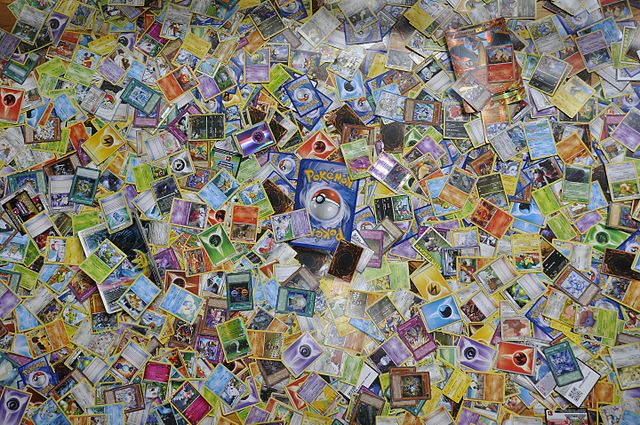
Featured photograph: Jarek Tuszyński, Pokémon collection, Creative Commons Attribution-ShareAlike 4.0, unchanged. It illustrates general card collecting, not the specific Charizard offered in any listing.
Conclusion
The best collecting decisions usually come from structure rather than urgency. When you combine clear comparisons, strong context, and a disciplined buying framework, you give yourself a better chance to build a collection with both enjoyment and staying power.