Answer-first summary
To evaluate Michael Jordan cards more confidently, separate the player name from the exact card, then test the card against condition, grading context, completed sales, buyer depth, seller quality, and its purpose inside the collection.
Start with a card-level question
Michael Jordan is easy to recognize and hard to evaluate lazily. The name is powerful, but a confident collector does not start by asking whether Jordan matters. Jordan clearly matters. The better first question is: what exactly is this card, and why should the broader collector market care about it?
That means identifying the year, set, card number, variation, image, format, and role in the checklist. A 1986-87 Fleer rookie, a 1986 Fleer sticker, a 1990s insert, a later Upper Deck autograph, and a common base card can all carry the Jordan name while behaving very differently in the market.
The Michael Jordan complete collector guide gives the wider category context. This page narrows the task to evaluation: how to look at one Jordan card and decide whether the evidence supports interest, patience, or a pass.
Separate player demand from card demand
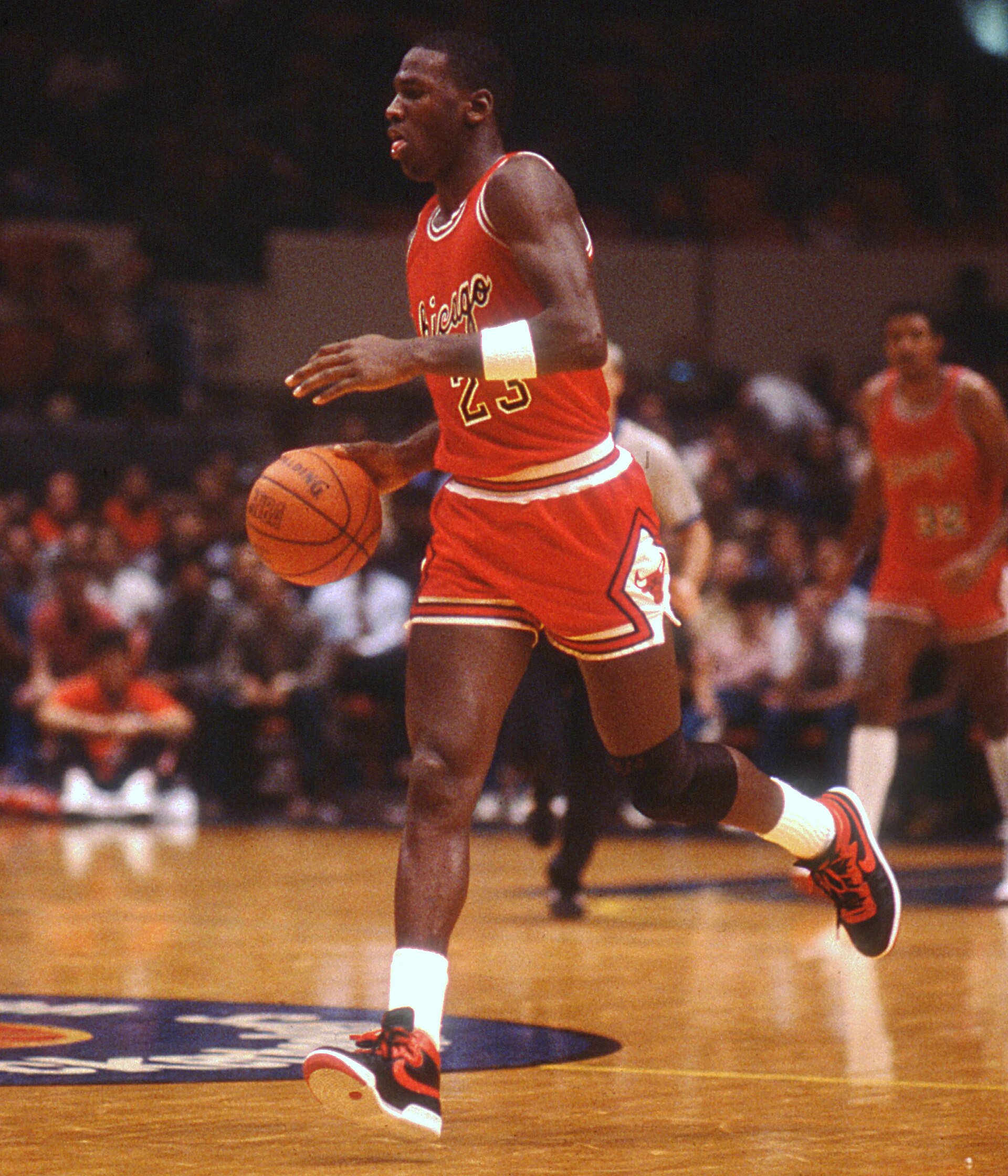
Jordan's player demand is broad because his NBA career, Bulls legacy, cultural presence, and hobby history are unusually strong. NBA.com's player profile is a useful reminder of the basketball record behind the market. But player demand and card demand are not the same thing.
Card demand depends on the exact issue. Is the card widely recognized? Does it belong to a landmark set? Is the image memorable? Is the supply understandable? Do enough collectors search for this exact card, or is demand mostly created by sellers describing it as rare?
Confident evaluation keeps those questions separate. Jordan's name may bring a buyer to the listing. The card's identity, condition, and market evidence decide whether the listing deserves serious attention.
Use the 1986-87 Fleer rookie as a benchmark
The 1986-87 Fleer Michael Jordan rookie is the benchmark because it combines player importance, set recognition, iconic status, and deep market language. PSA's CardFacts profile for 1986 Fleer Basketball helps collectors understand why that release anchors so much Jordan discussion.
You do not need to own the Fleer rookie to evaluate Jordan confidently. You do need to understand what it teaches. Strong cards usually have a clear identity, enough comparable sales, visible buyer depth, and condition details that the market already knows how to price.
When evaluating another Jordan card, ask how it compares to that benchmark without forcing equality. Is it more affordable because it is less central, or because the market is thinner? Is it rare in a way collectors value, or merely uncommon? Does it give you a different collecting role, or is it trying to imitate the rookie's importance without the same evidence?
Evaluate the Fleer sticker on its own terms
The 1986 Fleer sticker is close enough to the rookie conversation to matter, but different enough to need its own standard. PSA's CardFacts profile for the sticker set gives collectors a starting point for that distinction.
A confident evaluation looks at the sticker's role. It may be an early Jordan companion piece, a more reachable entry into the foundational Fleer era, or a condition-focused challenge. It should not be treated as a simple substitute for the base rookie, and it should not be dismissed just because it is not the main card.
Condition and eye appeal are especially important. Stickers can show centering issues, surface concerns, and presentation differences that affect buyer response. The better question is not whether the sticker is "good" in the abstract. It is whether the exact copy makes sense for its grade, price, and purpose.
Read condition before you read price
Condition is one of the biggest confidence builders in Jordan collecting. Before looking too hard at price, study centering, corners, edges, surface, print quality, color, registration, and overall eye appeal. On important cards, small differences can change buyer interest meaningfully.
PSA grading standards provide a helpful vocabulary, but the label is not the whole evaluation. Two cards in the same grade can look different. One may be better centered and cleaner. Another may have a distracting print mark, weak color, or a front that feels less balanced.
The card grading complete collector guide is useful background because Jordan cards often show why grading context matters. A slab can reduce uncertainty, but confident collectors still inspect the card inside it.
Make comparable sales do real work
Comparable sales should answer a specific question: what have buyers actually paid for cards close to this one? That means the same issue when possible, a similar grade, similar eye appeal, and a recent enough market window to be useful.
Weak comps create false confidence. A PSA 7 should not be priced mainly from a PSA 9. A sharp centered copy should not be judged against a poor-looking copy in the same holder grade. A rare Jordan insert should not be valued from a different rare insert just because both cards have the same player.
When comps are thin, say so. Thin evidence does not make a card bad, but it changes the decision. The buyer may need more patience, a stronger reason to own the card, or a wider gap between asking price and comfort price.
Check liquidity and buyer depth
Liquidity is not everything, but it is a practical part of evaluation. A card with broad buyer depth is easier to compare, insure, trade, upgrade from, or sell later. A thinly traded card may still be desirable, but it should be evaluated with more caution.
Jordan's market is deep at the name level. At the card level, liquidity varies. Recognizable issues in popular grades often have more consistent demand. Obscure releases, unusual formats, raw condition risks, and specialized inserts may require more knowledgeable buyers.
Ask how easily another informed collector would understand the card. If the answer is "immediately," the card may have stronger flexibility. If the answer requires a long explanation, the card may still belong in a specialized collection, but the price should reflect that narrower audience.
Test the seller's evidence
Evaluation is not only about the card. It is also about the evidence the seller provides. Clear photos, accurate titles, certification details, front and back images, return clarity, and realistic descriptions all reduce uncertainty.
For graded cards, verify the certification number when possible. Make sure the holder, label, grade, and card description match the listing. If the cert page includes an image, compare it with the seller's photos. If the seller avoids questions or relies on urgency, confidence should fall.
The guide to buying Michael Jordan safely covers this buying process in more detail. For evaluation, the rule is simple: the stronger the evidence, the less the collector has to guess.
Treat raw and graded cards differently
Raw and graded Jordan cards can both be collectible, but they require different confidence standards. A graded card gives the buyer a shared authentication and condition language. A raw card leaves more work with the buyer: authenticity, alteration risk, condition accuracy, and the possibility that photos hide important flaws.
That does not mean raw Jordan cards are always wrong. A raw lower-cost card, a personal favorite, or a card bought from a trusted source can make sense. The problem is paying a raw-card price that assumes an optimistic future grade. If the seller prices a raw card like it is already a strong graded copy, the buyer is taking the risk while the seller captures the upside.
For raw cards, inspect corners, edges, surface, gloss, color, centering, paper texture, and any sign of trimming, recoloring, creasing, indentation, or residue. Ask whether the photos are good enough to support the price. If not, the correct evaluation is not "maybe it is fine." It is "the evidence is incomplete."
For graded cards, the question changes. The card has already passed through a grading process, but the collector still has to decide whether that specific copy is strong for the grade and fairly priced against comparable examples.
Compare Jordan with Kobe and LeBron carefully
Kobe Bryant and LeBron James can be useful comparison points because each has major basketball-card demand. The comparison should focus on market structure, not player ranking. Jordan is often the mature benchmark. Kobe carries emotional legacy and 1990s nostalgia. LeBron brings modern-era supply, parallels, autographs, and active-era attention.
These differences matter because a Jordan card should not be valued only by analogy. A LeBron parallel may have one kind of supply profile. A Kobe insert may have a different nostalgia base. A Jordan card may have older condition sensitivity and deeper legacy demand. Use comparisons to sharpen questions, not to force a price.
Match the card to a collector purpose
A confident evaluation ends with purpose. Is the card supposed to anchor the collection, fill a budget slot, add visual appeal, represent a specific era, deepen a Bulls focus, or serve as a liquid trade piece? The same card can be a good fit for one collector and a weak fit for another.
Purpose protects against emotional overreach. A card that does not fit the collection needs a stronger reason to overcome that mismatch. A card that fits perfectly can justify more patience, but it still needs condition and price discipline.
Write the purpose in one sentence before buying. If you cannot explain the role, the card may be interesting but premature.
A confident Jordan evaluation checklist
Use a repeatable checklist. Identify the exact card. Separate player demand from card demand. Inspect condition before accepting the grade. Verify certification and seller quality. Compare relevant completed sales. Judge liquidity honestly. Decide whether the card has a clear collection role.
That process does not remove uncertainty. It does something better: it makes the uncertainty visible. Once you can see where the evidence is strong and where it is thin, Michael Jordan cards become much easier to evaluate with patience and confidence.
Conclusion
The best collecting decisions usually come from structure rather than urgency. When you combine clear comparisons, strong context, and a disciplined buying framework, you give yourself a better chance to build a collection with both enjoyment and staying power.