Answer-first summary
Sports card storage works best when collectors match sleeves, top loaders, semi-rigid holders, magnetic cases, boxes, binders, and safes to the card's value, condition sensitivity, grading plan, and collection role.
The short answer
Sports card storage is a condition-management system. The goal is not to buy the most expensive holder for every card. The goal is to reduce avoidable damage, keep cards easy to identify, and match each storage choice to the card's value, condition sensitivity, and role in the collection.
Most collectors need a few basic layers: penny sleeves for surface protection, top loaders or semi-rigid holders for raw cards that deserve structure, boxes for organized storage, binder pages only when they are high quality and not overfilled, and stronger storage for graded slabs or higher-value cards. Premium holders and safes can help, but only when they solve a real problem.
Storage also affects future decisions. A card that might be graded needs cleaner handling than a common duplicate. A card bought for display needs protection from light, dust, pressure, and accidental knocks. A card held for resale needs organization so the owner can find it, photograph it, and describe it accurately later.
Why storage matters
Condition is one of the first things collectors notice. Corners, edges, surface marks, dents, scratches, and warping can change how a card is viewed. Even when a card is not expensive, poor storage can make the collection harder to enjoy because the owner loses track of what is clean, damaged, duplicated, or worth upgrading.
Storage matters most because damage is often preventable. Loose stacks create edge wear. Tight binder pages can bend corners. Cheap sleeves can trap dust or fit poorly. Humidity can encourage curling or surface issues. Sunlight can fade cards and weaken the look of a display. Frequent handling creates fingerprints, soft corners, and small accidents.
The point is not fear. Cards are meant to be collected and enjoyed. The point is to create a routine that makes enjoyment safer.
Start by sorting cards by role
Before buying supplies, sort the collection by role. A collector usually has several groups: common cards, favorite low-cost cards, better raw cards, cards that may be graded, already graded slabs, display pieces, and higher-value cards that need stronger protection.
Common cards do not need premium treatment. They need clean, dry, organized storage. Favorite lower-cost cards may deserve sleeves and top loaders because they are handled more often. Better raw cards usually need a sleeve plus a top loader or semi-rigid holder. Cards being prepared for grading often need semi-rigid holders because they are easier to submit and remove carefully.
Graded cards need slab boxes, storage rows, or safe storage that prevents slabs from rubbing against each other. Display pieces need protection from light, dust, and pressure. Higher-value cards need a plan for security, access, insurance documentation, and environmental consistency.
Sleeves, top loaders, and semi-rigid holders
Penny sleeves are the first layer for many raw cards. They protect surfaces from direct contact, but they do not provide structure. A sleeve alone will not prevent bending, corner impact, or pressure damage. It works best as the soft inner layer before a top loader, semi-rigid holder, or properly sized binder page.
Top loaders are useful for everyday protection. They are rigid enough for storage boxes and easy enough for collectors to use regularly. The fit matters. A card should not be forced into a tight sleeve or shoved into a holder with debris inside. Clean hands, a clear surface, and a gentle angle help prevent corner damage.
Semi-rigid holders are common for grading preparation and for cards that need a little flexibility without being loose. They can be easier for grading services to handle, but they still require care. If a card is inserted aggressively, the holder can damage the card it was meant to protect.
Magnetic holders and display cases
Magnetic holders look cleaner and more premium than top loaders, which makes them popular for display cards. They can be a good choice for selected raw cards, autographs, patch cards, and cards with personal display value. The risk is sizing. A card that is too thin or too thick for the holder can move, pinch, or sit unevenly.
Collectors should use the correct point size and inspect the holder for dust before inserting the card. A magnetic holder is not automatically better than a top loader. It is better when the fit is right, the card benefits from display, and the holder is stored where it will not be dropped or exposed to sunlight.
For display, light control matters. A card may look great on a shelf, but direct sunlight and constant exposure can reduce visual quality over time. Display should be intentional rather than permanent by accident.
Boxes, binders, and shelves
Boxes are the backbone of many collections because they keep cards organized and reduce handling. The best box is not just the biggest one. It is the one that keeps cards upright, separated, and easy to find. Overfilled boxes create pressure. Half-empty boxes can allow cards to slide. Dividers and labels are simple but valuable.
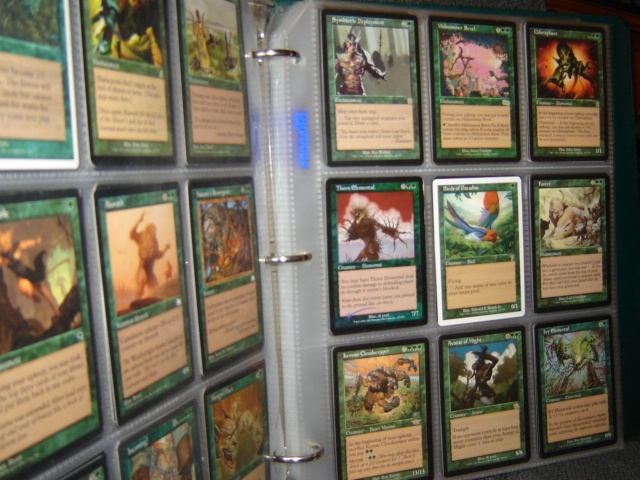
Binders are useful when browsing matters, especially for sets, player runs, lower-value favorites, and cards that are meant to be enjoyed visually. The quality of the pages matters. Pages should fit the cards comfortably, avoid rough edges, and not require bending the card during insertion. Binders should not be packed so tightly that pages press hard against each other.
Shelves and cabinets should be stable, dry, and away from direct sunlight. A neat shelf in a damp room is still a poor storage location. Card storage should consider the room, not only the holder.
Humidity, heat, and light
Environmental control is easy to underestimate. Cards are paper products with surfaces that can react to moisture, heat, and pressure. A room that feels acceptable for short visits may still be bad for long-term storage if humidity swings sharply or boxes sit near windows, exterior walls, garages, or attics.
Collectors do not always need specialized equipment, but they should avoid obvious risks. Store cards in a clean, dry place with stable temperature. Keep them away from direct sunlight, water sources, and heavy objects. If the collection includes higher-value cards, a basic humidity monitor can be useful because it turns guesswork into observation.
Storage and grading
Storage choices affect grading potential because grading is partly a condition judgment. A card that looks clean today can pick up surface scratches, corner wear, or pressure marks if it is handled casually for months. If a card might be submitted, it deserves a cleaner workflow: sleeve carefully, use an appropriate semi-rigid holder, keep it separated from bulk inventory, and avoid repeated removal.
The card grading complete collector guide explains how condition language works. Storage is the practical side of that language. It does not guarantee a grade, but it helps avoid preventable damage before the card is reviewed.
Collectors should be realistic. Storage cannot fix an existing print line, dent, bad centering, or touched corner. It can only preserve the card's current state as well as possible.
Security and documentation
For higher-value collections, storage also includes security and documentation. A card safe, locked cabinet, or off-site storage may make sense if the collection has concentrated value. The goal is not to make access difficult for no reason. The goal is to reduce theft risk, accidental damage, and confusion.
Documentation matters because cards can be hard to identify quickly after time passes. Keep a simple inventory with card name, year, set, parallel, grade if any, certification number, purchase date, purchase price, and storage location. Photos help for insurance, resale, and personal tracking.
The guide on how to buy card grading safely also applies to storage decisions because certification, photos, and records help collectors avoid confusion.
Common storage mistakes
The first mistake is treating all cards the same. Bulk commons, favorite display cards, grading candidates, and higher-value slabs should not share one storage plan.
The second mistake is overfilling. Boxes, binders, and shelves should protect cards, not compress them.
The third mistake is upgrading the holder before understanding the card. A premium holder does not make a weak card stronger. Spend more on storage when the card's value, condition, or role justifies it.
The fourth mistake is ignoring access. A collection that is too hard to browse may become disorganized because the owner stops maintaining it.
A simple starter setup
A practical starter setup can be modest. Keep bulk commons in labeled card boxes. Put favorite low-cost cards in sleeves and top loaders. Keep possible grading candidates in sleeves and semi-rigid holders, separated from the rest of the collection. Store graded slabs in a slab box or stable row where the holders do not rub. Use a binder only for cards you want to browse regularly, and avoid filling it so tightly that pages press against each other.
Add a basic inventory before the collection becomes difficult to remember. A simple spreadsheet with card name, year, set, condition notes, holder type, and storage location is enough. The best storage system is the one a collector will actually maintain.
Review that setup every few months. Collections change quickly, and a box that worked for a beginner can become crowded once better cards, graded slabs, or player projects start to accumulate.
Bottom line
Sports card storage should be practical, clean, and matched to the collection. Use sleeves and top loaders for everyday raw protection, semi-rigid holders for grading candidates, boxes and labels for organization, binders for cards meant to be browsed, and stronger storage for higher-value cards.
Good storage will not turn every card into a premium asset. It will protect condition, reduce handling mistakes, and make the collection easier to understand. That is enough to make it one of the most important habits a collector can build.
Conclusion
The best collecting decisions usually come from structure rather than urgency. When you combine clear comparisons, strong context, and a disciplined buying framework, you give yourself a better chance to build a collection with both enjoyment and staying power.