Answer-first summary
Read a Gretzky card in layers: year and manufacturer, exact issue and number, physical condition, authentication evidence, and fit with your collecting theme. Keep the 1979 O-Pee-Chee #18 and Topps #18 separate in your records. Learning those distinctions is a useful starting point even if you collect ordinary later cards rather than rookies.
Start by learning to read the card
Understanding Wayne Gretzky as a collector means being able to explain what a particular item is, which part of his career it represents, and what evidence supports its description. Begin with the card's year, manufacturer, set, and number. Then separate its physical condition from its authenticity and its asking price. Those are three different questions, even when a seller presents them as one impressive story.
You do not need a rookie card to build a coherent Gretzky collection. A small group organized around a team, design, or career chapter can be satisfying. The useful first milestone is recognizing exactly what you own and why you chose it. This guide explains the vocabulary that makes that possible, without turning career achievements into a purchasing formula.
Give the collection a subject
Choose a sentence that describes your interest: “I want cards showing Gretzky with the Rangers,” “I enjoy older hockey designs,” or “I want to learn the two main rookie issues.” A defined subject makes it easier to decide whether a listing belongs. It also stops a collection from becoming a succession of unrelated bargains.
Separate the date of the object from the date of its subject. A recently issued card can show an early career photograph. That does not make it a playing-era card. Likewise, an image of an Oilers uniform does not establish when the card was produced. Read the issue information and reverse before assigning a place in your timeline.
For wider context, use the complete Wayne Gretzky collector guide. Your own collecting theme can stay narrower than a career overview. A finished page of ordinary cards may meet that theme better than one expensive centerpiece that leaves no room for anything else.
Learn the rookie-card distinction
Two central issues to recognize are the 1979 O-Pee-Chee #18 and 1979 Topps #18. Their similar appearance makes manufacturer identification especially important. Treat them as separate entries in your notes and sales comparisons. A listing that says only “1979 Gretzky rookie” leaves a material identification question unanswered.
The PSA O-Pee-Chee reference identifies #18 and discusses its blue-border wear, printing problems, rough cuts, and centering. Those details explain why inspecting the actual copy matters. They do not provide a simple home authentication recipe, and an edge feature alone cannot prove that a card is genuine.
“Rookie” describes an issue's recognized place in the collecting hobby. It does not mean every item using the same photograph was printed at the same time. A later reprint can deliberately reproduce an earlier design. Ask for both sides and an exact catalog description whenever the date, manufacturer, or edition is unclear. Never fill in those blanks from the seller's headline.
Translate the most common listing terms
A base card belongs to the main set. An insert belongs to a separate subset or additional series within a product. A parallel is a variant of an underlying card, often distinguished by a finish, color, or other specified feature. For any claimed variant, look for a checklist or manufacturer description that names it precisely.
Serial numbering describes the stated edition of that version. A number such as 12/50 should not be interpreted as the total number of all cards using the photograph, all Gretzky cards in the product, or all copies of related versions. Write down what the denominator actually applies to before using it as a scarcity claim.
“Raw” means the card is outside a grading holder. “Slabbed” means it is encapsulated, usually with identification and an assessment on a label. Neither word tells you whether the item suits your collection. “Authentic” and a numerical condition grade also communicate different things; read the complete label rather than assuming every encapsulated item has received a number.
Separate condition from visual appeal
Condition concerns the physical card: corners, edges, surface, centering, and any damage or alteration. Visual appeal is your response to how it looks. Two examples with the same assigned grade can present differently. One may have a more distracting mark; another may have a border balance you prefer.
Make an observation before reaching a conclusion. Write “white spots along the blue edge,” “a visible crease on the reverse,” or “the left border appears wider.” These descriptions are more useful than “looks mint.” Ask for additional lighting or a sharper photograph when an observation cannot be confirmed. A scan cannot show every surface issue, and a photograph cannot establish an unseen edge.
The card grading guide provides more context for interpreting assessments. Use a grade to organize comparisons, then examine the copy. Do not assume that paying for another grading submission will improve an existing result or remove damage.
Understand what certification can establish
Certification is a reference to an assessment, not a reason to stop looking. For a PSA holder, use the official certification lookup and compare the returned identity with the label and photographs. Check the year, manufacturer, card number, player, and recorded grade. Review available reference images when present.
PSA warns that a matching certification number does not eliminate risk because genuine numbers can be copied onto counterfeit labels. Keep the seller's photographs, description, and transaction details. A mismatch or an unexplained difference is a reason to pause and request clarification, not an invitation to invent a reassuring explanation.
Autographs add another question. Determine whether a claim concerns the card, the signature, or both. A printed signature is not a hand-signed autograph. For memorabilia cards, read the exact wording about the embedded material; a photograph or dramatic listing title cannot establish a particular game connection. Follow the safe-buying guide when applying these checks to a purchase.
Read a comparison before reading a price
A comparable sale is a completed transaction for an appropriately matched item. Before recording its amount, match manufacturer, issue, number, variant, grading company, grade, and visible condition. Keep raw examples separate from graded copies when their condition has not been independently assessed. Keep reprints separate from original issues.
Record the sale date, currency, venue, and whether the displayed figure includes the buyer's premium or delivery. An asking price describes what a seller wants. It does not establish what another collector paid. A single unusual result should trigger a closer look at the listing, not become the automatic value of every similar card.
Consider a hypothetical pair of listings: an O-Pee-Chee rookie in a holder and a raw Topps rookie. Both depict Gretzky, but neither is a direct price benchmark for the other. The useful exercise is identifying the differences before discussing which amount seems attractive. No current price estimate is needed to practice that skill.
Use other hockey names as learning references
Mario Lemieux is a useful second subject for practicing the same cataloging process. Identify one exact issue, establish its date, then describe condition and evidence. The purpose is to test whether your method works beyond Gretzky. It is not to assume that comparable sporting stature produces equivalent card prices.
Sidney Crosby provides another reference point when you encounter unfamiliar products or variations. Start again with the full card identity. Do not transfer a rule about a vintage Gretzky issue to a differently structured product merely because both players are famous. Let the checklist and the item establish which distinctions matter.
O-Pee-Chee, unlike those two players, is a manufacturer or brand identifier in the card description. Learning to distinguish person, product, issue, and individual copy is the central lesson. A brand name supplies one field of the identification record; it does not replace the rest of that record.
Build a small evidence file
Create one record per item with its exact identity, photographs of both sides, seller description, purchase date, total paid, and any certification reference. Add a short sentence explaining why it fits your collection. Keep observations separate from unverified claims so a future reader can tell what you checked personally.
For example, “reverse photographed clearly” is an observation; “seller says stored since childhood” is a claim. You can preserve both without giving them equal evidential weight. If you later discover an identification error, correct the record and retain the original transaction information. Good notes make learning cumulative instead of forcing you to restart with every listing.
Before sending a card for grading, list the purpose and full costs, including shipping and applicable service charges. Decide whether you want identification, protection, a condition opinion, or easier comparison. The grading purchase checklist helps frame that decision. Submission is an optional collecting expense, not an automatic improvement to the underlying object.
A practical first exercise
Select three clearly photographed Gretzky listings without buying them. Write the full identity of each, identify what remains uncertain, and state which one best fits your chosen subject. Compare only genuinely matching sales. If none can be identified confidently, finding a clearer listing is progress rather than a missed opportunity.
This explainer uses a practical collector framework: clarify terminology, identify the object, examine evidence, and document the decision. These habits also help with other collectibles, although authentication methods remain specific to the object. The goal is an understandable collection and repeatable judgment, not a prediction about future demand.
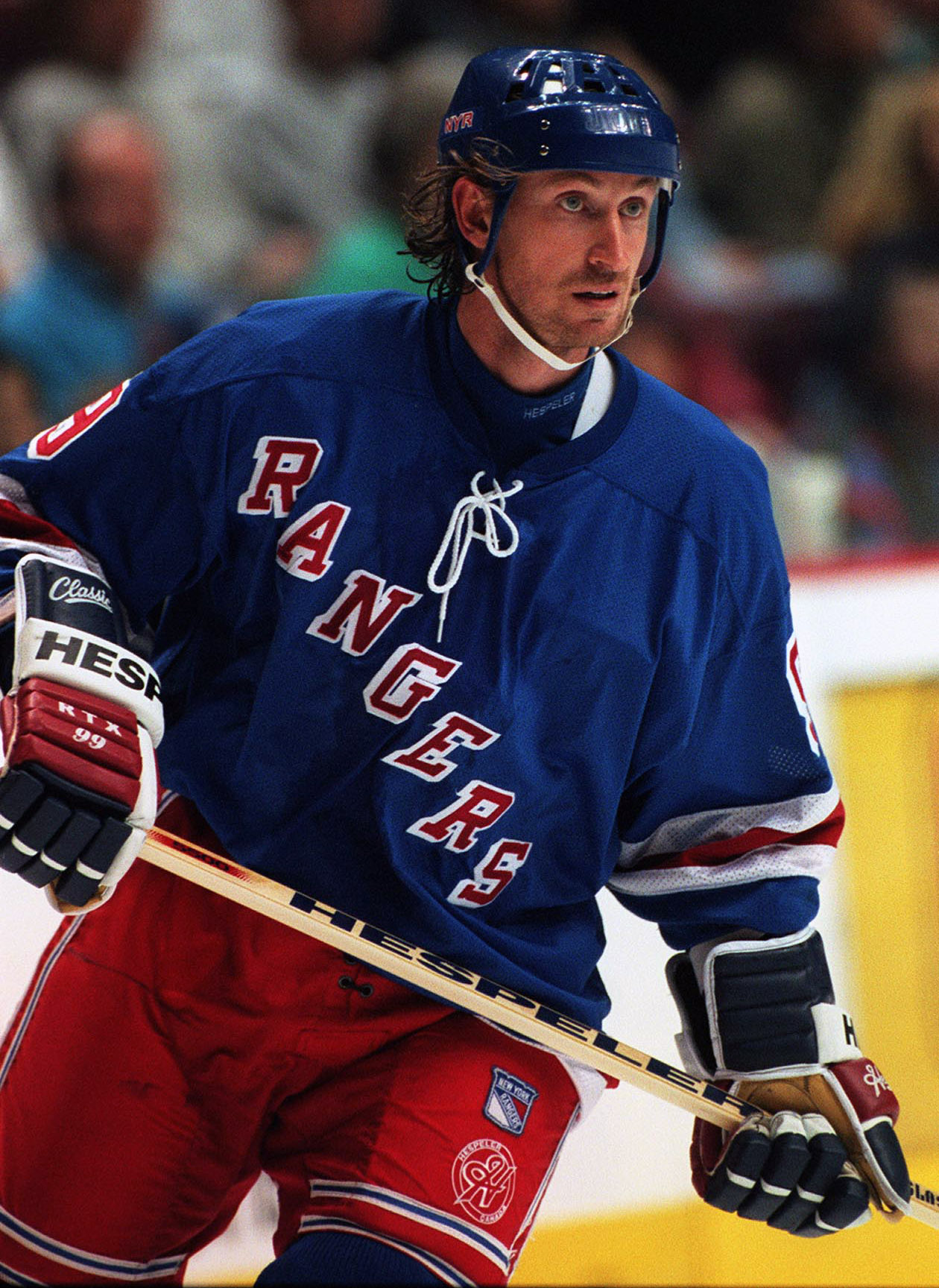
Image: Wayne Gretzky with the New York Rangers, Håkan Dahlström/SportNet, version uploaded by IrisKawling, CC BY-SA 3.0. File reproduced without modifications.
Conclusion
The best collecting decisions usually come from structure rather than urgency. When you combine clear comparisons, strong context, and a disciplined buying framework, you give yourself a better chance to build a collection with both enjoyment and staying power.