Answer-first summary
Gretzky provides a common subject through which collectors can connect career history, team interests, card production, and personal memories. His documented Hall of Fame recognition and the objects used to tell his story offer starting points for a coherent collection. Each acquisition should contribute its own meaning and supporting evidence, whether it is an ordinary card or a centerpiece.
Gretzky gives a hockey collection a shared reference point
Wayne Gretzky matters in collecting because his career gives otherwise separate objects a common subject. A rookie card, a team photograph, a game program, and a retirement tribute can each tell a different part of the same story. For collectors, that connection creates opportunities to organize, explain, and share a collection beyond the appeal of any single expensive item.
His significance is easiest to understand through three questions: what does this object document, why does that chapter interest you, and how does it relate to the other pieces you own? Those questions work for an ordinary card as well as a major centerpiece. They also keep historical importance separate from purchase urgency. An object can deserve attention without being the right acquisition for your budget or collection.
Institutional recognition supplies historical context
The Hockey Hall of Fame's 1999 induction announcement records Gretzky's election in the player category. That is a useful historical anchor for a retirement or recognition-themed collection. It gives a collector a documented event around which to arrange objects, rather than relying entirely on a seller's description of someone as a legend.
A museum's treatment of a player offers another perspective. The Hall's 99 Gretzky exhibition organizes his story through objects and career chapters. For a private collector, the useful lesson is about interpretation: a piece becomes easier to understand when its place in a larger narrative is explained. This is our collecting interpretation of the exhibit, not a claim that museum inclusion establishes a market price.
An institution recognizing the athlete does not authenticate every item bearing his image or name. Keep the evidence for the career separate from the evidence for your particular object. Both matter, but they answer different questions.
One career can support several collecting communities
A player-focused collector may want a broad career sequence. A team collector may want only the period that connects with a favorite club. A set builder may need one Gretzky card to finish a specific checklist. A photography enthusiast may prefer an expressive image over the most discussed issue. These are different reasons to care about the same athlete.
That range of possible interests helps explain why Gretzky is a useful conversation starter within hockey collecting. It should not be mistaken for measured demand for every product. The existence of several potential audiences does not show how many buyers want a particular copy at a particular price today.
Use the complete Wayne Gretzky collector guide to see the broader collecting landscape, then choose the audience you are collecting for: often, yourself. A clear personal interest makes it easier to appreciate another collector's centerpiece without feeling obliged to acquire the same thing.
The rookie card creates a common starting point
The 1979 O-Pee-Chee #18 is a concrete reference for discussions about Gretzky cards. PSA's issue page identifies it as a rookie and describes condition obstacles. It provides a specific object to study when a conversation moves from the athlete's career to the physical history of cards.
A common reference is useful even for people who do not plan to own that issue. You can learn how collectors distinguish an edition from an individual example, or how a familiar image appears in later presentations. Research access and ownership are separate activities. Studying a significant card does not require bidding on it.
Avoid allowing the rookie to define every possible collection. A later card may better represent the team you followed, a design you remember, or the moment you began watching hockey. A collection organized around memory has a different purpose from one organized around the earliest recognized mainstream issue.
Objects preserve different kinds of history
A trading card records how a manufacturer presented an athlete in a particular product. A dated program can document how an event was advertised or framed. A photograph records a scene, although its printing date may differ from the date of the scene. A signed item adds a claim about a later interaction or signing process.
These objects are related, but they are not interchangeable evidence. A program does not prove that its owner attended the event. A photograph of a player using equipment does not establish that a similar item for sale is the same equipment. A modern commemorative card can be interesting while remaining a modern interpretation of an earlier moment.
Write a short caption for each piece that distinguishes what it shows from what its history establishes. The caption should still make sense if the seller's adjectives are removed. That discipline turns an assortment of Gretzky images into a collection another person can follow.
Personal memory can be a legitimate selection rule
Collectors do not all begin with a checklist. Some begin with a family member, a television memory, an old album, or an attachment to a team. Gretzky can connect those experiences with objects that are small enough to store and specific enough to describe. The reason a card matters to you may have little to do with its position in an auction ranking.
Give that reason a place in your records. “This resembles the card I traded at school” is a meaningful personal note, provided you do not turn resemblance into an unsupported claim that it is the identical edition. If the original is unavailable, a clearly identified substitute can still serve your display's purpose.
Set limits before searching: one album page, a fixed number of career chapters, or a total spending allowance. Constraints help personal meaning survive the stream of attractive listings. Completing a modest theme can be more satisfying than repeatedly changing direction toward whatever receives attention next.
Lemieux, Crosby, and O-Pee-Chee widen the lesson
Mario Lemieux offers a second player around whom a collector could build a comparable narrative exercise. Ask which objects introduce the player, which represent a chosen chapter, and which require more explanation. This comparison concerns the structure of a collection; it is not a claim that the two players' cards share prices or supply.
Sidney Crosby provides another subject for discussing how different collectors enter hockey through different players. A conversation across those interests can reveal why one person values a remembered design while another prefers a particular product format. Ask about the collection's purpose before judging it by your own checklist.
O-Pee-Chee belongs to a different part of the discussion: it is a brand or manufacturer identifier. It helps connect player collecting with the history of card production. Keep those categories distinct. An athlete supplies the subject, a product supplies the publishing context, and an individual copy supplies the object you can inspect.
Condition changes the object you can display
Historical interest does not make physical condition irrelevant. A crease may interrupt the image you want to display, while a less visible flaw may not bother you. Decide which features support your purpose before deciding which condition level to pursue. A collector studying design may make a different choice from someone assembling a uniformly graded set.
The card grading guide explains how condition assessments fit into collecting decisions. A numerical assessment can help organize examples, but the number cannot describe your personal response to the photograph or explain why a particular career chapter matters to you.
If grading is under consideration, use the grading service buying guide to frame the purpose and costs. Preservation, identification, and comparison are possible objectives to examine. Paying for a service is a separate decision from recognizing the athlete's significance; one does not automatically require the other.
A famous subject still needs object-specific evidence
A persuasive career story can make weak documentation easy to overlook. Before acquiring an autograph, purportedly used object, or unusual edition, ask what supports the exact claim. Identify who provided the evidence, what it covers, and whether the pictured object can be matched to it. Keep unanswered questions visible instead of allowing reputation to fill them.
The Gretzky safe-buying guide develops the purchase side of this process. For the present article, the central point is that cultural meaning and transaction confidence are independent. A moving story about the player does not settle the authenticity of an offered item.
The same distinction applies to resale expectations. Several collectors may recognize the subject while preferring different formats, conditions, and prices. Historical stature provides a reason to study the market; it does not provide a deadline to buy, a guaranteed buyer, or a promised future outcome.
Make a collection that explains its own choices
Try planning a three-piece display on paper before shopping. Choose an introductory object, a piece representing a personally meaningful chapter, and an item that explains how the player is remembered. For each, write an identification line, a factual caption, and a sentence about why you want it. Mark any uncertain attribution or date for further research.
Then ask whether the three pieces add different information. If all repeat the same image or story, consider whether that repetition is intentional. You may decide to collect design variations, or you may replace one proposed item with something that adds context. Either choice becomes stronger when its purpose is explicit.
This explainer uses Gretzky as a practical example of how historical recognition, personal memory, and object-level evidence interact. We prioritize clear concepts that also help with other collectibles, while treating authentication as specific to each object. His importance gives a collection a subject worth explaining; your choices determine how well the collection tells that story.
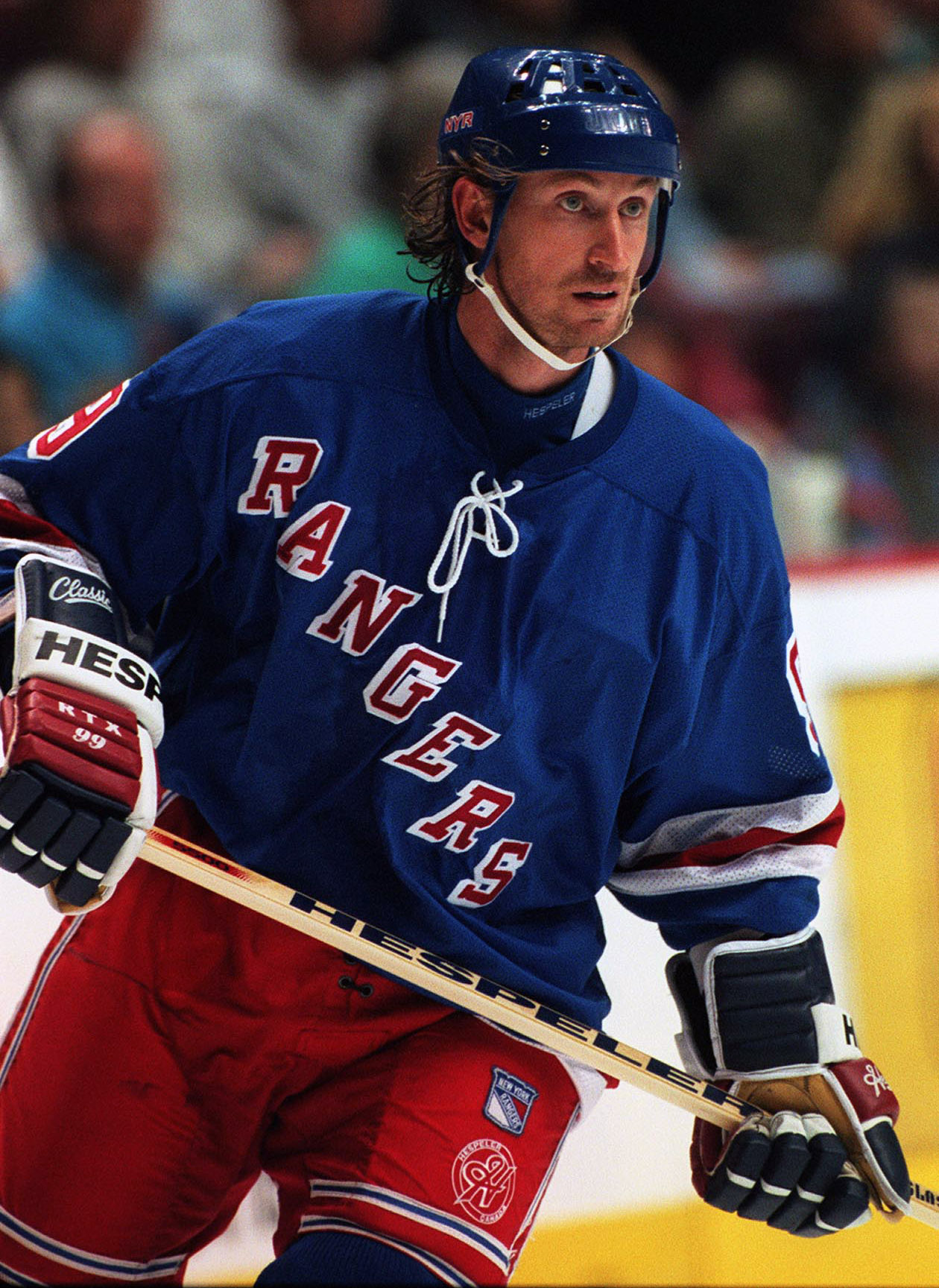
Image: Wayne Gretzky with the New York Rangers, Håkan Dahlström/SportNet, version uploaded by IrisKawling, CC BY-SA 3.0. File reproduced without modifications.
Conclusion
The best collecting decisions usually come from structure rather than urgency. When you combine clear comparisons, strong context, and a disciplined buying framework, you give yourself a better chance to build a collection with both enjoyment and staying power.