Answer-first summary
Gretzky collecting evolved through the addition of grading, wider visibility for exceptional rookie transactions, and attention to unopened material. The documented milestones involve different editions, objects, and sale formats. They explain the market's development without establishing a continuous return series or the price direction of every Gretzky card.
The change is bigger than the record price
The Wayne Gretzky card market has evolved through several overlapping developments: original rookie issues became historical reference points, third-party grading gave condition a more explicit vocabulary, and major auctions and private transactions made exceptional examples visible beyond ordinary card trading. Unopened material now supplies another kind of headline. These developments describe changes in how the market is organized and discussed, not one continuous increase in the value of every Gretzky card.
For collectors, the useful history separates the object, its condition, the transaction format, and the evidence available at the time. A record for one top-grade rookie cannot stand in for the experience of someone collecting later cards or worn originals. This article reviews selected documented milestones through September 18, 2026. It is not a complete sales index, and it does not establish the market's current direction. For the card categories themselves, see the complete Gretzky collector guide.
The original card and the later collecting infrastructure
The starting objects remain identifiable: the 1979 O-Pee-Chee and Topps Gretzky number 18 rookie cards. PSA maintains separate profiles for the O-Pee-Chee issue and the Topps issue. That distinction matters throughout the chronology. A later price milestone for one manufacturer does not automatically reset the other.
The cards also predate the grading infrastructure familiar to today's buyers. PSA dates its founding to 1991. An original release date and a grading date therefore describe different stages of an object's life. A recently encapsulated card is not a recent printing merely because its holder looks new.
The practical change is in the unit of comparison. A collector can discuss a manufacturer, card number, grading service, and numerical grade instead of relying only on a broad description such as a nice rookie. That makes transactions easier to sort, but not identical. Eye appeal and the specific defects still need examination. Our card-grading guide explains how to read that extra layer of information.
Condition turns one issue into several markets
A checklist entry identifies a card; it does not identify one uniform supply. Collectors seeking an attractive lower-grade copy and collectors seeking a near-perfect example compete for different candidates. Even without changing the original print run, tighter condition requirements can narrow the group of acceptable cards considerably.
This helps explain why later headlines increasingly describe both the issue and its grade. The grade is part of the transaction being reported, not a decorative detail. Removing it from a headline changes the meaning from a result for a specific class of object to an unsupported statement about the whole issue.
Do not infer that the rest of a collection followed the same path. A preserved rookie can become a trophy while an ordinary later card remains an inexpensive way to enjoy a favorite player. Those collecting experiences can coexist. The historical question is which segment attracted attention, not whether every card moved together.
December 2020: the trophy segment becomes highly visible
Heritage reported December 2020 results of $1.29 million for a PSA 10 O-Pee-Chee rookie and $720,000 for a PSA 10 Topps rookie. These are the auction house's reported US-dollar amounts, not present-day quotations. The contemporaneous release documents both.
For this history, the significance is the prominence of two precisely identified examples. A reader could encounter Gretzky through a major collectibles auction rather than through a routine purchase for an album. That is evidence of visibility at the exceptional end, not a census of how many new collectors entered or how much they spent.
Avoid making these prices the baseline for all subsequent discussion. Someone buying a visibly worn card was not purchasing the same condition proposition. Nor does an auction headline reveal the typical waiting time to sell a different example. Historical attention, individual price, and practical ease of resale are separate observations.
May 2021: a private transaction adds a different kind of evidence
On May 27, 2021, Heritage announced a $3.75 million private sale of a PSA 10 O-Pee-Chee Gretzky rookie. Its announcement explicitly identifies a private transaction. Calling that event an auction would misdescribe the evidence.
An auction result and an announced private agreement can both matter to market history, but they disclose different things. A private-sale announcement should not be treated as a public sequence of competitive bids. Record what the intermediary actually reports and leave undisclosed terms unknown.
The larger number also should not become a return calculation for an imagined ordinary owner. Two reported prices can concern different copies, different negotiations, and different transaction conditions. Without identifying a repeated sale of the same object and accounting for costs, the difference between headlines is not a collector's realized gain. The milestone shows how high an exceptional transaction reached at that date.
August 2022: keep the Topps story separate
Heritage's August 2022 lot archive records a PSA 10 Topps number 18 at $1.2 million. Its importance here is that the American issue has its own documented sequence rather than merely serving as a footnote to O-Pee-Chee.
A collector comparing historical milestones should maintain two columns for the two issues. Better still, retain a separate row for each actual copy whenever identification permits. This prevents a chart from appearing to show one card repeatedly changing hands when it really combines multiple cards and manufacturers.
There is another limitation: a few exceptional transactions are irregular observations, not a monthly index. Connecting them with a smooth line supplies a visual continuity the evidence does not contain. A timeline with dated labels is a more honest way to present this part of the story.
December 2024: unopened material tells a different story
Heritage reported $2.52 million for a sealed case of 16 boxes of 1979-80 O-Pee-Chee hockey cards in December 2024. The dated release concerns unopened product, not one already identified and graded Gretzky rookie.
That distinction changes the collecting proposition. A sealed object has packaging, preservation, and unopened status to assess. Its contents cannot be treated as an inspected group of cards with known individual grades. Dividing a case price by an assumed number of Gretzky cards would invent a per-card comparison before the relevant objects were even examined.
Opening also changes what is owned. The collector exchanges an intact sealed object for its contents and the uncertainty surrounding their condition. A buyer who values preservation may have a different purpose from someone who wants one specific rookie. The case milestone therefore belongs beside the individual-card history, not inside the same price series.
What the milestones do and do not measure
These events show the variety of objects and transaction formats that can carry the Gretzky collecting story. They do not establish the typical collector's experience, a current all-time record, or the performance of an entire collection. Every historical amount should remain attached to its date, exact object, and source.
There is a selection problem in any history built around famous sales: exceptional prices are easy to find because they were publicized. Ordinary transactions, unsold listings, and quiet purchases may receive much less attention. A narrative made only from memorable results will naturally emphasize the most spectacular end of the market.
To investigate broader change, define a repeatable sample before searching. For example, follow one manufacturer and grade over fixed periods, retain qualifying results whether high or low, and explain exclusions. Track sale counts alongside price observations. If the evidence becomes sparse, leave the gap visible rather than substituting another grade to complete the story.
Lemieux, Crosby, and the changing comparison set
Mario Lemieux and Sidney Crosby are useful reference points for deciding what a hockey collection should represent. A collector may prefer an earlier generation, a different team connection, or the card designs associated with another player's career. Those alternatives can change the personal appeal of a Gretzky purchase without implying a mechanical relationship between prices.
Use comparisons to frame questions, not to manufacture a historical ratio. Did the source discuss a rookie, a signature, or another format? Was condition assessed in the same way? Were the reported terms comparable? A famous player and a shared numerical grade are not enough to make two transactions equivalent.
O-Pee-Chee has a different role in that discussion: it is a manufacturer identity. Keep player comparisons and issue comparisons distinct. Otherwise, a conclusion about one edition's trophy examples can turn into an unjustified claim about the popularity of an entire player.
Applying the history to a collection today
Use the chronology to choose a collecting goal that remains meaningful without repeating a headline. You might want one original rookie, an affordable career selection, or a carefully documented signed card. State the goal first, then decide which historical evidence actually relates to that object. The Gretzky buying guide helps turn that choice into a purchase process.
Keep a short record separating historical context from current evidence. Historical context explains why the card interests you. Current evidence supports the price and condition decision for the particular copy. Update the second part when shopping rather than revising the whole history around the newest listing.
Finally, examine the card, seller, holder, and transaction terms directly. Old records cannot authenticate today's offering. Follow the graded-card buying checks, retain images and receipts, and set a total spending limit before bidding. The most useful lesson from this evolving market is greater precision about what you own and why you want it, not an expectation that the next chapter must deliver a higher price.
Image credit
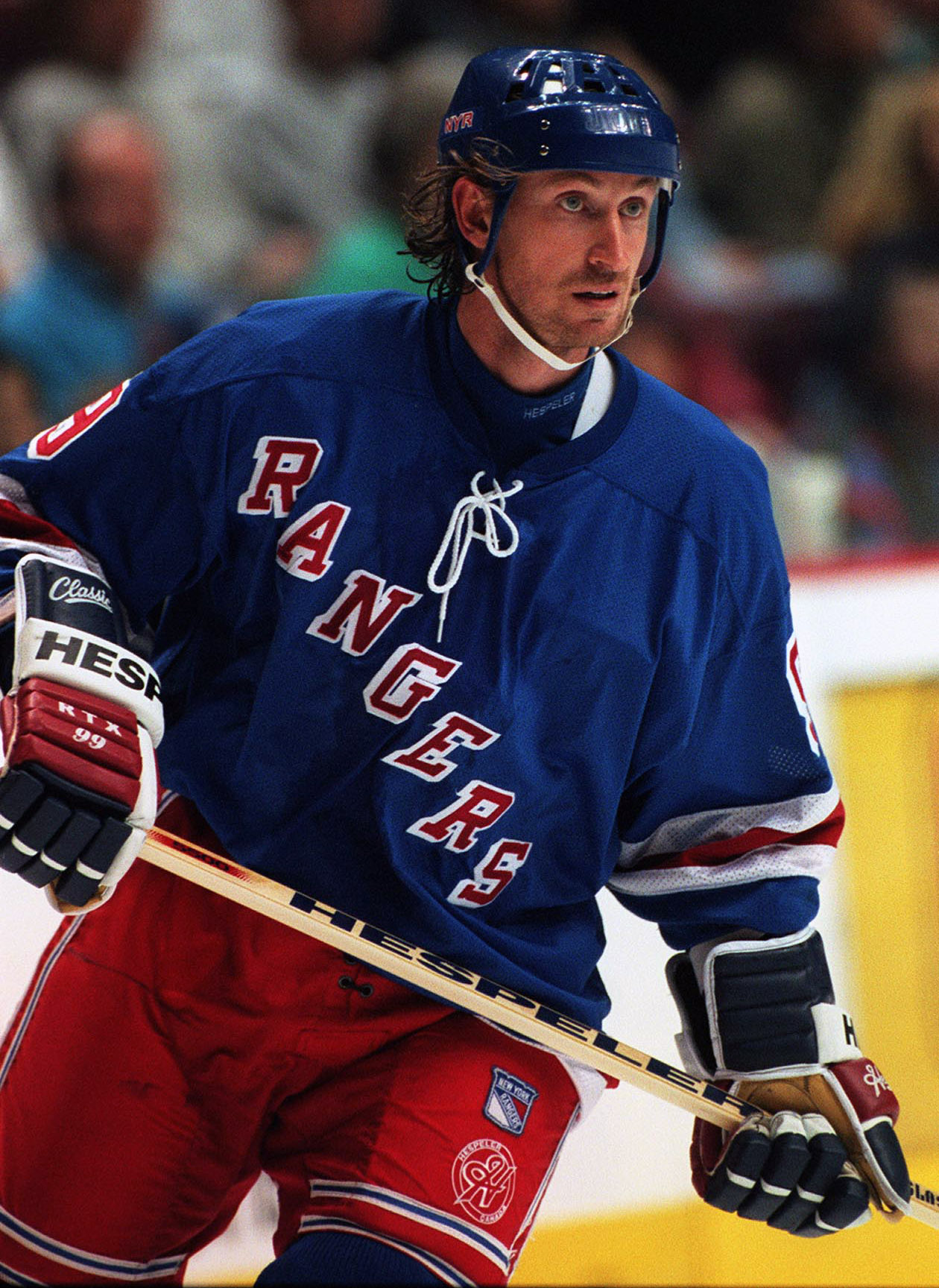
Wayne Gretzky at the 2006 Turin Winter Olympics, photographed by Kris Krüg. Image from Wikimedia Commons, used unchanged under Creative Commons Attribution-ShareAlike 2.0. The photograph illustrates the player, not the sale events discussed.
Conclusion
The best collecting decisions usually come from structure rather than urgency. When you combine clear comparisons, strong context, and a disciplined buying framework, you give yourself a better chance to build a collection with both enjoyment and staying power.