Answer-first summary
Evaluate Gretzky cards in separate segments and build a dated comparison sheet for the exact issue and grade. Record fees, inspect photographs, and distinguish credible completed sales from asking prices and relistings. The evidence here supports a method for reading the market, not a current price index or a forecast.
Read the Gretzky market one segment at a time
Wayne Gretzky does not have one card price or one market trend. A worn original rookie, an exceptionally preserved rookie, a later base card, and a certified autograph answer different collecting needs. Start by defining the exact object and the buyers who might want it. Then compare completed transactions within that segment. A famous player's name can explain attention; it cannot establish the value of every card bearing his image.
This guide provides a framework for interpreting evidence as of September 18, 2026, rather than a live price list or a claim that the market is rising or falling. No comprehensive current transaction dataset was assembled for this article. Historical examples are dated, and practical decision rules below are editorial analysis. For identification and collecting routes, begin with the complete Gretzky collector guide.
Separate rookie identity from condition scarcity
The 1979 O-Pee-Chee and Topps number 18 cards are separate rookie issues. PSA's player registry lists both. Do not merge their transactions simply because they feature the same player and card number. Record manufacturer, year, number, grading company, grade, and any qualification before a result enters your comparison sheet.
O-Pee-Chee also provides a useful lesson in condition scarcity. PSA's card profile identifies blue-border chipping, printing defects, rough cuts, and centering as concerns. The practical implication is that availability of the issue and availability of a particularly attractive copy are different questions.
Choose the defect you can comfortably live with before shopping. A collector who tolerates corner wear but dislikes uneven borders may prefer a different example from someone building a uniform graded run. Neither preference establishes a universal premium. To justify paying more, find evidence that buyers paid more for comparable visible quality, rather than assuming your taste is shared by the whole market.
Map the transaction you are actually considering
Use a short written description to prevent a broad search from drifting into unrelated results. The description should distinguish these collecting segments:
- Original rookies: compare the exact issue and authentication status.
- Later playing-career cards: identify the set, season, design, and any variation.
- Inserts and numbered versions: confirm the exact checklist identity and stated numbering.
- Signed cards: distinguish the underlying card, signature origin, and what the certification covers.
A small printed edition does not automatically make an insert more desirable than an unnumbered rookie. Conversely, a later card need not be expensive to belong in a satisfying player collection. Demand depends on whether the object fits a collecting goal. Ask whether you want a historical milestone, an image you enjoy, a particular team, or an autograph before assigning a budget.
For signed examples, read the label literally. Authentication of a signature and assessment of the card's condition answer different questions. Do not import the price of an unsigned, numerically graded card into a signed-card comparison without explaining that difference.
What historical headlines can tell you
In December 2020, Heritage reported a PSA 10 O-Pee-Chee Gretzky rookie sale at $1.29 million. That is a dated result for an exceptional example, not a September 2026 quotation. The auction house's report is useful evidence of attention at the trophy end of the hobby.
It does not establish how an ordinary copy performed afterward. A headline can introduce new people to a card, but proving a broader repricing requires matched results across time. The necessary comparison is the same issue, similar condition, consistent fees, and a documented transaction date. Without that, a claim that Gretzky cards rose or fell by a particular percentage is unsupported.
Keep major sales in a separate historical column. This allows them to explain the story of the category without quietly becoming price anchors for the card you can actually buy. An impressive past price is neither a floor nor a promise of a future buyer.
Build a comparable-sales sheet you can audit
For each candidate transaction, save the source link, sale date, currency, exact identification, grade, certification number when available, photographs, and the reported amount. Add whether buyer's premium is included and whether an accepted-offer amount is visible. An asking price belongs in a separate column because it records a seller's intention rather than a completed agreement.
Start with recent sales of the same card in the same grading company's holder at the same grade. Inspect the images before averaging anything. A qualifier, visible crease, unusually strong centering, signature, or mistaken listing title can make an apparently matching result unsuitable. Record why you excluded it so you can revisit the decision later.
Try a recent window first, then widen it if evidence is thin. Label the wider dates explicitly. Do not silently replace a missing recent comparison with a much older transaction or a different grade. If only one credible result survives, describe the evidence as sparse. A precise-looking average from mismatched cards is less useful than an honest range with clear limitations.
Look for repeated certification numbers or identical photos across listings. They may describe the same copy being relisted rather than several independent sales. Public results can also leave payment or cancellation status unclear. Where completion cannot be established, lower your confidence instead of treating every displayed amount as equally reliable.
Compare the complete cost on a consistent basis
Keep two calculations: a standardized sale comparison and your own delivered cost. The first helps interpret market evidence; the second decides whether the purchase fits your allowance. Mixing them makes cross-border transactions especially confusing.
For illustration only, suppose a hammer price is 500 units and the stated buyer's premium is 20 percent. The price including that premium is 600 units. Adding 25 units for delivery produces 625 before any applicable tax or other charges. These invented figures are arithmetic, not a Gretzky valuation or a statement of any marketplace's current fees.
Use the actual platform terms for a real purchase. Record the exchange-rate date when converting currencies, and distinguish a published result that already includes premium from one that does not. Otherwise, you may add a fee twice or mistake exchange-rate movement for a change in collector demand. Keep grading or authentication costs separate when considering an ungraded card; the future result is not assured.
Read liquidity alongside price
Liquidity means how readily a suitable buyer can be found at a realistic price. It is not the same as name recognition. For your exact segment, examine how often credible sales appear, how many comparable copies remain offered, and how widely accepted prices differ. These observations are more useful than the total number of search results for Gretzky.
A card with few sales can be scarce, lightly followed, closely held, or simply poorly represented in the sources you checked. Do not choose the most flattering explanation automatically. Compare several venues and lengthen the observation period before deciding what the silence means.
When an eventual sale matters to your collecting plans, estimate the amount you would receive after the venue's actual selling costs, not the amount a buyer might pay. Include the possibility of waiting or accepting a lower offer. This is a budgeting exercise for flexibility, not a prediction of resale profit.
Use grading and population information carefully
A grade narrows the comparison but does not replace looking at the card. Consult the grading standards for the service involved and inspect both sides under useful lighting. The card-grading guide provides background for comparing raw and encapsulated examples.
Treat a population figure as a dated count within the reporting service's scope. It is not automatically a count of all surviving cards, all available sellers, or interested buyers. Even an accurate low count does not tell you what the next buyer will pay. Save the date and exact category with any population observation you use.
For a slabbed candidate, use the certification lookup, then compare the returned identity with the offered card and holder. PSA explicitly cautions that number verification does not eliminate counterfeit risk. Seller history, clear photographs, and understandable transaction protections still belong in the decision. The grading buying checklist helps organize those checks.
Use Lemieux and Crosby as context
Mario Lemieux and Sidney Crosby can help clarify what you enjoy about hockey collecting. Compare the role a card would play in your collection: a defining rookie, a favorite era, a team connection, or an authenticated signature. These are meaningful alternatives for a fixed hobby budget.
They are weaker substitutes for direct price evidence. A Gretzky card and a Crosby card can share a numerical grade while differing in product, production context, format, and buyer audience. A Lemieux sale does not establish a percentage discount that every Gretzky card should follow. Treat cross-player comparisons as a way to assess personal priorities, then return to exact-card sales for price analysis.
O-Pee-Chee belongs in a different category of comparison because it is a manufacturer, not another player. Its name helps identify the object being valued. Confusing manufacturer prestige with player preference can lead you to compare cards that have little beyond hockey in common.
Make the buying decision reproducible
Before bidding, write down the issue, acceptable condition, strongest matching transactions, total spending limit, and unresolved questions. Separate what is verified from what is inferred. If better photographs or seller clarification could change the decision, obtain them before increasing the offer. Use the Gretzky safe-buying guide for the purchase sequence.
A practical watchlist can contain three groups: ready to evaluate, needs more evidence, and outside the budget. Move a listing between groups when information changes, not because an auction countdown creates pressure. If the price exceeds your limit, preserve the comparison notes for another copy rather than changing the collection's purpose mid-bid.
After buying, save the receipt, listing images, certification details, and your reasons for selecting that example. Review the segment monthly when actively shopping; otherwise, review when your collecting goal changes. Update comparable sales and unresolved evidence, rather than treating every new headline as a reason to revalue the whole collection.
Image credit
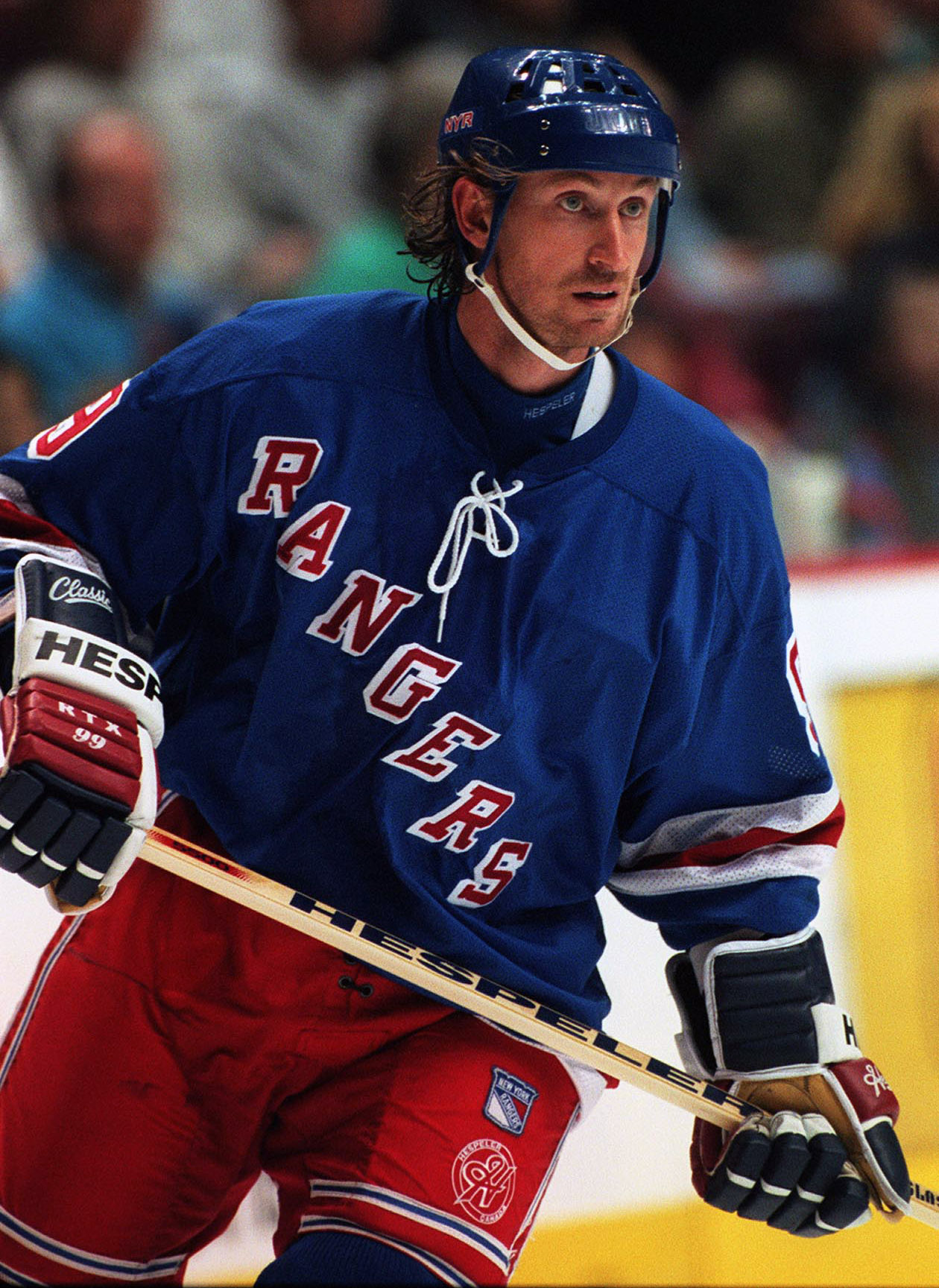
Photograph of Wayne Gretzky at the 2006 Turin Winter Olympics by Kris Krüg, via Wikimedia Commons, used unchanged under Creative Commons Attribution-ShareAlike 2.0. It illustrates the player, not a card offered for sale.
Conclusion
The best collecting decisions usually come from structure rather than urgency. When you combine clear comparisons, strong context, and a disciplined buying framework, you give yourself a better chance to build a collection with both enjoyment and staying power.