Answer-first summary
Assess Gretzky resale flexibility by tracing the transaction from offer to payment. Track distinct cards and unknown outcomes over a stated window, compare amounts retained after seller costs, and establish the actual payment timetable. A recognizable name and an advertised price do not demonstrate a completed exit.
Read the market through the sale you could actually complete
A useful Gretzky market assessment asks what a specific card might attract from a credible buyer, how much work and time a sale could require, and what the owner would receive after costs. Player recognition alone cannot answer those questions. Separate an advertised price, a reported completed sale, and money actually received before interpreting demand.
This third edition examines resale evidence and transaction readiness. It is an editorial framework reviewed on September 25, 2026, not a live appraisal or a promise that a card will sell within a particular period. We have not compiled a comprehensive dataset of sales, unsold listings, or seller payouts. Numerical examples are hypothetical. The complete Gretzky collector guide provides the identification background needed before applying this framework.
Define the exact object and its likely audience
Write a one-line identity for the card: manufacturer, season, number, edition, grading service, grade, and relevant label wording. Record a signature separately, including what authentication covers. A buyer seeking an original rookie, a signed display piece, or a particular graded-set entry may search for the same player while wanting a completely different object.
PSA's 1979 Topps Gretzky number 18 profile organizes reported sales by grade. It offers a starting point for researching that issue, not a valuation for every Gretzky card. Keep O-Pee-Chee and Topps entries separate. A low-grade original, an altered card, and a later reproduction should not enter one comparison group simply because each is described as a rookie image.
The likely audience also determines useful documentation. A set collector needs unambiguous identity and label details. A display collector may prioritize centering and visible presentation. A signature collector needs evidence about the autograph as well as the underlying card. These are editorial distinctions for organizing research, not measured claims about the size of each audience.
Put each observation at the right stage
Use four stages in your notes: offered, reported sold, independently corroborated, and settled in your own records. An active asking price belongs in the first stage. A public sale result belongs in the second until additional evidence supports it. A seller's own completed transaction can reach the last stage when payment, deductions, and any adjustments are recorded.
Do not call an inaccessible or removed listing a completed sale without evidence. It may have expired, been withdrawn, or moved elsewhere. Similarly, a repeated certification number deserves investigation rather than automatic treatment as another independent buyer. Save dates and screenshots or permitted copies of the relevant details so you can distinguish new observations from recycled listings.
Public research will often stop short of settlement confirmation. Mark that limit explicitly instead of discarding all public results or claiming more certainty than they provide. A carefully labeled reported sale remains useful when matched to the right card and interpreted alongside other observations.
Measure selling activity within a defined window
Choose a review period and record the distinct matching cards you can observe during it. Note the date each was first seen, asking-price changes, reported sale dates, and whether its outcome remains unknown. The date you first noticed a listing is not necessarily its original publication date; keep those fields separate when the original date is unavailable.
Imagine following 20 distinct matching cards during a fictional 30-day period. Six are reported sold, ten remain offered, and four disappear without a confirmed outcome. You can report six observed sales among twenty tracked cards, or 30%, with those limitations. You cannot turn that sample into a universal 30% probability that your own card will sell in a month.
The sample may omit private transactions, newly listed cards, or venues you did not monitor. Some listings had more exposure time than others. Report unknown outcomes instead of forcing them into sold or unsold groups. Repeating the same procedure over time is more informative than presenting one small snapshot as a definitive liquidity score.
Investigate a quiet listing before blaming the player
A card that attracts little response may be incorrectly identified, poorly photographed, difficult to ship to the intended buyer, or priced above the available comparisons. It may also be offered in a format or location that does not reach the relevant audience. These possibilities should be checked before interpreting silence as fading interest in Gretzky.
Change one meaningful variable at a time when possible. Improve unreadable photographs before cutting the price, or correct a missing manufacturer before interpreting search traffic. Record the change and the observation period. Multiple simultaneous changes make it difficult to learn which problem mattered.
Views, watchers, and inquiries can help describe attention, but they are not payments. One serious question about a specific defect may be more useful than many casual views. Keep your own minimum acceptable terms separate from the desire to generate activity. An offer below those terms does not become suitable simply because the listing has been quiet.
Compare seller proceeds, not just headline results
For a prospective sale, start with the amount payable to the seller under the stated arrangement, then subtract applicable seller charges, shipping, insurance, and other agreed costs. Establish the fee base: a percentage may apply to an amount different from the headline figure you are reading. Ask for written terms rather than assuming every venue calculates deductions the same way.
Suppose a fictional route produces a US$1,000 gross amount for the seller, charges 12% of that amount, and leaves US$30 in shipping and insurance costs. The illustrative proceeds are US$850. Another fictional route offers US$900 with US$20 in total seller costs, leaving US$880. The larger headline amount yields the smaller net amount in this example.
These are invented terms, not quotations from a platform, and they exclude taxes, acquisition cost, and any other unlisted expenses. Net sale proceeds are not profit. Keep the original purchase record and subsequent costs separate if you want to understand the full ownership history. A buyer's auction total also need not equal the seller's gross amount.
Time and certainty are part of the comparison
Compare the expected sequence of events as well as the possible price: preparation, listing or consignment, sale, payment processing, delivery, and any adjustments under the agreement. Obtain actual timing terms from the provider or counterparty. A stated sale date alone does not tell you when cleared funds will become available.
An owner with a deadline may prefer a documented firm offer over waiting for an uncertain higher result. An owner without urgency may prefer more time to find a buyer who appreciates the copy's appearance. Neither choice proves that one route is always best; the trade-off depends on terms and the owner's purpose.
Do not fund a committed purchase with money from a sale that has not completed. For collection planning, distinguish available cash from an estimated future receipt. This practical separation prevents a speculative resale assumption from quietly becoming the budget for another card.
Improve the evidence package without inventing a premium
Prepare clear front and back images, readable holder details, and additional angles for ambiguous surface marks. Describe known defects plainly. Retain provenance records, receipts, and relevant correspondence, while keeping unnecessary personal information out of public listing images. Organized evidence makes questions easier to answer; it does not guarantee a higher selling price.
Use PSA's certification lookup when the card carries its label. PSA warns that real certification numbers can appear on counterfeit inserts, so a matching number alone does not validate the offered object. Compare the record with the actual holder and card and consider the transaction's protections. The safe Gretzky buying guide helps structure those checks from the buyer's side.
Avoid calling a card an easy upgrade or promising a particular result from another grading service. Such language adds an unsupported future outcome to an otherwise documentable object. A buyer should be able to understand what exists today without accepting the seller's grading prediction.
Consider grading as a separate project
For an ungraded card, decide whether authentication or encapsulation solves a real identification or presentation problem. Compare the effort, fees, shipping, insurance, and waiting time with the purpose of the collection. Do not assume that the difference between one raw asking price and one graded sale is the gain your submission would produce.
PSA's grading standards explain that alterations can prevent a numerical grade and specifically discuss sheet-cut 1979 O-Pee-Chee Gretzky cards as ineligible for ordinary grading. This makes the card's history and physical characteristics relevant before any submission calculation. A photograph-based optimistic grade is not a reliable starting value.
The complete grading guide explains the role of assessment, while the grading purchase guide helps organize service questions. Keep a submission decision separate from a sale decision so a hoped-for grade does not become a condition of making the entire plan work.
Use related players to clarify the collection goal
Mario Lemieux and Sidney Crosby offer alternative player and era connections. Compare them when deciding what belongs in your collection, but do not use their sale speed as a substitute for missing Gretzky evidence. Their specific cards can have different formats, condition expectations, and buyer requirements.
O-Pee-Chee is a manufacturer reference rather than a player alternative. Within Gretzky research, it helps identify which product market you are observing. Across players, keep the collecting question separate from the pricing question: which object would you enjoy owning, and what evidence supports that particular transaction?
Selling a duplicate to buy another player's card can be a coherent collection change. Write down the intended replacement and the maximum extra spending before accepting an offer. If the sale does not complete on suitable terms, revisit the replacement plan instead of assuming recognition guarantees immediate resale.
What drives demand for Wayne Gretzky?
Demand becomes useful evidence when identifiable buyers pursue a particular issue, condition, and transaction. Player recognition can prompt interest, but exact card identity, appearance, documentation, and acceptable terms determine whether that interest becomes a purchase. This guide does not quantify the size of the buyer pool.
How has the Wayne Gretzky market changed over time?
Study consistent records of offerings, reported sales, and known outcomes across dated periods. A higher reported price can coexist with fewer observable transactions or longer exposure. Without a matched longitudinal dataset, this edition makes no claim about market-wide growth, decline, or typical selling time.
What should collectors watch before buying in this market?
Watch whether the resale story relies on asking prices, unconfirmed outcomes, or proceeds calculated before deductions. Buy an object that fits the collection on its present evidence. Treat a future sale as a separate transaction whose timing and result remain uncertain.
Method and image credit
We reviewed the linked PSA issue record, certification guidance, and grading standards. Our stages, tracking worksheet, and arithmetic examples are editorial tools for interpreting demand and transaction friction. They are not measured market statistics, forecasts, or financial advice. The next scheduled review is October 25, 2026.
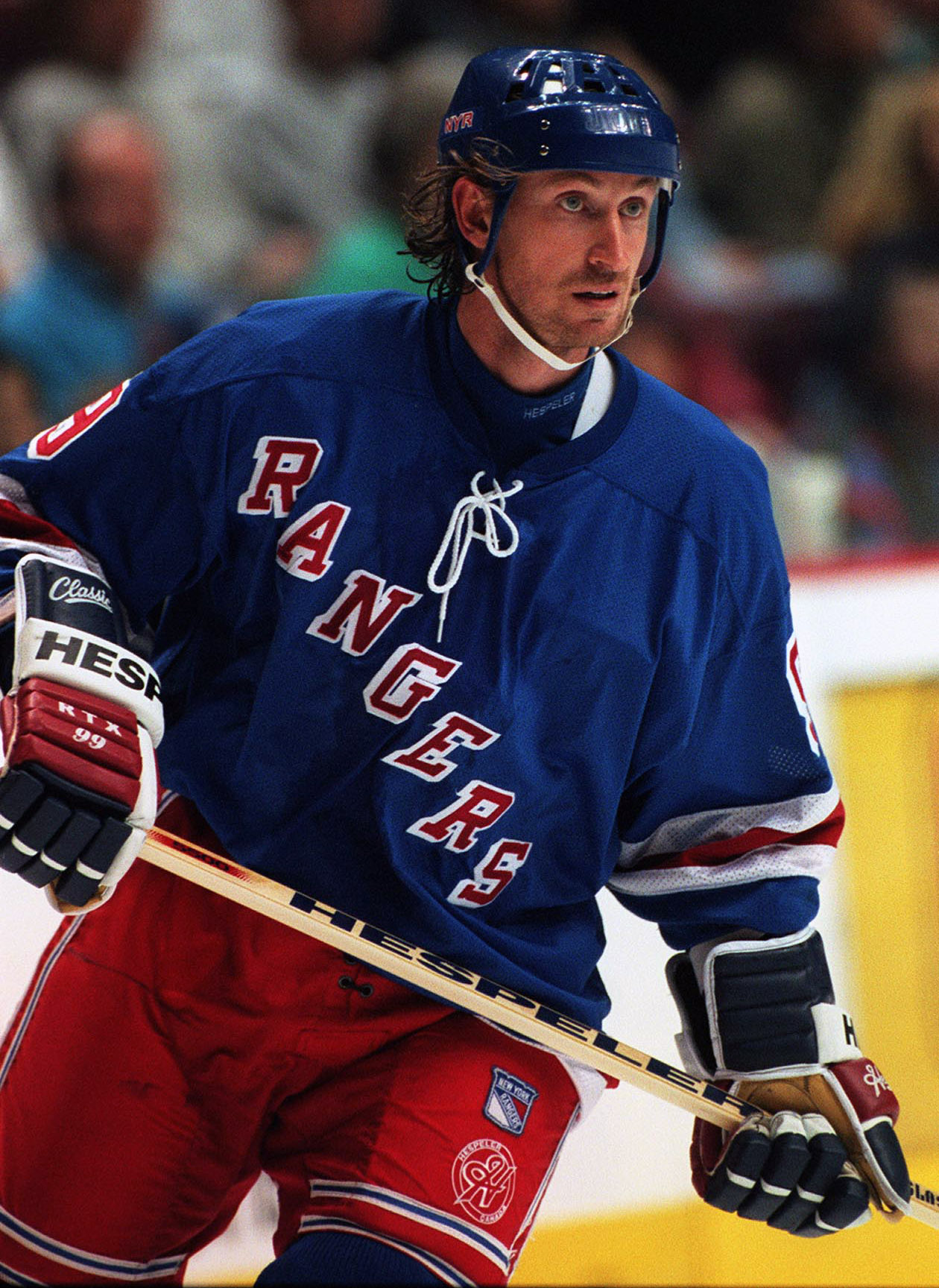
Photograph: Wayne Gretzky speaking in Edmonton in 2001, by Kmf164/Aude; Commons version edited by Maurilbert and cropped by Soerfm. From Wikimedia Commons, under Creative Commons Attribution-ShareAlike 2.5. Reproduced without further edits. The image illustrates the player, not an offered card.
Conclusion
The best collecting decisions usually come from structure rather than urgency. When you combine clear comparisons, strong context, and a disciplined buying framework, you give yourself a better chance to build a collection with both enjoyment and staying power.