Answer-first summary
For most new collectors, the best system is a soft sleeve inside a top loader for important raw cards, a fitted storage box for organization, a zippered side-loading binder for cards viewed often, and dedicated slab boxes for graded cards. Use magnetic holders selectively rather than as the default.
The best setup for most new collectors
The best sports card storage is not one expensive case. It is a simple layered system. For most new collectors, that means a correctly sized soft sleeve inside a top loader for important raw cards, a fitted card box to keep those holders upright and organized, a zippered side-loading binder for sets or player collections that are viewed often, and a separate slab box if graded cards enter the collection. Magnetic holders are useful for a few display cards, but they are rarely the most efficient default.
That answer works because different storage products solve different problems. A soft sleeve limits surface contact and fingerprints. A rigid holder resists bending. A box reduces movement, dust, and light while making inventory easier. No single layer does all three jobs equally well.
New collectors often buy storage reactively: a loose pile gets a binder, an expensive pull gets the thickest holder available, and graded cards remain in shipping boxes. A better approach is to decide which cards are handled often, which need rigid protection, which deserve display, and which mainly need stable bulk storage. The right option is the one that protects the card without making the collection difficult to use.
How we ranked the options
We compared each storage type across six practical criteria: protection from surface contact, resistance to bending and impact, control of movement, ease of viewing, cost per stored card, and ability to scale. We also considered whether the enclosure material is clearly identified and whether holders are available in the correct thickness.
Material claims deserve attention. The Smithsonian National Postal Museum recommends chemically stable enclosure plastics such as polyester, polyethylene, or polypropylene for paper-based collections and warns that PVC can be reactive. Trading-card products vary by manufacturer, so do not assume the word “archival” is a complete specification. Look for a clear material statement, buy from a traceable supplier, and replace any sleeve that becomes tacky, cloudy, warped, or strongly odorous.
Environment is part of the ranking too. Even an excellent holder cannot compensate for direct sunlight, recurring condensation, a leaking basement, or a hot attic. The Smithsonian’s broader preservation guidance emphasizes stable conditions, protection from light, clean handling, and suitable enclosures. Those principles transfer well to sports cards even though a home collection does not need to imitate a museum vault.
1. Soft sleeve plus top loader: best overall for important raw cards
A soft sleeve and correctly sized top loader is the best all-purpose choice for most ungraded cards that deserve more than bulk storage. The sleeve keeps the card surface from rubbing directly against the rigid holder. The top loader adds structure against ordinary bending and handling. Together, they are inexpensive enough to use across a growing collection and standardized enough to fit many dedicated boxes.
This combination is best for rookie cards, inserts, parallels, autographs, and other cards you would be unhappy to damage but do not need to display in premium hardware. It also makes the card easy to inspect without repeatedly touching it. A resealable team bag or outer sleeve can reduce dust and prevent the card from sliding out during transport, although adhesive should never contact the card or inner sleeve opening.
Fit matters. Standard cards and thick memorabilia cards do not belong in the same holder size. If a card bows, pinches, or requires force to insert, the holder is too tight. If it moves freely enough to strike the edges, the holder may be too large. Check the card’s thickness and use a holder intended for that range.
Top loaders are not sealed environmental chambers and are not impact-proof. Their open edge admits dust, and the plastic can scratch. Store them inside a fitted box rather than leaving them stacked on a desk. For the broad workflow behind protection, cataloging, and placement, see the sports card storage complete collector guide.
Best for: important raw cards, growing player collections, and collectors who want a dependable default.
Main trade-off: more space and cost than sleeves alone, with less presentation value than magnetic holders.
2. Zippered side-loading binder: best for sets and frequent browsing
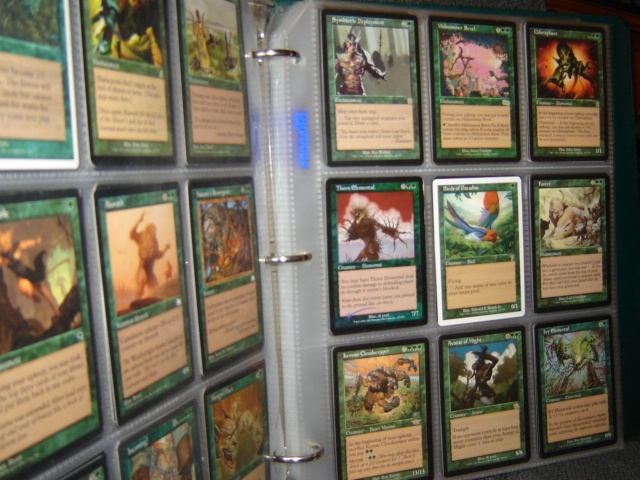
A quality binder is the best choice when the collection’s purpose includes browsing. Team sets, yearly runs, player pages, and lower-to-mid-cost inserts are easier to appreciate when they can be viewed in sequence. Side-loading pockets reduce the chance of cards slipping out through the top, while a zipper helps limit dust and accidental opening.
Choose fixed pages with a soft backing or well-made removable pages from a supplier that identifies the materials. Sleeve cards before placing them in pockets when the pocket fit allows it. The sleeve creates another barrier against surface friction and makes later removal less stressful. Do not force a sleeved card into a tight pocket.
Binder capacity should be treated as a limit, not a challenge. Overfilled rings can press or curve pages, and an overstuffed fixed-page binder can put pressure near the spine. Pages should lie naturally when the binder is closed. Store the binder flat or vertically with full support according to its construction, away from shelf edges where it can fall.
Binders provide excellent access but weaker crush and impact protection than individual rigid holders. They are not the best destination for a card whose condition would materially suffer from one bent corner. They also make it tempting to pull cards in and out frequently, so clean, dry hands and a clear work surface still matter.
Best for: complete sets, team collections, player runs, and cards whose arrangement is part of their appeal.
Main trade-off: superior viewing and organization, but less rigid protection and more risk from overfilling.
3. Fitted card storage box: best for scale and organization
Boxes are the backbone of a collection because they turn individual holders into a controlled system. The best box is designed for the format inside it: sleeved raw cards, top loaders, semi-rigid holders, or graded slabs. Correct width reduces sideways movement, while dividers and modest fill pressure keep cards upright without compressing them.
Cardboard hobby boxes are affordable and easy to label. Plastic cases can provide stronger walls and handles, but the material, closures, internal dimensions, and gasket claims should be clear. Neither format should sit directly on a basement floor. Place boxes on shelving above possible water exposure and avoid exterior walls or spaces with repeated heat and humidity swings.
Do not use an ordinary old shoebox merely because the cards fit. The National Baseball Hall of Fame notes that shoebox storage is not recommended for historic cards because ordinary cardboard can be acidic. Purpose-made card boxes are not automatically permanent either, but their dimensions and available dividers make them much safer operationally. For higher-value or vintage paper, seek clearly specified acid-free or conservation-quality materials.
Leave enough room to remove cards without pinching their top edges. Fill empty space with an inert fitted spacer or divider rather than letting rows lean. Label the exterior with category and range, not a public list of the most valuable contents. A separate inventory can carry detailed card and location data.
Best for: collections that are growing beyond one binder, organized back stock, top-loaded cards, and graded cards in dedicated slab boxes.
Main trade-off: excellent capacity and light control, but cards are less immediately visible and poor packing can cause leaning or edge pressure.
4. Semi-rigid card saver: best for submissions and compact staging
Semi-rigid holders are most useful when cards need enough support for short-term handling or grading submission without the bulk of a top loader. Their flexible construction and wide opening can work well when used with a soft sleeve and the submission service specifically accepts or requests that format.
They are not automatically better for long-term home storage. Inserting a card requires more technique, and the card may be harder to view or remove than it is in a top loader. New collectors should practice with inexpensive cards, keep the opening controlled, and never push on a corner. Follow the current packaging instructions of the grading company rather than relying on an old video or marketplace checklist.
Semi-rigid holders store compactly in a fitted box and are useful for a “research or submit” queue. That separate queue prevents raw cards from being repeatedly moved between piles while you decide whether grading is appropriate. If grading is part of the plan, the card grading complete collector guide explains why card identity, condition, fees, and likely outcome should be considered together.
Best for: grading submissions, temporary sorting of selected raw cards, and space-conscious staging.
Main trade-off: compact and submission-friendly, but less intuitive for frequent access and less rigid than a top loader.
5. Magnetic holder: best for selected display cards
Magnetic holders, often called one-touch holders, give a single card a clean presentation and stronger structure than a sleeve alone. They suit a centerpiece card on a protected shelf, a rotating display, or a card that you want to view without a slab label. Many include a recessed card well and UV-related marketing, but exact materials and test claims vary, and no transparent holder makes direct sunlight safe.
The holder’s point size must match the card. A standard paper card can move inside a recess made for a thick patch card, while a thick card can be pinched by a shallow holder. Some designs accept a sleeved card and others are engineered for direct placement. Follow the specific product design rather than improvising.
Before closing the case, inspect the recess and mating surfaces for dust or debris. Set the card down without dragging it. Close the holder on a flat surface and confirm that no edge is trapped. Put the finished holder in a protective outer sleeve because the case itself scratches, and use a stand that supports it securely.
Magnetic holders cost too much and consume too much space to be the default for every card. They can also create false confidence: a beautiful case still needs protection from falls, theft, water, heat, and sunlight. Use them where display value justifies the trade-off.
Best for: a small number of display cards, thick cards in precisely fitted holders, and presentation-focused collections.
Main trade-off: attractive and sturdy, but expensive, bulky, thickness-sensitive, and still dependent on safe placement.
6. Inner sleeves and team bags: best supporting layers
Soft sleeves are essential, but they are usually a layer rather than a complete system. A properly fitted sleeve reduces fingerprints, dust contact, and friction. It is the first step before many top loaders, semi-rigid holders, binder pockets, and storage rows. For standard modern cards, choose sleeves that do not require force; for thick cards, use sleeves designed with extra capacity or easy-entry corners.
An outer team bag or graded-card sleeve protects the rigid holder from scratches and helps limit dust at its opening. It also keeps labels or removable notes away from the card itself. These inexpensive layers are useful because a scratched outer sleeve can be replaced without handling the card more than necessary.
Avoid sealing moisture inside. Cards and enclosures should be dry and acclimated to the room before bagging. Do not use kitchen wrap, unknown soft vinyl, or adhesive laminate. If you cannot identify the material, it is not worth testing on a card you care about.
Best for: every collection as a low-cost surface-protection layer.
Main trade-off: minimal resistance to bending or crushing when used alone.
7. Dedicated graded-card box or case: best for slabs
Graded cards arrive with rigid encapsulation, but slabs still scratch, chip, collect dust, and move around. A fitted slab box is the best storage choice for most graded collections. It keeps labels upright, reduces case-on-case contact when paired with outer sleeves, and makes inventory easier.
Portable hard cases with foam channels can be useful for transport or shows, provided the foam does not press on slab labels or leave cards loose enough to collide. A heavy locking case is not automatically a safe; its lock, fire rating, water resistance, and insurance implications must be evaluated separately. For home storage, discretion, stable shelving, and an accurate inventory may matter more than theatrical hardware.
Separate slabs by grading-company size when necessary. Do not force differently shaped cases into one tight row. Add dividers for categories and keep certification details in your inventory rather than repeatedly pulling slabs to read labels.
Best for: graded collections of any meaningful size and collectors who transport slabs occasionally.
Main trade-off: efficient protection for cases, but not a substitute for security, insurance, or environmental care.
Match protection to the card, not the story around it
A card does not need premium storage merely because a seller called it rare. Storage should reflect replacement difficulty, condition sensitivity, handling frequency, and personal importance. A low-cost childhood card may deserve a magnetic display because it matters to you. A liquid modern card may be perfectly well served by a sleeve, top loader, outer bag, and box.
Create three practical tiers. Bulk cards receive safe sleeves when needed and a fitted box. Collection cards receive sleeves plus binder pockets or top loaders. Display, unusually fragile, or high-consequence cards receive precisely fitted premium holders or professional conservation advice. Graded cards receive outer sleeves and slab boxes.
This system can change. Review cards when the collection is reorganized, not every week. Excess handling creates its own risk. If you are buying used supplies, inspect them for grit, cracks, residue, odor, yellowing, and warped surfaces. Saving a small amount on a compromised holder is rarely sensible.
Storage mistakes new collectors can avoid
The most common mistake is buying one holder size for every card. Memorabilia, acetate, chrome, vintage, and standard paper cards can have different thickness and surface needs. Measure or consult the set specification before applying pressure.
The second mistake is treating display as preservation. Sunlight and strong indoor light can fade printed material over time, while a clear case can concentrate attention without removing exposure. Display copies away from windows and rotate them. Keep the rest boxed in stable conditions.
The third mistake is ignoring the room. Avoid attics, garages, damp basements, heater-adjacent shelves, and any location with condensation or leak risk. Keep boxes off the floor. Stable, moderate household conditions are more useful than chasing a precise number with an unreliable device.
Finally, do not clean a card with household chemicals, tape a damaged sleeve closed around it, or laminate it. If a valuable vintage card has active mold, stuck material, severe warping, or another conservation problem, isolate it from the collection and consult a qualified paper conservator. The goal is to prevent further harm, not experiment.
A starter shopping list that avoids overbuying
Begin with one pack of clearly specified soft sleeves, one pack of standard top loaders, outer bags for those top loaders, and one correctly sized storage box with dividers. Add a zippered side-loading binder only if you have a set or theme that benefits from browsing. Buy thick-card holders only after identifying the point sizes you actually own.
Skip bulk packs of magnetic holders until you know which cards will be displayed. If graded cards are already present, add slab sleeves and a fitted slab box. Keep a clean microfiber cloth for wiping empty holder exteriors, but never use it to polish card surfaces.
Test the workflow with inexpensive duplicates. Practice sleeving, opening semi-rigid holders, placing a card in a magnetic recess, and moving rows without touching corners. Storage products are simple, but careful technique is what lets them work.
Before buying unfamiliar supplies from a marketplace seller, use the checks in how to buy sports card storage safely. If grading supplies are bundled with a service offer, the companion guide on how to buy card grading safely helps separate holder quality from submission claims.
Bottom line
For a new collector, top loaders win as the best overall rigid option, a zippered side-loading binder wins for browsable sets, and fitted boxes win for organization at scale. Magnetic holders are excellent for selected display cards, semi-rigid holders are useful for submission workflows, and sleeves support nearly every raw-card system.
The best collection does not have the most elaborate cases. It has materials you can identify, holders that fit, enough structure to prevent movement, and a storage location protected from light, moisture, impact, and sudden environmental change. Build that system in layers, label it clearly, and expand only when the cards give you a reason.
Conclusion
The best collecting decisions usually come from structure rather than urgency. When you combine clear comparisons, strong context, and a disciplined buying framework, you give yourself a better chance to build a collection with both enjoyment and staying power.