Answer-first summary
Charizard suits a collector with a named centerpiece or evolution display in mind; Pikachu suits a deliberately curated illustration page. Compare exact cards within your budget, not the characters as undifferentiated markets.
Should you collect Charizard or Pikachu?
Choose Charizard if your ideal collection revolves around an imposing centerpiece, an evolution line, or the particular satisfaction of owning a vintage Charizard. Choose Pikachu if you prefer building pages around changing illustrations and a character you want to revisit across releases. Neither character is automatically the better purchase: the exact card, condition, language, and delivered cost determine whether a listing suits your collection.
For a first comparison, use cards from the same expansion. English Scarlet & Violet—151 includes Charizard ex #006, #183, and #199, alongside Pikachu #025 and #173. Those identities are listed in the official expansion checklist. They give you a manageable shortlist without pretending that every Charizard or every Pikachu occupies the same market.
Our preference-based recommendations are editorial judgments. We have not collected a current completed-sales dataset, so this comparison does not rank measured liquidity, report live prices, or predict appreciation. It explains how to choose a collecting project and evaluate the particular copies available to you.
Compare the collecting projects
| Your priority | Charizard route | Pikachu route | Main trade-off |
|---|---|---|---|
| One display card | Select one specific Charizard artwork | Select one specific Pikachu artwork | Personal appeal matters more than character reputation |
| A focused binder | Build around Charmander, Charmeleon, and Charizard | Build a page of selected Pikachu illustrations | Define a stopping point before expanding |
| A shared expansion | Compare the numbered Charizard versions in 151 | Compare Pikachu #025 and #173 in 151 | Different treatments need separate price comparisons |
| Vintage ownership | Research the exact Base Set printing | Research the exact early Pikachu issue | Age alone does not establish rarity or authenticity |
| Resale flexibility | Study sales of the precise Charizard target | Study sales of the precise Pikachu target | Recognition does not guarantee a quick buyer |
Start with the row that describes how you want to use the cards. A graded display card can be inconvenient for someone who wanted a binder; an inexpensive substitute can disappoint someone who wanted one particular illustration. Decide what a successful purchase looks like before choosing which character deserves your budget.
Charizard: a strong fit for a defined centerpiece
Charizard makes sense when you can name the specific card you want and explain why it belongs at the center of your collection. The goal might be a modern illustration, an evolution display, or an original-era object. Those goals produce different shortlists. The word Charizard by itself is too broad to serve as a buying specification.
Within 151, begin by comparing #006, #183, and #199 visually, then research each separately. Do not treat a listing for one number as evidence for another. If #199 is the artwork you actually want, buying a different version merely because it also depicts Charizard may delay rather than satisfy your goal. Conversely, a collector who simply wants the character in a set binder may have no reason to pursue every treatment.
The main compromise is concentration. Spending most of a budget on one centerpiece leaves less room for companion cards, storage, and future purchases. That can be entirely reasonable if one card is the project. It becomes a problem when you still expect to complete a broad binder afterward. Write down the next two intended purchases before committing to an expensive first one.
Pikachu: a strong fit for an illustration collection
Pikachu suits a collector who wants to choose among individual images and build a coherent page over time. The useful question is not whether Pikachu has more potential than Charizard, but whether you enjoy selecting several distinct depictions. Set a theme, such as one expansion, one language, or a fixed number of favorite illustrations.
The 151 checklist provides a simple exercise: compare #025 with #173 and decide whether the additional illustration treatment changes your enjoyment enough to justify its actual delivered price. Keep the two issues separate in your notes. Owning one does not oblige you to buy the other, and choosing Pikachu does not require starting with a scarce promotional release.
The compromise is an expanding checklist. A character collection can drift from a satisfying nine-pocket page into an open-ended search for every release. Define completion before buying: perhaps three favorite cards, a single page, or one representative from selected expansions. Charizard collectors need the same discipline, but it is especially useful when the attraction is variety itself rather than one named centerpiece.
A fair comparison starts with exact identities
Use a short identity record for every candidate: expansion, card number, language, finish or variant, condition, and grading status. Include the grading company and numerical grade when relevant. A listing title that says only rare Pikachu or vintage Charizard does not provide enough information for a useful comparison.
Compare like with like wherever possible. The ordinary Pikachu #025 from 151 and Charizard ex #199 are not equivalent simply because they share an expansion. They may still be valid alternatives for your spending budget, but that is a comparison of two collecting experiences, not evidence that one character is inherently cheaper or more desirable.
Language is another decision, not a cosmetic footnote. Verify the checklist for the language you intend to buy rather than assuming English numbering and release structure apply everywhere. Decide whether matching the rest of your collection matters more than an isolated attractive asking price. A cheaper card can become an awkward purchase when it does not fit the page you planned.
Base Set Charizard is one option, not the whole category
The queue's question about Charizard versus Base Set Charizard needs this distinction: Base Set Charizard is a particular historical collecting direction within the broader Charizard category. Buying a modern Charizard can satisfy a character or artwork goal; it does not satisfy a goal that specifically requires an original Base Set issue.
For a vintage purchase, establish the printing before evaluating the price. A familiar early illustration can appear in later products, so the image alone does not establish the release. Ask for photographs detailed enough to inspect identifiers, text, and the reverse. If you cannot confidently identify the version, resolve that uncertainty before negotiating.
Choose Base Set because the historical object matters to you. Choose modern because the specific modern card matters to you. Neither decision requires a story about which will perform better financially. Our complete Charizard guide offers broader context once you know which collecting direction you prefer.
Compare condition before comparing prestige
Inspect front and back photographs of the offered copy, then ask for angled images where reflections hide the surface. Look for edge wear, corner damage, scratches, creases, and dents. Record the defects you can actually see rather than translating a seller's enthusiastic description into an assumed grade.
A binder collector and a holder-focused collector can reasonably accept different imperfections. Decide your own condition floor in advance. If a crease would bother you every time you turned the page, a low price will not necessarily make that copy satisfying. If minor reverse whitening would not affect your enjoyment, do not automatically pay a large premium to eliminate it.
PSA's grading standards are a reference for understanding that company's assessments, not a promise about how an ungraded card will score. Evaluate raw purchases as raw purchases. A seller's hoped-for future grade should not become the foundation of your budget for either character.
Raw or graded depends on the ownership experience
An ungraded card is a natural fit for a protected binder page. A professionally graded card can suit a display or a collection organized around holder labels. Choose the format first, then compare copies within it. Switching between raw and graded examples midway through a price comparison can obscure what you are paying for.
For a graded candidate, check certification details with the grading company and compare any available reference images with the offered card and holder. A matching number is one piece of evidence, not a substitute for examining the listing. Request clear photographs and consider seller history, transaction terms, and any discrepancies together.
For a raw candidate, budget for the card you can inspect rather than a future grading result. If you plan to submit it, include submission, shipping, and related costs before deciding whether the purchase remains worthwhile. Do not let an uncertain grading outcome turn an otherwise straightforward Charizard-versus-Pikachu choice into an expensive wager.
Use sold examples to test the asking price
Build separate comparison groups for the exact Charizard and Pikachu targets. Record sale date, language, number, apparent condition, grading status, and delivered cost where visible. Exclude different versions and obvious condition mismatches. Five relevant examples can be more informative than a large search result mixing unrelated cards.
Keep asking prices separate from completed transactions. A hidden accepted offer does not reveal an exact sale amount, and a single auction result may reflect circumstances that do not apply to your purchase. Note uncertainty explicitly. When the evidence is thin, broaden the time window carefully or wait for better information instead of inventing a confident benchmark.
If future resale matters, look for repeated comparable sales and the range of outcomes rather than the largest headline result. Account for selling fees and shipping when considering what you might receive. Recognizable characters can still have difficult-to-sell versions, especially when condition or asking price narrows the audience.
Set a total budget and a stopping rule
Make a small worksheet with two candidates and the same spending ceiling. Include card price, shipping, applicable taxes or import costs, and protection. If one candidate consumes the entire allowance, show which companion purchases must wait. This makes the trade-off visible before enthusiasm changes your arithmetic.
For example, imagine you want both a display card and a three-card evolution page. A Charizard centerpiece may satisfy the display goal while leaving the page unfinished. A Pikachu page may provide the immediate variety you wanted while leaving the centerpiece goal unmet. Neither outcome is wrong, but decide which unfinished project you are comfortable carrying forward.
Set a stopping rule as well as a spending limit. Missing reverse photographs, an unresolved card identity, or unclear return terms can each justify passing. Apply the same rules to both characters. Otherwise you are comparing your favorite character under relaxed standards with its alternative under strict ones.
Authentication and transaction quality apply equally
Use official release references to compare identity and visible design, then seek experienced inspection when uncertainty remains. Photographs can expose inconsistencies, but they cannot settle every authenticity question. Pokémon Support's counterfeit guidance is an official starting point and suggests specialist card shops as a resource for evaluating suspect cards.
Avoid destructive tests. Ask questions while you can still choose another seller, and retain the listing description, photographs, receipt, and communications. Prefer transactions whose payment protections and return process you understand. An exciting character should not make an opaque transaction seem acceptable.
Our safe Charizard buying guide expands the purchase checklist. The same habits help when buying Pikachu: identify the exact issue, inspect the actual copy, and settle important uncertainties before payment. A lower price does not repair a mismatch between the listing and the item you intended to own.
Where Blastoise fits in this decision
Blastoise is a useful companion reference when your real goal is a shared Kanto display rather than a single-character collection. The official 151 checklist includes Blastoise ex #009, #184, and #200. That lets you consider a coordinated expansion-based project alongside the Charizard and Pikachu alternatives without introducing unrelated releases.
Sketch the finished page before buying. If Blastoise and the other starter lines are essential, allocate money across the whole project. If Pikachu is your favorite character and the starter display is somebody else's preference, build the Pikachu collection instead. Companion cards should clarify what you enjoy, not become an obligation to buy a supposedly complete set of famous names.
Keep the expansion reference beside your shortlist rather than relying on memory. When two listings appear inconsistent, pause and check whether you are comparing a different number, language, finish, or condition. Correcting that small identification error can change the entire decision without requiring a new opinion about Charizard or Pikachu. The more precise your shortlist becomes, the less useful broad character rankings become.
A practical choice for your first purchase
Choose Charizard when a specific card or evolution display is the reason you want to collect. Choose Pikachu when a small, deliberately curated group of illustrations is the project you want to finish. For a beginner with no fixed preference, compare identifiable modern singles from one expansion and select the copy whose artwork, condition, and delivered price work together.
Before paying, write one sentence explaining why this exact card wins for you. Then verify its identity, inspect the photographs, compare relevant sales, and check the transaction terms. On arrival, compare the card with the listing and record whether it fulfilled that sentence. That small review is a better guide to your next purchase than treating either character as a universal winner.
Image credit
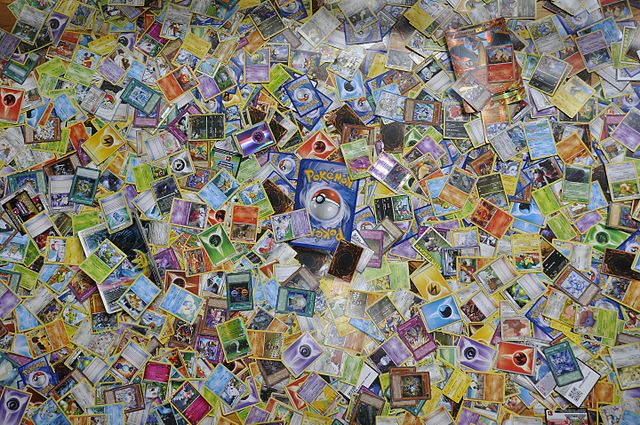
Photograph: Trading cards vending machine by OhanaUnited, used unchanged under Creative Commons Attribution-ShareAlike 4.0. It shows a Singapore vending machine selling Pokémon and One Piece card packs, rather than the individual cards compared here.
Conclusion
The best collecting decisions usually come from structure rather than urgency. When you combine clear comparisons, strong context, and a disciplined buying framework, you give yourself a better chance to build a collection with both enjoyment and staying power.