Answer-first summary
Neo Destiny Shining Charizard suits a collector seeking that exact vintage design and set entry. Another Charizard suits a broader character or illustration goal. Identify both actual copies, decide acceptable defects and edition requirements, then compare matching sales and complete costs; waiting is valid if neither listing fits.
Choose the card that completes your collecting goal
Choose a conventional Charizard release when you want a particular illustration, an original-era memory, or a flexible character collection. Choose Neo Destiny Shining Charizard when the specific Shining design and its place in your vintage collection are the attraction. Neither choice is automatically better: the exact printing, the condition of the copy, and the complete purchase cost can reverse your preference.
Shining Charizard is itself a Charizard card. This comparison therefore puts a broad family against one named release, rather than two different Pokémon. To make it useful, use English Base Set Charizard as one concrete reference and another individually identified Charizard as the artwork-led alternative. Then compare either with English Neo Destiny Shining Charizard, keeping other languages separate.
Do not buy a category label. A listing called “shiny Charizard” might describe a modern shiny Pokémon, a holographic card, or the vintage card discussed here. Ask for the set, collector number, language, edition, and actual-copy photographs. For wider context, see the Charizard collector guide; use the safe-buying guide when assessing a seller.
Define the two candidates precisely
The PSA Charizard checklist identifies English Base Set Charizard as number 4 and Neo Destiny Shining Charizard as number 107. It separates their edition entries. These identities anchor the comparison; a shared character does not make the releases interchangeable.
For Shining Charizard, record Neo Destiny, 107/105, English, and whether the copy is first edition or unlimited. For Base Set, record 4/102 and investigate the printing independently. If your alternative is a later Charizard, record its own expansion, collector number, finish, and language instead of borrowing Base Set terminology. A complete identity should survive even when the seller's title is removed.
A modern Shining Fates card is a different release. The official Shining Fates checklist lists Charizard V as SV107 and Charizard VMAX as SV122. Neither is Neo Destiny Shining Charizard 107/105. Similar words and numbers are a reason to check carefully, not evidence of equivalence.
Save the front and back photographs alongside the identity. A useful comparison sheet has one row per actual card: set, number, language, edition, holder, grade if applicable, visible defects, asking price, and total cost. If an essential field is unknown, leave it visibly unresolved. Filling gaps with optimistic assumptions makes the more complicated purchase look easier than it is.
Compare purpose before price
| Collecting priority | Conventional Charizard candidate | Neo Destiny Shining Charizard |
|---|---|---|
| Original-era memory | Base Set may fit the specific memory | Fits a different vintage collecting chapter |
| Artwork-led display | Choose the particular illustration you enjoy | Choose this specific Shining design |
| Completion goal | Match the release to the set or character plan | Match the exact edition and language to the plan |
| Flexible shopping | Define several acceptable releases in advance | Search within one tightly defined release |
| Evidence needed | Matching sales for the chosen printing | Matching sales for the chosen edition and condition |
The table describes collecting choices, not measured market rankings. A flexible shopping list can make it easier to find an acceptable purchase because more cards qualify. It does not prove that every conventional Charizard is cheaper, more available, or easier to sell than Shining Charizard. Those questions require evidence for the exact candidate.
Ask what would still matter if you never resold the card. The answer might be childhood artwork, completing a Neo collection, a visual contrast in a display, or owning one well-documented vintage example. That purpose helps decide which compromises are acceptable. A card that fails the collection's purpose does not become a good fit merely because a seller calls it a bargain.
When a conventional Charizard fits better
A conventional Charizard is a useful choice when the character matters more than one particular release. You can define an artwork, period, size, finish, and condition preference, then compare several eligible cards. This approach suits a collector who wants a satisfying display without making a specific vintage set entry mandatory.
Base Set Charizard belongs on the shortlist when that original English release is the point. Its role is different from a later illustration you prefer aesthetically. Separate those reasons: buying a vintage copy for nostalgia and buying a later card for its composition are both coherent decisions. Neither requires arguing that the other card is inferior.
Flexibility needs boundaries. Make a shortlist before shopping, with an explanation for each candidate and a total spending ceiling. Otherwise, a broad search can become repeated impulse buying. If you already own the artwork that prompted the search, ask what the next copy adds: a different printing, better presentation, a set milestone, or merely another version of an existing idea.
The trade-off is that a substitute may leave a specific goal unfinished. A modern Charizard cannot complete a Neo Destiny Shining entry, however attractive its artwork is. If that entry is the real goal, buying several substitutes may consume the budget without reducing the desire. Waiting can be the more satisfying collecting decision.
When Shining Charizard fits better
Neo Destiny Shining Charizard makes sense when you want that named release and can explain its role without referring to a predicted price increase. It can anchor a focused vintage collection or provide a distinct counterpart to another Charizard already owned. The reason should be personal and specific enough to guide edition and condition choices.
Edition preference is part of the goal. If an English first-edition set is your project, an unlimited copy is not an exact completion substitute. If the visual card is the attraction, the edition stamp may matter less than the quality of the copy you can comfortably buy. Decide this before seeing a listing that encourages you to stretch the budget.
A narrow target also means fewer acceptable substitutes within your own criteria. You may need to wait for suitable photographs, a seller with clear terms, and defects you can live with. This is a consequence of your specification, not a claim about print runs or current supply. Do not relax several requirements simultaneously just because the card is available today.
The principal compromise is concentration. One purchase may use money that could otherwise support several collection goals. Compare the satisfaction of this card with the collection you would postpone. If buying it means accepting an unwanted crease, uncertain identity, or uncomfortable total cost, the intended centerpiece may become a persistent source of frustration.
Judge the actual copy, not just the grade
Separate visual enjoyment from edition significance. Some collectors prioritize a clean-looking front for display; others prioritize a particular printing even with visible wear. Write down your tolerances for corner wear, whitening, scratches, dents, creases, and discoloration. Two equally described cards can differ substantially in how their defects affect your enjoyment.
Request a straight-on front, a complete back, close views of corners and edges, and angled light across reflective surfaces. Ask for an additional view when glare covers the area you need to inspect. A sleeve or holder can hide damage or introduce reflections. Do not demand risky handling solely to improve a photograph; unresolved evidence is enough reason to pass.
For graded cards, the PSA standards provide a framework for condition vocabulary. A numerical grade is not a complete description of eye appeal. Inspect the card and holder shown in the listing, and check that the label identifies the intended release. Comparing different graders solely by matching numbers can obscure differences in their assessment systems.
For raw cards, budget as though the observed condition is the condition you are buying. A seller's predicted grade is not an assigned grade. Do not justify an otherwise uncomfortable purchase with a hoped-for grading result. If independent assessment matters to you, include submission costs, transport, waiting time, and the possibility that the result will not meet your expectations.
Build a fair sales comparison
Research the two candidates separately. Match set, number, language, edition, finish, grading company, assigned grade, and visible presentation wherever relevant. A first-edition Shining sale cannot establish an unlimited copy's value by itself, and a Base Set sale cannot price every card featuring Charizard. Identity comes before arithmetic.
Use completed transactions with inspectable records. Asking prices tell you what sellers request; they do not establish what buyers paid. Remove obvious mismatches and repeated appearances of the same copy where you can identify them. Keep transaction dates and venues, and flag records with missing pictures or uncertain accepted-offer information rather than treating every number as equally reliable.
Look at a range of comparable evidence rather than selecting the highest or lowest sale. An unusual result can reflect exceptional presentation, poor listing quality, transaction terms, or a mismatch. If only a few useful records remain, acknowledge that uncertainty. Expanding the sample by adding different releases creates apparent precision while weakening the comparison.
This article supplies no live price ranking or numerical liquidity claim. If resale flexibility matters, examine how many closely matching copies sold during a defined period, how widely outcomes varied, and what selling costs apply. A familiar character and an appealing rarity story do not answer those questions. The practical result may be that you lack enough evidence to choose confidently today.
Calculate the complete purchase cost
Compare totals in the same currency and at the same decision date. Include the card, shipping, taxes or import charges where applicable, payment or currency-conversion costs, and any immediate holder or storage needs. If grading is optional, show it separately so an appealing card price does not quietly become a larger project.
Keep purchase cost distinct from a possible future selling outcome. Selling fees, delivery, time, and uncertainty affect what you could recover. Do not assume that buying at a recorded past sale guarantees the same result later. Your budget should remain comfortable without depending on a future sale, a higher grade, or a market move.
A useful hypothetical comparison is one attractive unlimited Shining copy against one clearly identified Base Set copy. Both pass identity checks, but one has a front scratch and the other has back whitening. The relevant question is which defect you tolerate and which card completes your goal at the verified total. An edition upgrade is not automatically worth sacrificing the presentation you wanted.
Add a waiting option to the sheet. Neither current listing may satisfy your requirements. Waiting preserves the budget and gives you time to improve identification and comparison skills. Avoid framing every shopping session as a compulsory choice between two cards; declining both can be the strongest answer supported by the evidence.
Verify authenticity and transaction terms
Use several checks together: correct identity, consistent photographs, credible seller history, clear ownership or sale context, and enforceable purchase terms. Pokémon's counterfeit-card guidance is a useful official starting point. A convincing photograph alone cannot authenticate every aspect of a vintage purchase.
For an encapsulated card, compare the certification record with the label and actual card where the grader provides that information. A genuine certification number can be copied into a misleading listing. Inspect the holder for inconsistencies and ask the seller to resolve mismatched details. For an expensive or uncertain purchase, seek a qualified independent assessment rather than relying on a single online visual test.
Agree on return conditions, shipping arrangements, and what happens if the delivered card differs from the listing. Save the listing, messages, receipt, and photographs. Avoid destructive authenticity tests: tearing, scraping, or bending a card damages the object and does not provide a sensible purchasing process. Missing evidence and pressure to decide quickly are sufficient reasons to stop.
Consider a broader Pokémon collection
The queue's Pikachu and Blastoise references are useful as collection alternatives, not direct substitutes for Shining Charizard. Pikachu may suit a display centered on several recognizable Pokémon. Blastoise may fit a starter-themed arrangement. In either case, choose the exact card independently and research its own condition and transactions; Charizard evidence does not price another character.
Base Set Charizard is the concrete historical reference in this comparison. Putting it beside Shining Charizard can be a coherent display if you enjoy comparing two releases of one character. Owning both is optional. A focused one-card collection can be more satisfying than a wider arrangement assembled without a clear reason for each addition.
Before buying, describe the finished collection in one sentence. Then list what the candidate adds and what it displaces. If the answer is only that someone else calls it essential, revisit the goal. Collector relevance and long-term satisfaction are personal judgments; unsupported claims about inevitable demand should not substitute for them.
A decision routine you can reuse
First, identify both actual candidates completely. Second, write the collecting reason and acceptable defects for each. Third, inspect the evidence and resolve identity or condition gaps. Fourth, build separate matching-sales samples. Fifth, calculate complete purchase totals. Finally, choose the better fit or wait if neither meets the requirements.
For a first-time collector, the best starting point is a card with a clear identity, useful photographs, manageable total cost, and understandable terms. That might be an ordinary Charizard release, a vintage Base Set copy, or Shining Charizard after sufficient research. The name of the card does not remove the need to learn the transaction.
The main trade-offs are breadth against a specific completion goal, preferred appearance against edition significance, and one concentrated purchase against several collection priorities. Make those choices explicitly. This approach gives you a defensible reason for buying either candidate without inventing a universal winner or a promise about resale.
Methodology and photograph credit
We compared collector relevance, authentication evidence, condition compromises, and the transaction records needed to assess resale flexibility. We treated future demand as uncertain and emphasized a repeatable decision process. The linked identification references support release distinctions; the comparison routines and hypothetical example are editorial guidance, not a live appraisal or financial advice.
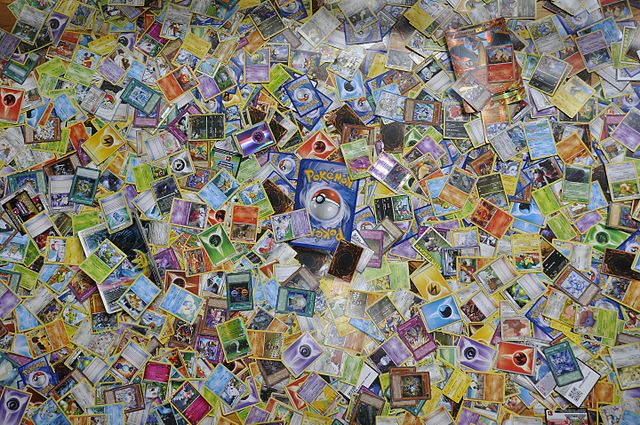
Featured photograph: Nabeel H, visitors entering the Pokémon National Championships, used unchanged under Creative Commons Attribution-ShareAlike 2.0. The photograph illustrates the wider Pokémon community, not either card being compared.
Conclusion
The best collecting decisions usually come from structure rather than urgency. When you combine clear comparisons, strong context, and a disciplined buying framework, you give yourself a better chance to build a collection with both enjoyment and staying power.