Answer-first summary
Binders are the better choice for sets, teams, eras, and personal collections that are enjoyed by browsing pages. Fitted boxes and cases are better for bulk cards, duplicates, changing inventory, top loaders, magnetic holders, graded slabs, transport, and restricted access. Most collectors benefit from a hybrid system: use binders only for coherent groups that fit their pages safely, and use measured boxes or cases for everything that needs greater density, holder flexibility, individual labeling, or movement control.
The short answer: choose by how the cards are used
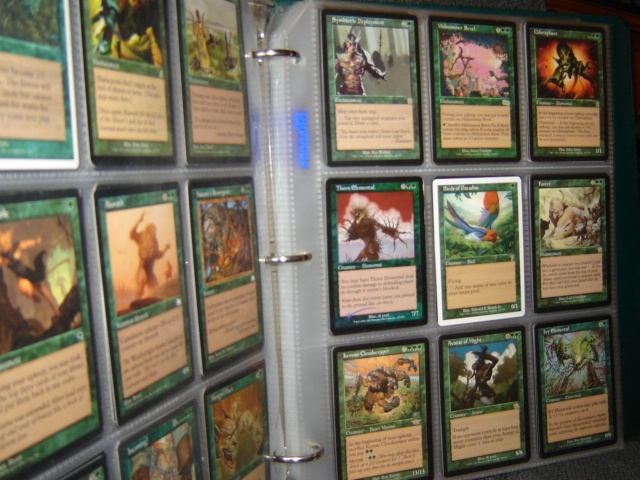
Binders are better for a coherent group of standard-size cards that you want to see in order. They make a set, team run, player collection, or favorite-card album easy to browse without removing every card. Empty pockets can show what is missing, and page order turns the collection into a visual record.
Boxes and fitted cases are better when capacity, expansion, holder variety, individual retrieval, or transport matters more. They handle duplicates, bulk cards, top-loaded singles, magnetic holders, grading candidates, and certified slabs more naturally. Dividers can change as the collection changes, while a fitted outer case can restrain its contents during movement.
Neither is universally better. A binder is a presentation and browsing tool that also stores cards. A box is a compact organization tool; a fitted transport or security case adds another specific function. Most mature collections use both because the cards do not all perform the same job.
The practical rule is simple: put a group in a binder when page-by-page viewing is part of its purpose and every card fits safely. Put it in a box or case when the group needs density, frequent reorganization, rigid individual holders, controlled movement, or restricted access.
What “sports card storage” means in this comparison
The box-and-case side includes several formats rather than one product. A basic card box holds sleeved raw cards in supported rows. A larger fitted box can accept top loaders or slabs. A transport case restrains compatible holders while moving. A cabinet or safe can limit access to a defined group, although it cannot replace card-level enclosures or environmental planning.
That range is important because comparing one binder with every possible container can hide the real decision. Start with the job, then choose the least complicated container that performs it. A collector who only needs dense shelf storage does not automatically need a heavy travel case. A collector who takes sale inventory to shows should not assume a lightweight household box will control the load.
A full system also extends beyond the visible container. Sleeves, pages, dividers, labels, shelf dimensions, loaded weight, room conditions, inventory records, and handling habits all affect the result. The complete sports card storage guide maps those layers in more detail.
Where binders are clearly better
Browsing a set or story
A binder lets collectors understand a group spatially. Nine-pocket pages can show a run, checklist, team, season, or theme at a glance. That experience is difficult to reproduce with cards standing behind dividers. If enjoyment comes from turning pages with another collector, a binder provides the better interface.
Binders can also make gaps obvious. A reserved empty pocket communicates the missing card immediately. In a box, placeholders or an external checklist must do that work. This makes binders especially effective for stable projects with a known sequence.
Reducing unnecessary removal
Cards in a well-fitted page can be viewed front and back without being pulled from individual holders. That can reduce routine transfers during casual browsing. The advantage disappears if pockets are loose, cards slide toward openings, or pages must be bent sharply to see them.
Presenting a personal collection
A curated binder can be more inviting than a row of labeled boxes. It gives context to cards that may not justify rigid holders but matter as a group. Player collections, favorite photography, complete team issues, and low-cost childhood sets often gain more from accessible presentation than from maximum storage density.
Where boxes and cases are clearly better
Capacity and efficient expansion
Boxes usually use shelf volume more efficiently for sleeved cards. They accept dividers, allow categories to grow, and make it easier to add duplicates without redesigning page order. A partly filled row needs suitable support so cards do not lean or collapse, but expansion remains straightforward.
Binders become awkward when a sequence changes. Inserting one card near the front may require moving many cards. Adding pages can strain a ring binder or change how it sits on the shelf. Fixed-page binders avoid ring problems but impose a hard capacity limit.
Mixed holder formats
Standard binder pockets are designed around a narrow card-and-sleeve profile. Thick memorabilia cards, booklet cards, unusual cuts, top loaders, magnetic holders, and graded slabs need different formats. Trying to force them into ordinary pages creates pressure and poor fit.
Measured boxes can separate these groups while preserving a common labeling system. Raw cards can occupy one box, top-loaded cards another, and slabs a compatible slab box. The container should match the full holder dimensions, not just the advertised card size.
Changing and transactional inventory
Cards intended for sale, trade, grading, or regular resorting benefit from individual access. A divider-based box allows one card to move without shifting an entire page sequence. Individual labels can carry inventory numbers, prices, or workflow status without placing stickers near the card itself.
The advantage comes with a discipline requirement. A box without readable dividers and an inventory can become an opaque archive. The best format is not the one that holds the most; it is the one from which you can find a card without unnecessary handling.
Transport and access control
A binder can travel, but ordinary rings, zippers, and pages do not automatically control a loaded collection through drops, vibration, or compression. A fitted case can restrain compatible boxes or holders and provide handles and closures intended for movement. Even then, cards need correct inner protection and empty space must be controlled.
A cabinet or safe may be appropriate when unauthorized access is the main concern. It adds decisions about installation, floor load, locks, humidity, emergency recovery, and insurance. It should serve a defined high-consequence group rather than becoming the default answer for every common card.
Side-by-side decision table
| Factor | Binder | Box or fitted case |
|---|---|---|
| Best use | Browsable sets and themes | Dense, varied, or changing inventory |
| Viewing | Excellent page-level overview | Card-by-card retrieval |
| Expansion | Limited by pages and sequence | Flexible with space and dividers |
| Standard raw cards | Good with correct pages and sleeves | Good with fitted rows and support |
| Rigid holders | Limited or specialized | Strong when box dimensions match |
| Graded slabs | Poor in ordinary pages | Strong in compatible slab boxes |
| Transport | Acceptable only with careful restraint | Better with a truly fitted outer case |
| Reorganization | Labor-intensive for ordered pages | Usually faster behind dividers |
| Inventory visibility | Visual for a stable sequence | Strong with labels and digital records |
| Main failure mode | Pocket, page, ring, or pressure problems | Movement, crushing, poor fit, or lost location |
The winner depends on which row matters most. A set builder may accept slower reorganization for the pleasure of seeing every position. A seller may value fast retrieval and modular expansion far more than page presentation.
Binder design choices that matter
Not all binders behave alike. A fixed-page, side-loading, zippered binder can limit some movement and eliminate metal ring pressure. A ring binder allows pages to be replaced or rearranged but requires careful page capacity, ring alignment, and shelf handling. If pages ride across a ring or the binder is overfilled, cards near the hardware can experience uneven pressure.
Pocket direction matters. Side-loading pockets can reduce the chance of cards moving out through the top during ordinary handling, especially when an outer closure keeps the binder stable. Pocket fit still matters: too loose allows movement, while too tight makes insertion difficult and can press on corners or surfaces.
Use pages and sleeves that identify their materials rather than relying only on words such as “premium” or “archival.” Inspect seams, clarity, odor, residue, and dimensional consistency. Test several lower-consequence cards before filling a binder, and never use force to make a thick card fit.
Store binders upright with appropriate support when their design permits it, and avoid unstable leaning or tall horizontal stacks. Do not overfill them. Turn pages from supported edges on a clean surface, and keep food, drinks, direct sunlight, damp floors, and likely leak paths away.
Box and case choices that matter
Measure the actual sleeved or rigid holder before buying a box. Confirm internal length, width, height, lid clearance, divider thickness, and how much movement remains when the row is loaded. Marketing terms such as “standard,” “graded,” or “universal” are starting points, not proof of compatibility.
Partly filled rows need non-abrasive support so cards stay upright without being compressed. Overfilled rows make retrieval rough and can bow cards or holders. Leave enough working space to lift one item cleanly, but not so much that everything falls during normal movement.
For transport, test the completed load rather than an empty case. Check closures, handle comfort, weight, internal movement, corners, and how the case fits in the vehicle or travel routine. A hard exterior does not help if holders collide inside it.
For card safes or cabinets, plan the installation before delivery. Consider location, discretion, household access, floor support, anchoring, humidity monitoring, and what happens after water or fire exposure. A secure enclosure can reduce one risk while making recovery slower, so documentation and an emergency plan remain necessary.
Which cards belong in a binder?
Binders suit standard-size cards that form a stable, viewable group: complete or nearly complete sets, team runs, player collections, low-cost parallels, favorite designs, and personal-history collections. The cards should fit the selected sleeve and pocket without pressure, sharp movement, or exposed edges.
Market price alone is not the deciding line. A modest card may be perfect in a binder because its value comes from the page sequence. A more expensive card may also remain in a binder if the collector accepts the handling and access profile. Conversely, an inexpensive but irreplaceable family card may deserve individual rigid protection and separate documentation.
Avoid treating every empty pocket as a command to fill it. Placeholders should not create pressure or encourage repeated card movement. If a project changes constantly, a labeled box plus a digital checklist may be more practical until the sequence stabilizes.
Which cards belong in boxes or fitted cases?
Boxes are usually better for duplicates, bulk inventory, unsorted acquisitions, active trade stock, top-loaded cards, grading candidates, and cards awaiting cataloging. Separate incompatible sizes so small holders cannot tip between larger ones. Give every box and divider a durable location code.
Graded cards need a container that fits the actual slab formats owned. Slab dimensions differ, and a box that works for one service or generation may fit another poorly. Before submitting cards, review the complete card grading guide and verify current service instructions using the safe grading purchase guide.
Transport cases suit groups that genuinely move. Secure cabinets or safes suit groups whose loss would have serious financial or personal consequences. Neither should be purchased because it looks like the strongest option in isolation; both must work with the holders, room, inventory, and real handling routine.
Cost: compare the completed system
A binder's price is not its full cost. Include sleeves, pages where separate, replacement capacity, labels, shipping, and shelf space. A cheap ring binder with inconsistent pages can cost more after replacement than a well-specified fixed-page model.
A box also depends on sleeves or rigid holders, dividers, row support, labels, shelving, and sometimes an outer transport case. A safe adds delivery, installation, monitoring, and possible insurance coordination. Compare the completed cost for one defined card group rather than the sticker prices of unrelated products.
Buying in volume before testing is a common false economy. Order a sample, inspect several units, load them with lower-consequence cards of the intended dimensions, and use them through a normal browse or retrieval cycle. The guide to buying sports card storage safely provides a product and seller checklist.
A practical hybrid system
Start by grouping cards according to use, not assumed prestige:
- stable sets and themes meant to be browsed
- ordinary raw cards and duplicates
- selected raw cards in rigid holders
- grading candidates and cards in transit
- certified slabs
- active sale or trade inventory
- cards with unusually high personal or replacement consequence
Assign one primary format to each group. Use binders for the first group when fit and page handling are sound. Use fitted raw-card, top-loader, or slab boxes for the next groups. Add a transport case only to inventory that moves, and restrict access only where the consequence justifies the added system.
Create an inventory that records the card, holder, container, and location. Photograph important cards and distinguishing details, and keep a backup away from the collection. Review the setup after new acquisitions, a move, a leak, changes in household access, or a significant shift in how the cards are used.
Final verdict
Binders win when viewing a stable sequence is the point. They turn sets and themes into readable collections and reduce the need to remove cards during casual browsing. Their limits are pocket fit, page support, capacity, ring or spine pressure, and poor compatibility with varied rigid holders.
Boxes and fitted cases win for density, expansion, mixed formats, individual retrieval, workflow labeling, transport, and controlled access. Their limits are hidden contents, internal movement, loaded weight, and the need for disciplined dividers and inventory.
For most collectors, the best answer is both. Build a binder for the cards whose relationship deserves to be seen. Build measured, labeled box lanes for cards that need flexibility or rigid protection. Then add transport or secure storage only for a defined purpose. That produces a collection that is easier to enjoy and easier to manage without pretending one container can solve every risk.
Conclusion
The best collecting decisions usually come from structure rather than urgency. When you combine clear comparisons, strong context, and a disciplined buying framework, you give yourself a better chance to build a collection with both enjoyment and staying power.