Answer-first summary
Reduce Charizard collecting mistakes by writing down your collection boundary, acceptable defects, and total budget first. Buy the identified card in its present state, preserve its records, and judge any upgrade by the specific improvement it provides.
The mistakes begin before the purchase
The most common Charizard collecting mistakes are buying an unidentified printing, paying for a hoped-for grade, and letting a famous character replace a clear collecting goal. A better starting point is a written brief: the exact release you want, the defects you can accept, your total spending limit, and the evidence you need before paying. That brief makes attractive listings easier to judge consistently.
Charizard is a character, not one interchangeable collectible. Two cards showing similar artwork can differ in language, set, finish, and printing. A card can also be authentic but unsuitable for your display or priced against the wrong comparison group. Successful collecting therefore involves several separate decisions rather than one confident reaction to the name.
This guide examines errors across the collecting process, including purchase planning, grading decisions, recordkeeping, and upgrades. It uses practical examples rather than live valuations. The goal is a collection you understand and enjoy, with fewer avoidable costs and fewer assumptions hidden inside each purchase.
1. Buying the character without identifying the card
A listing titled “original Charizard” leaves too much unresolved. Record the set name, collector number, language, finish, and relevant printing details. Read the card itself and compare front and back images with a dependable reference. If the title and photographs disagree, ask the seller to explain the difference before comparing prices.
Base Set Charizard illustrates the problem. PSA maintains a separate reference for the shadowless printing. That distinction is a reason to identify a copy carefully; it does not establish that every unfamiliar border or copyright detail represents a valuable variation. Avoid promoting an unresolved observation into a rarity claim.
Save a one-line identity alongside each candidate listing. If you cannot complete it, the card belongs in your research list rather than your checkout basket. The Charizard collector guide provides broader context for choosing between releases once identification is settled.
2. Borrowing prices from a different comparison group
A spectacular sale can anchor your expectations even when its card differs from yours. Match the release, language, printing, finish, and condition before using a transaction as evidence. Separate raw cards from graded cards, and separate grading companies and assigned grades. A larger spreadsheet does not help if its rows describe different collectibles.
Asking prices describe sellers' ambitions. Completed transactions provide more relevant evidence, but inspect their details too: sale date, included items, condition photographs, and whether an accepted offer amount is actually visible. Mark an uncertain record as uncertain. Do not quietly substitute the original asking price for an undisclosed final amount.
Use a small range of well-matched observations rather than one dramatic result. If relevant evidence is sparse, say so and reduce your confidence. Blastoise and Pikachu can help you compare collecting themes, but their sales cannot fill gaps in a Charizard valuation. Character popularity does not turn another Pokémon's card into a comparable.
3. Paying today for a grade that does not exist
“Potential ten” is a seller's opinion, not an assigned grade. A promising raw card may have surface defects, edge wear, or centering issues that photographs do not resolve. Budget for the copy in its current state. Any future grading result should be treated as an uncertain outcome with additional costs.
Read PSA's published grading standards for the terminology used by that service. The standards describe multiple aspects of a card; a clean-looking front alone is insufficient. Do not assume another company's similarly numbered grade means the same assessment or attracts the same buyers.
For a submission decision, list the purchase cost, grading charge, insured shipping where appropriate, and other applicable costs. Consider whether you would still enjoy owning the card if its result were lower than hoped. If the purchase only makes sense after a top grade, you are relying on an outcome you do not control.
4. Treating a condition label as a full inspection
“Near mint,” “pack fresh,” and “beautiful” do not tell you where the flaws are. Ask for clear front and back photographs, corner details, and angled surface views. Describe observations before choosing a condition label: a white patch on an edge, a scratch through the foil, or a depression beside the illustration.
Decide which defects matter to your own collection. A binder collector may accept reverse wear while rejecting a crease across the artwork. Someone building a uniform graded display may prioritize a particular holder and assigned grade. Neither preference establishes a universal discount for the rest of the market.
Separate what is visible from what is unknown. Glare, sleeves, and holders can obscure marks. Missing photographs should lower your willingness to pay, rather than encourage optimistic guesses. A cheaper copy with disclosed wear can be a more satisfying choice than an expensive copy whose main selling point is uncertainty.
5. Confusing verification with a guarantee
Check a graded card's certification number on the grading company's official site, then compare the record with the photographed card and label. When reference images are available, examine those as well. A correct number is useful evidence, but it does not independently authenticate the physical object offered by a seller.
PSA's certification page explicitly notes that valid numbers can be copied onto counterfeit inserts. Use verification alongside holder inspection, seller history, and clear transaction terms. If a material discrepancy remains unexplained, pause the purchase rather than treating the database result as permission to ignore it.
For raw cards, consult Pokémon Support's counterfeit guidance and seek knowledgeable examination when doubt remains. Avoid destructive tests. No single photograph or home check should settle every authenticity question. The safe buying guide covers listing and transaction checks in more detail.
6. Choosing the budget after finding the listing
Set a total acquisition budget before browsing. Include the card, delivery, applicable taxes or import charges, and any protection or storage you need. A listing within your card-only limit may exceed the amount you intended to spend once checkout is complete. Compare totals on the same basis across sellers.
For illustration, suppose your limit is 300 units of your own currency. A card priced at 270 leaves 30 for every remaining cost. If delivery and applicable charges exceed that remainder, the purchase is outside the brief even though the headline price looks acceptable. These invented figures demonstrate arithmetic, not a Charizard valuation.
Reserve money for the rest of your collecting plan. One centerpiece can crowd out companion cards, storage, or a later release you prefer. Revisit the budget when your priorities change, but avoid rewriting it simply because a seller introduces a countdown or says another buyer is waiting.
7. Chasing every release instead of defining a collection
A character collection can expand faster than its owner expects. Choose a boundary that is easy to explain: selected artwork, one language, a particular era, or a manageable checklist. Decide what completion means before acquiring scattered cards. A defined theme helps distinguish a worthwhile addition from an appealing distraction.
Pikachu is a useful reference for asking whether you prefer a wider character collection. Blastoise can help frame a starter-themed display. Base Set Charizard can serve as an early-artwork focus when its exact printing fits your brief. These are collecting choices, not a ranking or a claim that one theme offers superior returns.
Keep a separate wish list for cards outside the boundary. You can revisit it later without buying immediately. If a new release changes your taste, revise the theme deliberately. An unfinished but coherent collection can offer more satisfaction than a larger collection assembled from unrelated moments of urgency.
8. Reading scarcity as an automatic reason to pay more
A low population in one grade is not a complete measure of how many cards exist. Submission choices, grading standards, and the date of the report affect what you see. Raw copies and examples graded elsewhere are outside that particular count. Record the scope before using a population number in your reasoning.
Scarcity also does not establish how many buyers want the exact version at your proposed price. Distinguish limited observed supply from demonstrated demand. If only a few sales exist, avoid interpreting the highest result as a price every future seller can obtain. Thin evidence should remain thin evidence.
Ask whether rarity is central to your enjoyment or merely a persuasive phrase in the listing. A widely available card with artwork you love can be a better fit for your collection. You do not need to invent a scarcity story to justify choosing it within a sensible budget.
9. Forgetting protection and purchase records
Plan storage before the card arrives. Use appropriately sized protective supplies intended for trading cards and avoid forcing a card into a tight opening. Keep cards away from direct sunlight, moisture, and situations where pressure or bending can occur. Inspect the storage arrangement as well as the card itself.
Save the listing, seller messages, payment record, and arrival photographs. Record the identity, disclosed defects, total cost, and certification details where applicable. This makes later comparisons easier and helps you separate pre-existing wear from a delivery problem. Check applicable claim and return deadlines promptly rather than assuming unlimited time.
Keep inventory entries for duplicates too. Two copies of the same release may have different defects and purchase costs. Without individual records, an upgrade can leave you unsure which copy was which. A modest collection still benefits from clear photographs and consistent names in its files.
10. Upgrading without accounting for the whole change
An upgrade has two sides: acquiring the replacement and deciding what happens to the existing copy. Expected sale proceeds are not guaranteed cash. Account for selling charges, delivery, and the time needed to find a buyer before assuming the old card will fund the new one.
Compare the actual improvement with its total cost. Is the replacement's artwork clearer, its wear less distracting, or its presentation more consistent with your display? A higher number on a label may matter to your theme, but it is worth explaining what that change gives you personally.
Avoid repeated small upgrades driven by dissatisfaction you have not defined. Photograph your current card and write down the specific feature you want to improve. If a candidate does not solve that problem, it may simply create another transaction. Keeping a satisfactory copy is a legitimate collecting decision.
A review routine before you commit
Use the same sequence for each candidate: identify the card, assess the actual copy, verify the supporting evidence, compare matching transactions, and calculate the full cost. Then ask whether it advances the collection you intended to build. Write unresolved questions down so they cannot disappear under the excitement of checkout.
A useful decision note is brief: “I want this release for its artwork; I accept the photographed reverse wear; the total fits my limit; the seller clarified the printing.” If you cannot write a similarly concrete explanation, further research may be more useful than a purchase. Repeating this routine is how collectors turn experience into better decisions.
Method and image credit
The guide uses collector-focused examples and practical buying considerations, prioritizing broadly useful decisions over specialist printing exceptions. Official identification, grading, certification, and counterfeit references support the relevant checks. Collection boundaries, spending examples, and upgrade routines are editorial frameworks; they are not measured market findings.
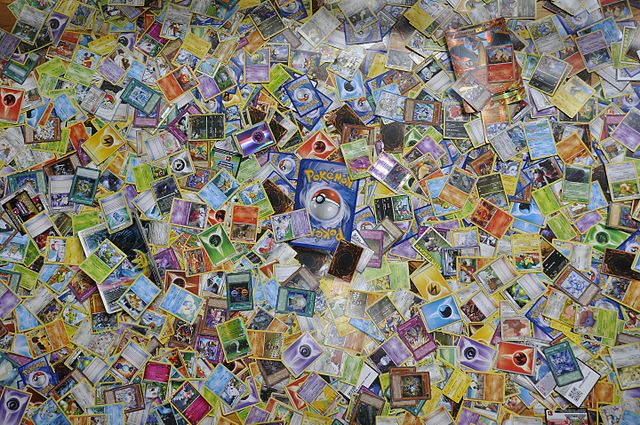
Featured photograph: Klapi, Pokémon Trading Card Game at Pyrkon 2022, licensed under Creative Commons Attribution-ShareAlike 4.0. The original photograph is unchanged and depicts the wider card-game community, rather than a particular Charizard card.
Conclusion
The best collecting decisions usually come from structure rather than urgency. When you combine clear comparisons, strong context, and a disciplined buying framework, you give yourself a better chance to build a collection with both enjoyment and staying power.