Answer-first summary
Start an Eeveelution collection by defining the characters, language, and releases you want. Identify each card by printing and finish, price the whole checklist, and inspect condition before comparing matched completed sales.
Start with a collection you can define
Eeveelutions are Eevee's eight evolved forms: Vaporeon, Jolteon, Flareon, Espeon, Umbreon, Leafeon, Glaceon, and Sylveon. For card collectors, the term describes a family of subjects across many releases, languages, finishes, and illustrations. It does not describe a single set or a uniform price category. A useful first collection is one card of each evolution, with Eevee as an optional ninth slot, chosen within a fixed total budget.
Start by deciding whether you want characters, a coordinated page, one favorite Pokémon, or a particular era. Then identify each card precisely before considering condition and price. This sequence matters because a visually similar printing can be a different collectible. There is no requirement to buy the most discussed Umbreon or complete every variant to build a satisfying collection.
Choose your boundary before choosing cards
A character checklist is the most flexible approach. Pick one illustration you enjoy for each evolution, allowing different sets and rarity levels. This suits collectors who want a recognizable family without making the whole project depend on an expensive final card. Decide whether Eevee belongs on the page before buying a binder with a particular layout.
A matching release is more visually consistent but potentially less forgiving. First confirm that your chosen release actually contains every character and version you intend to include. Similar branding does not prove that the checklist is symmetrical. If one slot costs more than you are comfortable spending, change the scope while it is still inexpensive to do so.
A single-character collection offers another route. An Umbreon collector might choose ordinary cards, selected illustrations, and one promotional card rather than every language and finish. Write the stopping rule down. Otherwise, a modest project can quietly become an open-ended checklist whose missing variants determine every purchase.
Learn the names across languages
Language is part of card identity. English Vaporeon, Jolteon, and Flareon are Aquali, Voltali, and Pyroli in French, and Aquana, Blitza, and Flamara in German. Japanese cards use シャワーズ, サンダース, and ブースター. Knowing the local names helps you search listings without assuming that different names indicate different characters.
For the remaining evolutions, check the character and illustration against the intended release rather than relying only on a translated listing title. Keep the printed name and collector number in your inventory. A seller may use an English search term for a Japanese card, so the listing headline alone cannot establish language or edition.
Mixing languages is a legitimate aesthetic choice. It becomes a problem when mixed-language cards are compared as interchangeable sales or a complete collection is described without disclosing the difference. If consistency matters, define the language rule at the start; if it does not, record each card's language anyway.
Identify the exact printing
For every candidate, record the character, set or promotional series, collector number, language, finish, and any edition distinction. Add the grading company and grade if the card is encapsulated. A photograph of both sides should support those details. If the title and pictured card disagree, resolve the discrepancy before paying.
Card numbers are particularly useful because the same character can have several treatments within a release. An ordinary card, a reverse-holographic version, and a more elaborate illustration should not be grouped merely because they share a Pokémon name. Likewise, a promotional card needs its own identity rather than being assigned to the expansion whose branding appears on its packaging.
Treat collector nicknames as search aids. A phrase such as “alternate art” can help locate listings, but sellers do not necessarily apply it consistently across eras. Verify the actual card against a release checklist or reliable reference image. The full identity should be clear enough that another collector could find the same printing without seeing your listing.
Use releases as research anchors
Sword & Shield—Evolving Skies and Scarlet & Violet—Prismatic Evolutions are useful starting points for researching modern Eevee-themed collecting. They are examples, not a complete history or a claim that every appealing evolution card belongs to those releases. Explore a checklist before deciding which cards belong in your project.
The official Prismatic Evolutions page presents Eevee and its evolutions as a central theme. That makes it a relevant research anchor, but promotional emphasis does not establish rarity, pull rates, or resale value. Those questions require evidence about the specific printing and transaction.
Older cards and promotional releases can make an equally coherent collection. The trade-off is research: edition differences, distribution, and condition may require more attention. Start with a clear, verifiable reference rather than buying a supposedly scarce card because the seller describes it as vintage or exclusive.
Compare collection routes honestly
| Route | Why it can work | What to check first |
|---|---|---|
| One card per evolution | Flexible budget and visible progress | Language and the total cost of all slots |
| Matching release | Consistent design and a clear checklist | Whether the intended lineup exists |
| One favorite character | Personal focus and room to explore artwork | A stopping rule for variants |
| Graded display | Standardized labels and protected handling | Holder size, grade premium, and certification |
Price the entire route before buying the opening cards. Eight inexpensive purchases can still leave one difficult slot that changes the project. A temporary placeholder is reasonable when you label it honestly and accept that it may remain part of the collection. Completion should express your plan, rather than pressure you into abandoning it.
Inspect condition beyond the front photograph
Look at corners, edge whitening, centering, scratches, dents, and creases. Ask for clear back photographs and angled surface views when the finish makes damage difficult to see. A sleeve reflection can hide a scratch; a bright scan can make surface wear disappear. Request additional evidence when the price depends on unusually clean condition.
Separate production characteristics from later damage, while recognizing that both can affect appearance and grading. A newly opened card can have manufacturing imperfections. A seller calling a card “pack fresh” describes its handling history at best; it does not establish a professional grade or guarantee that you will like the surface.
Choose your acceptable defects before comparing listings. For a binder collection, a lightly worn back may be an acceptable compromise if the illustration looks good. For a display focused on clean surfaces, the same copy may be unsuitable. Condition matters through your objective as well as through the market's labels.
Decide whether grading serves the collection
Graded cards can make condition comparisons more structured, but the label is only part of the purchase. Inspect the card, holder, identification, and certification details. A matching certification record is a useful check; it does not independently prove that the photographed holder or the item delivered is genuine.
Read the grading company's published standards before paying for a grade premium. Grading involves several condition factors and judgment. Two cards with the same numerical grade may present differently, so choose the example you prefer rather than treating the label as a substitute for inspection.
For raw cards, work out whether you would still want the purchase if it remained raw permanently. Add submission fees, shipping, insurance where applicable, and the possibility of a lower grade when assessing a grading plan. If the purchase makes sense only after a perfect result, the collection is carrying an avoidable dependency.
Build comparable sales around the card
Compare completed transactions for the same printing, language, finish, grading company, and grade whenever possible. Record the sale date, currency, shipping treatment, and visible condition. A bundle, damaged copy, or accepted offer with an undisclosed final amount can distort a comparison if you treat it as an ordinary single-card sale.
Use several observations rather than selecting the highest result. Asking prices reveal seller expectations, while completed sales provide evidence of transactions; neither guarantees what your own card would achieve. If the available examples are old or inconsistent, describe the uncertainty instead of filling the gap with a confident estimate.
Calculate your total cost separately. Delivery, local taxes, import charges, currency conversion, and payment fees can change which listing is preferable. A lower sticker price from another country may lose its advantage after those costs. Keep the comparison in one currency and note the date of the conversion.
Understand demand without inventing a ranking
Umbreon is a useful example of why collectors must distinguish a character from a particular card. Interest in one celebrated illustration does not establish equal interest in every Umbreon printing. Check the exact version and the number of relevant sales before describing it as easy to sell.
Charizard and Pikachu, the other reference characters in this guide, provide context for character-led collecting rather than direct price comparisons. A Charizard sale cannot price an Espeon card, and a Pikachu promotion cannot establish the scarcity of a Sylveon release. Character recognition is one question; comparable evidence is another.
Liquidity means finding a buyer at a price you can actually accept within your timeframe. It is not the number of people discussing the character. A card can be attractive, scarce, and slow to sell. Select a collection you would enjoy holding without depending on a quick resale or an assumed increase in value.
Check authenticity and seller evidence
Compare the candidate with a verified example of the same printing. Look for inconsistent text, layout, back design, finish, or texture where that version should have texture. No single photograph or home test proves authenticity. Avoid damaging a card in an attempt to test it.
Pokémon Support's counterfeit guidance identifies counterfeit merchandise as a real concern and suggests specialist evaluation when needed. For a costly or ambiguous purchase, seek qualified inspection rather than relying on a seller's reassurance or a convincing-looking case.
Read the return terms and keep the original listing, messages, and payment record. Ask for photographs of the actual item, especially when a seller has several copies. If the photos, description, and seller's answers remain inconsistent, passing on the listing is a practical collecting decision.
Buy singles or sealed products deliberately
Singles let you choose the exact card and inspect its condition before committing. Sealed products offer the experience of opening packs, but they do not promise a particular evolution or illustration. Keep an entertainment budget for opening separate from the amount you reserve for completing a specific checklist.
Do not assume that buying more packs will make a missing card economical. Without verified pull-rate data and realistic product costs, that calculation is speculative. Even with good data, an expected outcome is not a guarantee for your own packs. A collector seeking one exact card should compare the direct purchase option first.
Keep the collection usable
Sleeve cards with clean hands and store them in suitable holders without forcing tight fits. Avoid direct sunlight, moisture, and pressure. Leave enough room in binder pockets and keep heavier holders from pressing against loose cards. Store receipts and identification photographs separately so the inventory remains useful if the collection changes.
Your inventory should list the exact printing, language, finish, condition, purchase date, and total cost. Mark placeholders and duplicates. Review the checklist before buying at a show so an appealing illustration does not become an accidental repeat. Good records support enjoyment as well as future sales or trades.
Continue your research
The Charizard collector guide offers another example of defining a character collection across releases. The guide to buying Charizard safely adds a related purchase-review framework. Apply the process to the actual evolution card; retain its own identification and comparable evidence.
Methodology
This guide uses collector-focused concepts, market context, and practical buying considerations, with clarity and broad relevance prioritized over obscure edge cases. Official Pokémon material supplies release context and counterfeit guidance; grading standards explain condition terminology. The collection routes and buying framework are editorial guidance, not measured popularity rankings, live valuations, or forecasts.
Frequently asked questions
What should collectors know about Eeveelutions?
They are a family of eight evolved Pokémon represented across many card releases. Set a collection boundary, identify each printing, and assess its condition and authenticity before comparing prices. Including Eevee is a personal checklist decision.
Why do Eeveelutions matter in this market?
The family supports both individual-character collecting and coordinated collections. That gives collectors several ways to organize a project, but demand and availability still vary by exact card. A recognizable character does not guarantee an easy sale.
What mistakes should beginners avoid?
Avoid confusing languages or finishes, paying for an assumed future grade, and beginning a matching collection without pricing the difficult slots. Buy at a pace that leaves room to inspect cards and reconsider scope.
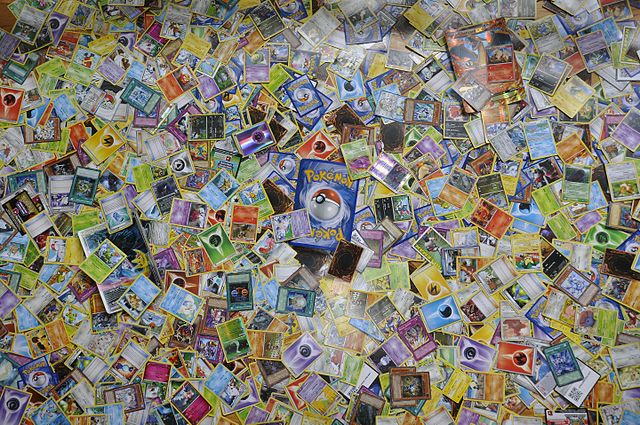
Photograph: Nabeel H, Wikimedia Commons, Creative Commons Attribution-ShareAlike 2.0. Unmodified photograph of visitors entering the 2014 Pokémon National Championships; it illustrates the collecting community, not specific Eeveelution cards.
Conclusion
The best collecting decisions usually come from structure rather than urgency. When you combine clear comparisons, strong context, and a disciplined buying framework, you give yourself a better chance to build a collection with both enjoyment and staying power.