Answer-first summary
Condition can change both presentation and the buyers considering a Charizard. Estimate its effect with sales of the same release and similar defects or the same assigned grade; no fixed discount reliably applies across all copies.
Condition changes the comparison, not just the discount
Charizard values change with condition because buyers are choosing different physical examples of the same card. Cleaner copies can attract buyers who prioritize presentation or a particular grade, while worn copies may suit a binder collection at a lower cost. There is no reliable universal percentage to subtract for a scratch, crease, or lower condition label. Estimate a range from genuinely comparable sales instead.
The useful question is not simply “What is Charizard worth?” It is “What have buyers paid for this release, in this language and printing, with similar defects or the same professional grade?” Identify the card first, describe its condition second, and choose the comparison group third. Changing that order can make an apparently precise estimate misleading.
This guide provides a repeatable way to reason about condition differences. It does not quote live prices or assign grades from photographs. The numerical example below is invented solely to demonstrate comparison arithmetic. Use current, documented sales for an actual purchase or sale, and keep uncertainty visible when the evidence is weak.
Fix the card identity before judging the wear
Record the set, collector number, language, printing, and finish. A Charizard with similar artwork may belong to a different release. If one listing concerns a different edition, its price cannot isolate the effect of condition. Keep raw cards separate from professionally graded examples before narrowing the comparison further.
Base Set Charizard is a useful reminder that a familiar name does not describe one comparison group. PSA maintains a separate shadowless Charizard reference. Do not blend that printing with other versions just to obtain more sales. A larger collection of mismatched records is less useful than a small, honestly qualified set of relevant ones.
If identification is still uncertain, consult the Charizard collector guide before assigning a condition value. Write a one-line identity for every candidate sale. When the number, language, or printing is not visible, mark the record incomplete rather than quietly assuming it matches. The same discipline applies to modern releases and promotional cards.
Describe defects before choosing a label
Inspect the front and back, corners, edges, and surface in a consistent order. Record what you can actually see: a white spot on a back corner, scratches across the foil, a line through the illustration, or a small depression near the border. Specific observations are more useful than a confident but unexplained “great condition.”
Ask for both evenly lit and angled photographs. Straight-on images help establish the overall presentation, while changing the angle can make certain surface marks easier to see. Distinguish marks on a sleeve or holder from marks on the card. Where a photograph cannot resolve that distinction, ask for clarification instead of pricing the card as clean.
Note the location as well as the severity of a flaw. Two examples with similar overall wear can look very different in a display. A scratch across the character's face may bother you more than comparable wear on the reverse. That preference can guide your own choice, but it does not justify claiming a fixed market penalty without sales evidence.
Raw condition categories are broad descriptions
TCGplayer's condition overview distinguishes five categories from Near Mint through Damaged. Its Near Mint category permits some slight imperfections. Consequently, a marketplace label should not be read as a promise of a flawless card or a particular professional grade.
Read the standard used by the seller rather than assuming every marketplace uses the same boundaries. Then compare the actual photographs within that standard. Two sellers can describe similar wear differently, and two cards under the same label can have different combinations of defects. The label is an organizing tool; the photographed example is what you will own.
The following is a comparison worksheet, not a replacement grading scale. Its descriptions deliberately avoid assigning a numerical grade or guaranteeing a marketplace category. Use it to identify the evidence needed before selecting price references.
| Observed example | Useful comparison | Question still to resolve |
|---|---|---|
| Clean appearance with a few small marks | Same release with similar visible marks | Are the surface and back fully shown? |
| Edge wear and foil scratches | Sales showing a similar mix of wear | Are there hidden dents or creases? |
| A visible crease or indentation | Examples documenting a comparable defect | Where is it, and how extensive is it? |
| Heavy wear or possible alteration | Clearly disclosed examples in a separate group | Can identity and originality be established? |
Why a small defect can change the buyer group
Condition pricing is not necessarily a smooth ladder. A collector seeking a clean display copy may reject a crease even when the rest of the card looks strong. Someone completing a childhood binder may accept it. The same defect can therefore change who is willing to consider the card, not merely how much every buyer subtracts.
Compare two hypothetical copies with similar corners. One has a tiny reverse-edge mark; the other has a shallow dent near the artwork. A photograph might make the first look worse because the white edge is conspicuous. That does not prove the second deserves a higher price. Inspect both defects and find relevant examples instead of ranking them by the first image alone.
Avoid averaging good and bad features into a homemade grade. Sharp corners do not erase a crease, and an attractive front does not make missing back photographs irrelevant. If the decisive defect is uncertain, widen the estimate or withhold it. Precision should follow evidence rather than compensate for its absence.
Graded and raw prices answer different questions
A raw sale concerns an unencapsulated card described by its seller; a graded sale includes a named company's assessment and holder. Keep those groups separate. When comparing graded copies, match the company, grade, exact card, and any qualifiers or special label details that affect what is being offered.
Consult the relevant company's standards directly. PSA's grading standards discuss both observable defects and judgment in assessment. This is a reason to avoid converting a raw marketplace label into a guaranteed numerical grade. Use an assigned grade when one exists, and describe ungraded cards with appropriately limited confidence.
Even within one grade, inspect the individual copy. You may prefer its centering or the placement of its wear, but a personal preference is not automatically a resale premium. A large gap between two grade levels needs matching sales to support it; do not infer the gap from the numerical distance between their labels.
Build a small, transparent set of comparable sales
Start with completed transactions whose identity and condition can be checked. For each, record the sale date, venue, currency, printing, language, raw description or grade, visible defects, and known charges. Save a link or screenshot so you can revisit exclusions and explain the comparison later. Separate confirmed amounts from figures you cannot verify.
Keep the time window reasonably consistent. Comparing a recent worn copy with a pristine sale from a different market period mixes condition with timing. If few examples exist, widen the window deliberately and mark the limitation. Do not quietly substitute an old record price for the current range because it is easier to find.
Check whether a result is a single card, a lot, an auction amount before fees, or an offer whose accepted price is hidden. Avoid counting the same physical copy twice when repeated records suggest a relisting. Exclude misleading examples with a written reason. A short defensible list is preferable to a spreadsheet whose apparent size conceals incompatible data.
A worked example without invented market claims
Imagine three completed sales of the same raw Charizard printing with closely matched wear. For this exercise only, their comparable totals are 80, 90, and 100 currency units. The median is 90 and the observed range is 80–100. These are fictional teaching numbers, not quotations for any Charizard card.
Now imagine three similarly documented cleaner copies at 120, 130, and 140 units. Their median is 130. The difference between the two medians is 40 units. Expressed relative to the cleaner median, the worn group's discount is 40 divided by 130, or approximately 30.8%. Expressed relative to the worn median, the cleaner premium is 40 divided by 90, or approximately 44.4%.
Both calculations describe the same invented gap with different denominators. Neither percentage becomes a rule for another printing, a different defect, or a future date. With only three observations per group, you would also have little basis for a narrow forecast. Use the arithmetic to communicate your evidence, not to give a tiny sample more authority than it deserves.
Distinguish purchase cost from seller proceeds
A buyer's total and a seller's net proceeds are different quantities. For a purchase comparison, record the card price and known delivery or transaction charges consistently. For a sale decision, subtract the actual selling and shipping costs that would apply to you. Do not compare one seller's net with another buyer's all-in total and attribute the gap to condition.
If you are considering grading a raw card, write down submission, shipping, insurance where applicable, and any other required costs separately. Check current service terms for your location. Compare the total commitment with an already graded example only after allowing for an uncertain result and the possibility that the outcome will not meet your collecting goal.
Do not treat the difference between a raw asking price and a top-grade sale as available profit. The two records describe different evidence and potentially different physical quality. A more useful question is whether you would still want the raw card at the agreed cost if it remained raw or received a less impressive result than hoped.
Choose condition for the collection you want
Base Set Charizard may suit a collector who wants early artwork and accepts wear to stay within a chosen budget. Another collector may prefer a cleaner copy from a different release. Compare these as alternative ways to enjoy a collection, while keeping their price evidence separate. A different release is not a condition-adjusted version of the first.
Pikachu and Blastoise can help you test your preferences. If a consistent binder page matters most, consider whether matching presentation across characters is more satisfying than spending heavily on one pristine card. Their sales do not establish a Charizard discount. Their role here is to clarify your collecting priorities before you pay for condition you may not personally value.
Set a maximum extra amount you are comfortable spending for better presentation. Revisit it after examining the actual copies, not just their labels. A modestly worn example can be a satisfying choice when the defects are known and acceptable. Conversely, buying a flaw that continually distracts you may be poor value even when the price is low.
Document uncertainty and protect the condition you buy
Keep a short condition record with the card's identity, photographs, date, observed defects, comparison range, and reasons for excluding sales. Separate confirmed observations from assumptions. If a seller supplies a new angled image revealing a crease, update the record and comparison group. Do not preserve the original estimate merely because negotiation has already started.
For seller checks, payment arrangements, and arrival inspection, use the safe Charizard buying guide. Condition research cannot resolve every authenticity or delivery question. Once a purchase arrives, compare it with the documented condition before changing its storage or taking any action that could make a discrepancy harder to establish.
Handle the card carefully, use suitable protective storage, and avoid attempts to improve its appearance through cleaning, pressing, or recoloring. The purpose is to preserve what you bought, not to manufacture a better-looking sales description. If you later sell, disclose the same material defects you would have wanted explained as a buyer.
Use a range that matches the strength of the evidence
A useful condition estimate names the exact card, describes the wear, identifies its comparison group, and explains the range. It may be broad. That is more honest and more useful than presenting a single confident number based on a mismatched grade or an assumed percentage discount. When evidence is insufficient, say which additional photographs or sales would improve it.
Our approach prioritizes practical collector reasoning and broadly useful market comparisons over specialist printing exceptions. The linked marketplace and grading references explain terminology; the worksheet and fictional calculation show how to organize a decision. No current price appraisal, guaranteed grading outcome, or future resale prediction is offered. Recheck condition standards and transaction details when you act.
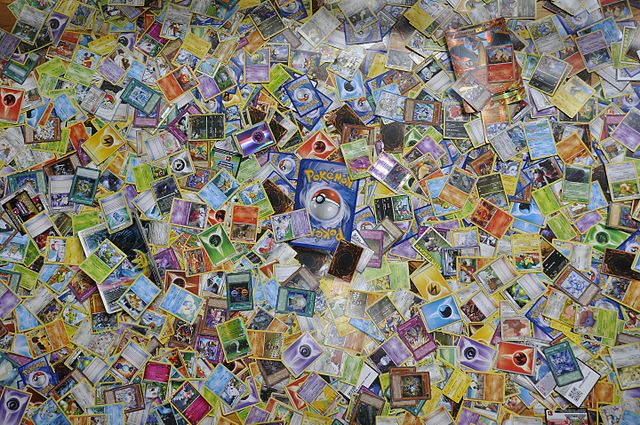
Featured photograph: Jarek Tuszyński, Pokémon collection, Creative Commons Attribution-ShareAlike 4.0, unchanged. The collection photograph is illustrative, not evidence of the condition of any individual Charizard.
Conclusion
The best collecting decisions usually come from structure rather than urgency. When you combine clear comparisons, strong context, and a disciplined buying framework, you give yourself a better chance to build a collection with both enjoyment and staying power.