Answer-first summary
Understand Charizard by reading the card in layers: identify its release, separate the printing and finish, then describe the actual copy’s condition and grading status. Translate listing terms into observable facts and unresolved questions before deciding what belongs in your collection.
Read Charizard in layers
To understand Charizard as a collector, distinguish the character from the card and the card from the individual copy. Start with the release and language, establish the printing or variant and finish, then describe the condition and whether a grading service has assessed the copy. This layered approach turns a crowded listing title into a sequence of questions you can answer.
The aim is to become comfortable with collecting language before choosing an expensive or complicated target. You do not need to memorize every Charizard ever printed. You need to recognize which detail a term describes, which evidence confirms it, and what remains unknown. That skill also transfers to Pikachu, Blastoise, and other cards you may collect later.
Character, card design, and copy are different things
“Charizard” identifies the Pokémon. It does not identify one release, illustration, or physical object. A card design belongs to a particular release and can have features that distinguish it from other designs. A copy is one actual piece of cardboard carrying that design, with its own wear, history, and documentation.
This distinction clarifies everyday conversations. “I collect Charizard” describes a subject. “I want this Charizard from this set” narrows the design. “I want the copy shown in these photographs” identifies the object being purchased. Moving between those levels without noticing is a common source of confusion.
Practice with three descriptions in a notebook. First write only the character. Then add the release and card number from a verified reference. Finally add observations about a photographed copy. Notice how each additional layer answers a different question rather than simply making the name longer.
A set and a card number provide an address
A set is a group of cards associated with a release. A collector number helps locate a design within its release, but a number alone is not a complete identity. Keep the set name and the number together. Add language and other identifying details before treating two descriptions as a match.
Think of this as an address rather than a ranking. A number is not a condition score or a direct statement of value. A release name is not proof that an individual copy is genuine. Each identifier supplies a piece of the description, and the pieces need to agree with the card and a trustworthy reference.
When learning from an unfamiliar listing, copy the stated details and compare them with the photographs. Mark a missing number or unreadable line as unknown. Do not fill gaps from a remembered illustration: related-looking cards can belong to different releases. For broader collection planning, use the complete Charizard collector guide.
Printing and variant narrow the identity further
A printing describes an issue of a card; collectors also use variant for a distinguishable version. Marketplace usage is not always precise, so ask what physical feature the term refers to. An edition mark, a different layout detail, or a specified finish can mean different things. Write the feature alongside the label.
English Base Set Charizard is a useful exercise. Collectors distinguish first edition, shadowless without a first-edition stamp, and unlimited versions. The stamp and the shadow beside the illustration frame are identification clues. PSA's Base Set reference explains these distinctions. Use it for identification rather than reading its historical prices as current offers.
The lesson is not that every language or set follows that pattern. It is that familiar artwork still needs a precise printing description. Terms developed around English cards should not be applied automatically to Japanese cards. If a seller uses a specialist term you cannot verify, ask for the relevant detail rather than accepting the label on its own.
Finish describes appearance; rarity describes a category
Finish concerns the card's surface appearance, such as the presence and placement of a reflective treatment. Rarity is a designation within a release's own system. The two ideas can be related, but they do not answer the same question. A shiny surface does not by itself establish how difficult a particular version is to obtain.
Avoid using one universal rarity ladder for every era and language. Consult a reliable reference for the specific release when a distinction matters. Similarly, a seller's “rare” may be an informal adjective rather than the card's official designation. Ask which meaning is intended and what supports it.
For a learning exercise, describe what you see before naming it. Write where the reflective area appears, then confirm the finish against an appropriate reference. Keep “finish confirmed” separate from “availability understood.” This prevents an attractive visual feature from silently becoming an unsupported scarcity claim.
Condition describes wear; a grade records an assessment
Condition concerns the actual copy. Useful observations include edge whitening, corner wear, surface marks, and visible creases. A broad seller label can summarize those observations, but it does not replace them. Two sellers may use the same adjective for copies with noticeably different defects.
A professional grade records a service's assessment under its standards. PSA's grading standards connect its grades with characteristics including surface, corners, and centering. A raw card is simply one that is not presented in a grading holder; “raw” does not mean damaged, genuine, or likely to receive a particular score.
When reading a listing, keep three columns: seller description, visible observations, and any documented grade. If they disagree, investigate the disagreement. Do not promote “looks clean to me” into a guaranteed professional result. For graded cards, include the grading company in the record so that numbers from different services are not treated as one interchangeable scale.
Authenticity is its own question
Correct-looking identifiers and an attractive surface do not settle authenticity. Treat genuine origin as a separate question from whether the card has been identified accurately. A reference can help you understand what the intended design should be, but a photographed resemblance alone cannot resolve every concern.
Pokémon Support advises consulting a specialist card shop if you suspect counterfeit cards. If you lack the knowledge to judge a copy, record that uncertainty and seek appropriate help. Avoid tearing or otherwise damaging a card as a learning experiment.
The guide to buying Charizard safely addresses transaction checks in more detail. Here, the central vocabulary lesson is simple: “identified,” “appears well preserved,” and “authenticated” are different statements. Use each only when the available evidence supports it.
A listing, a sale, and liquidity answer different questions
A listing is an offer. An asking price expresses the seller's request. A completed sale records a transaction, with details that must still be checked before comparison. None of these terms means that every similar-looking card can immediately sell for the same amount.
Liquidity describes how readily an item can be sold under relevant conditions. In practice, think about the likely time, acceptable price, and costs involved rather than treating it as a permanent property of the character. A collector who enjoys a card and a seller who needs a quick transaction can face different decisions.
For now, practice separating evidence from interpretation. “Three matching sales are recorded” is a different statement from “this will be easy to sell.” If the examples differ in printing, language, or condition, explain those differences instead of hiding them inside one average. Learning the terms helps you recognize what an argument actually proves.
Your collecting goal determines which details matter most
An artwork collection, a complete-set project, and a graded display use different inclusion rules. An artwork collector may accept different releases featuring a preferred scene. A set collector needs the correct identities within a defined checklist. A grade-focused collector pays attention to the service and assigned assessment as well as the design.
Pikachu is useful for testing whether your interest extends beyond one character. Blastoise can help distinguish a starter-themed collection from a collection of a single release. These are planning references, not universal recommendations to buy them or comparisons that assign Charizard a price.
Write one sentence describing what belongs in your project. Then name what would make an otherwise appealing card irrelevant. This boundary helps you use vocabulary purposefully: a term matters when it changes whether the card fits your collection, not merely because it makes an advertisement sound impressive.
Keep a learning record that separates facts from questions
Create a small record with identity, visible features, condition observations, source references, and unresolved questions. Save photographs or links you can revisit. Put uncertain details in a clearly marked section rather than guessing. That makes it easier to correct the record when better information becomes available.
A hypothetical entry might say “Charizard; release and number confirmed; language confirmed; printing awaiting a clearer photograph; surface wear visible; no documented grade.” It is incomplete, but useful. It tells you exactly what to ask next and avoids pretending that a seller's headline supplies every missing detail.
Before moving from learning to buying, explain the target card aloud without relying on words such as “amazing” or “rare.” If you can identify the release, describe the relevant variant, distinguish wear from grading, and state what remains unknown, you have a workable foundation for more detailed collecting decisions.
Method and image credit
This introduction treats collecting language as a practical concept rather than a catalogue of every Charizard release. We prioritize clear definitions and habits usable across card categories. The cited references support the printing example, grading terminology, and authenticity guidance. The notebook exercises are editorial teaching tools and do not describe real listings, market surveys, or current price estimates.
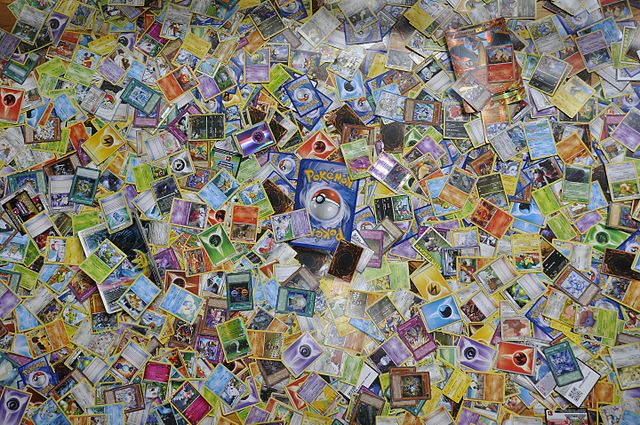
Featured photograph: MIKI Yoshihito, Pokémon card battle, licensed under Creative Commons Attribution 2.0. The original photograph is retained without changes. It illustrates the wider Pokémon card community, not a particular Charizard printing.
Conclusion
The best collecting decisions usually come from structure rather than urgency. When you combine clear comparisons, strong context, and a disciplined buying framework, you give yourself a better chance to build a collection with both enjoyment and staying power.