Answer-first summary
The Tom Brady card market evolved in three broad stages: overlooked 2000 issues gained recognition as his career grew, grading and online sales created clearer hierarchies, and a mature market began separating iconic rookies from accessible career cards and specialist rarities. Today, collectors need card-level evidence rather than a general Brady narrative.
The short answer
The Tom Brady card market evolved from an uncertain 2000 rookie category into one of football collecting's broadest player markets. Career achievements brought recognition to cards that had not entered the hobby with the expectations attached to a top draft pick. Grading, population data, online marketplaces, and major auctions then made the hierarchy easier to see. Over time, buyers learned to distinguish iconic rookies, premium autographs, condition-sensitive chrome cards, later-career issues, and specialist parallels instead of treating every Brady card as one market.
That final change matters most today. Brady's name can create attention, but it cannot make every card scarce, liquid, or fairly priced. Mature demand is selective. The exact year, product, card number, version, condition, grade, and sales history now do more of the pricing work.
This guide explains that development without predicting the next move. For a map of the market as it stands now, use the Tom Brady market guide for collectors. Here, the focus is the sequence: how the category changed and why older assumptions may no longer help.
Phase one: a rookie class without a ready-made superstar premium
Brady's 2000 cards did not arrive around a highly drafted, heavily promoted professional prospect. That origin shaped the market. Products included him, but collectors were not initially working from the long résumé that later made his name globally recognizable. Supply was distributed across many sets, and no single card had yet accumulated decades of shared collector meaning.
PSA's Tom Brady Rookie Set checklist contains 44 required issues. That breadth helps explain why “the Brady rookie” was never one object. The 2000 class offered paper cards, chromium cards, serial-numbered releases, and autographs across different brands and price levels. As Brady's career developed, collectors had to revisit that entire checklist and decide which issues best represented the player.
This retrospective discovery is different from a market built around immediate prospect hype. Recognition arrived after many cards were already in collections, boxes, shops, or ordinary storage. Some survived cleanly; others acquired surface wear, poor corners, or handling damage. The combination of a growing career story and uneven surviving condition eventually made grading especially influential.
Phase two: career success reorganized the checklist
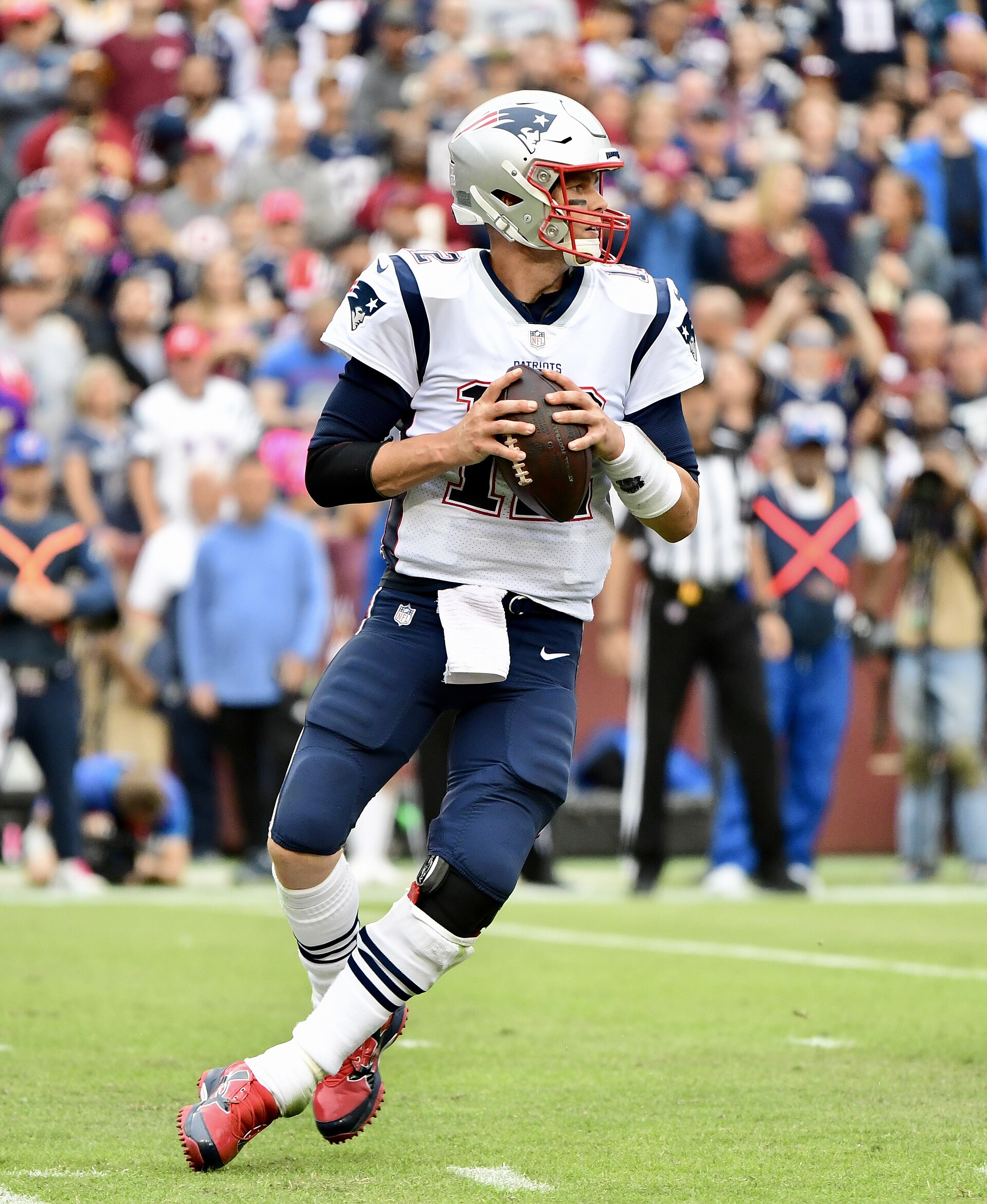
Repeated championships and longevity changed Brady from a player collectors might notice into a subject with several audiences. Patriots collectors, quarterback collectors, rookie specialists, set builders, autograph collectors, and general sports fans could all enter the market for different reasons. His later championship with Tampa Bay added another team chapter. The Pro Football Hall of Fame notes that the Super Bowl LV win was his seventh championship, a milestone that reinforced a career narrative already understood far beyond the card hobby.
Career recognition did not lift every issue equally. Instead, it reorganized the checklist. Cards that were easy to identify, explain, and compare became anchors. More obscure issues could benefit from broader attention, but they still needed a collector reason—set importance, genuine scarcity, distinctive design, or a meaningful career connection—to maintain a premium.
This is where the market began to separate recognition from rarity. A widely known card could be less scarce yet easier to sell because buyers understood it. A low-population issue could be harder to replace but also harder to price. The strongest Brady narrative did not eliminate that trade-off; it made more collectors aware of it.
How a rookie hierarchy emerged
Mature player markets usually develop reference points, and Brady's market is no exception. Accessible 2000 rookies formed one lane. Bowman and Bowman Chrome gained recognition as understandable rookie choices. SP Authentic represented a premium serial-numbered direction. The 2000 Playoff Contenders Rookie Ticket autograph became a specialist centerpiece; PSA's set profile identifies Brady #144 as the key signed card in the release.
These cards do not move together simply because they show the same player. Their supply, surfaces, autograph status, set reputation, and buyer pools differ. Even within Bowman Chrome, a base card and a Refractor require separate comparisons. A collector who collapses them into a single price trend loses the information that makes the hierarchy useful.
The hierarchy also created budget ladders. A collector could participate with a modest raw rookie, choose a graded mainstream card for easier benchmarking, or pursue a scarce premium piece. That range helped broaden the category, but it also encouraged sellers to use results from the top of the ladder to promote unrelated cards. As the market matured, experienced buyers became less receptive to that shortcut.
Phase three: grading changed the language of demand
Grading gave buyers a shared condition vocabulary and a certification number they could verify. It also made population reports and grade-specific comparisons part of ordinary research. For Brady's condition-sensitive cards, this was important. Chrome surfaces can show scratches or print defects; paper cards can reveal corner, edge, and centering problems; autographed cards add signature presentation and authentication questions.
The label did not remove judgment. PSA's grading standards describe general expectations, but two cards with the same numerical grade can have different centering, print quality, or overall eye appeal. As more images and sale records became available, buyers could compare the actual copy rather than relying only on the holder.
That transparency strengthened premiums for some attractive high-grade examples while exposing weak assumptions elsewhere. Raw cards could no longer be priced confidently as though they had already earned an optimistic grade. At the same time, a high grade was not automatically rare or liquid. Collectors learned to read the grade alongside population, card recognition, and visible quality.
The card grading complete collector guide provides the broader framework. Brady's market shows why it matters: grading is most useful when it improves identification and comparison, not when it replaces inspection.
Online marketplaces made the market easier—and noisier—to read
Online selling increased access to Brady cards across nearly every price tier. Collectors could see more listings, track completed sales, compare photographs, and locate issues that once required a show or specialist dealer. This enlarged the apparent market and gave recognizable cards deeper trading activity.
It also created noise. Asking prices were easy to copy. Listing titles mixed base cards with parallels. Accepted offers could obscure the real transaction amount. A dramatic auction result could circulate without enough detail about grade, version, buyer's premium, or copy quality. More data did not guarantee better conclusions.
The market therefore evolved from limited information to an information-filtering problem. Current collectors need several matching completed sales when possible, not a screenshot of the highest listing. They should record the full identity, sale date, venue, condition, grade, fees, and any uncertainty. If the comparison requires too many adjustments, it may not be a true comparable.
The boom period broadened attention, then selectivity returned
Periods of intense sports-card attention brought new buyers, more grading submissions, and aggressive price expectations into established player markets. Brady benefited from the same broad forces that affected basketball, baseball, and other football categories: greater online participation, nostalgia, visible auction headlines, and interest in graded collectibles.
The lasting effect was not that every card became permanently stronger. It was that more supply and more evidence entered the system. When attention became less indiscriminate, cards had to compete on clearer merits. Recognizable rookies, scarce cards with established followings, and attractive copies remained easier to explain. Ordinary later-career cards and obscure inserts could still be enjoyable, but fame alone was a weaker basis for a premium.
This return to selectivity is normal in a mature market. It rewards collectors who define the card's role before buying. A display card can be chosen for image and personal meaning. A set card can be chosen for completion. A card bought with resale flexibility in mind needs repeated buyer evidence. Those goals should not share one standard.
Retirement shifted the story from active milestones to a settled résumé
During Brady's playing career, new seasons and championships could add fresh chapters. After retirement, the central résumé became more settled. Attention can still rise around anniversaries, documentaries, public appearances, Hall of Fame milestones, or important auctions, but collectors are no longer waiting for the next game to redefine the career.
That shift can make card-level differentiation even more important. When the player story is widely known, the market asks what the particular object contributes. Is it a documented 2000 rookie? Does it represent the Patriots or Buccaneers chapter? Is the design important to a set? Is the autograph certified? Is the parallel genuinely distinct and verifiable?
Retirement does not make the market static. It changes the type of uncertainty. Career-performance uncertainty declines, while questions about supply, collector taste, condition premiums, transaction costs, and buyer depth remain.
Comparisons with Patrick Mahomes and Peyton Manning
Patrick Mahomes and Peyton Manning are useful reference points, but neither is a direct pricing substitute. Mahomes represents a modern product environment with many parallels, autographs, and active-career narratives. Manning offers another established quarterback market, yet his rookie-year products and collector hierarchy differ from Brady's 2000 checklist.
Useful comparison focuses on structure: how many buyers recognize the card, how clearly versions can be separated, how often matching examples sell, and how much of the price rests on condition or scarcity. Unhelpful comparison turns career rankings into card valuations. A Mahomes headline cannot price a Brady card, and Brady's best autograph cannot establish a value for an unrelated Manning issue.
What the evolved market asks of collectors
First, identify the lane. Decide whether the target is an accessible career card, mainstream rookie, premium rookie, autograph, or scarce parallel. Each lane has a different evidence standard.
Second, verify the object. Match year, manufacturer, set, card number, and version. Inspect the front and back. For graded cards, check the certification record against the holder and card. For autographs, understand what has been authenticated.
Third, compare like with like. Use completed sales for the same version and grade when possible. Adjust cautiously for eye appeal, timing, fees, and venue. Treat a thin sales history as uncertainty rather than proof of an unlimited premium.
Fourth, define the purpose. A personal collection can prioritize meaning and design. A collector who values resale flexibility should prioritize recognizable identity, repeated sales, and realistic transaction costs. The safe Tom Brady buying guide covers the purchase process, while the safe graded-card buying guide helps when the holder and label drive much of the price.
Final view
The Tom Brady market grew because an unlikely 2000 rookie became the center of an extraordinary career story. It matured because collectors, graders, marketplaces, and auction records gradually sorted dozens of rookies and thousands of later cards into recognizable lanes.
The result is deeper but less forgiving than a simple superstar market. Recognition creates an audience; the exact card determines whether that audience is relevant. Condition, certification, scarcity, visual appeal, and comparable sales decide how confidently a collector can act.
Understanding that evolution is more useful than trying to predict the next headline. Choose the lane, verify the card, compare matching evidence, and pay for qualities the actual buyer pool has repeatedly shown it values.
Conclusion
The best collecting decisions usually come from structure rather than urgency. When you combine clear comparisons, strong context, and a disciplined buying framework, you give yourself a better chance to build a collection with both enjoyment and staying power.